
A polished Alibaba profile hides a lot. During our [factory audit](https://tommysourcing.com/?p=803)s across Jiangsu, we have watched red flags when choosing a supplier in China turn into six-figure losses for buyers.
The ten biggest red flags when choosing a supplier in China are: missing business licenses, mismatched bank accounts, refusal of factory audits, below-market pricing, vague spec answers, sample-to-bulk mismatches, payment pressure, trading companies posing as factories, evasive communication, and unverifiable certificates. Multiple red flags together mean walk away.
Most supplier problems are not obvious scams. They are early warnings of weak control, hidden intermediaries, or poor quality systems. This guide breaks the ten red flags into four practical questions. For each one, I will show you what the warning sign looks like, why it matters, and how our Suzhou purchasing team verifies it on the ground.
What are the biggest red flags I should watch for when a Chinese supplier's quotation looks too good to be true?
A buyer in Texas once forwarded us a quotation that undercut every other supplier we had screened for him. He asked one question: how is this possible?
A quotation more than 15% below market price is a stop sign. Combined with requests for payment to personal accounts, 100% advance payment, or proforma invoices naming a different company, it usually signals quality fade, bait-and-switch pricing, or outright fraud rather than a genuine bargain.
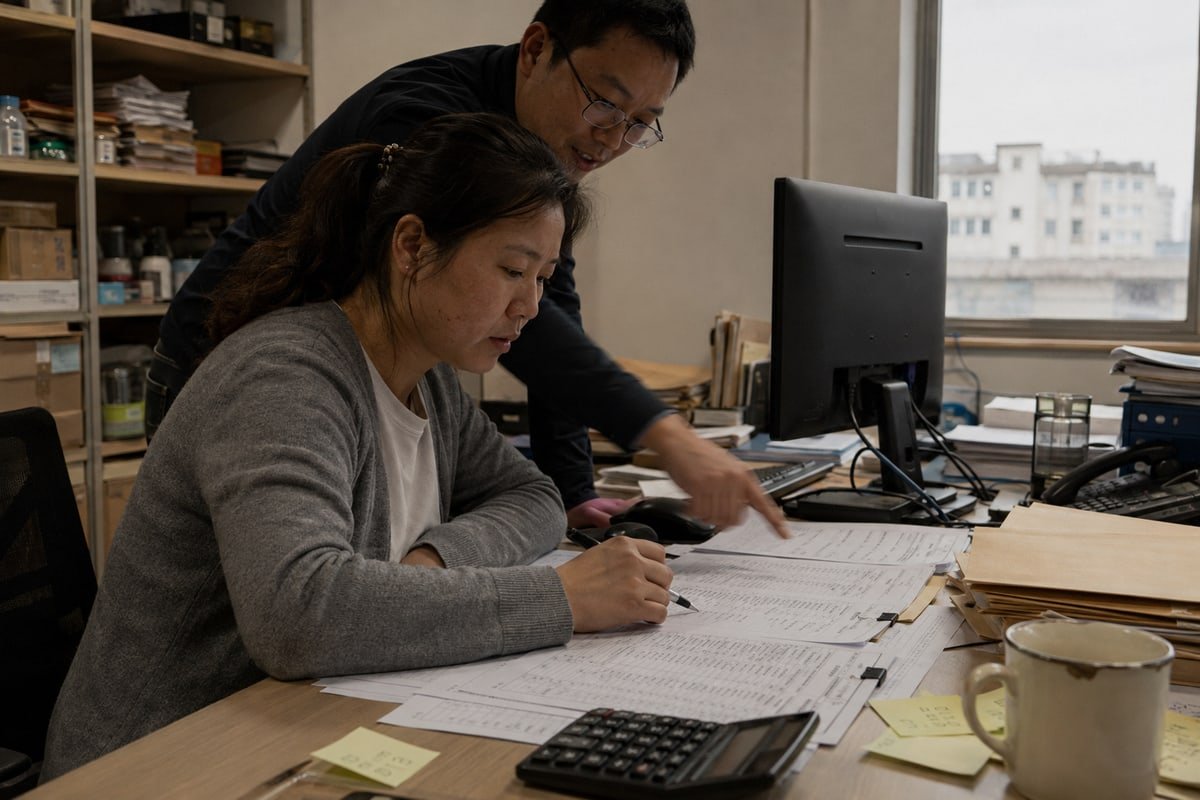
Price is where most sourcing mistakes begin. Buyers anchor on the lowest number. Risky suppliers know this. So they quote low to win the order, then recover margin later through inferior materials, hidden fees, or renegotiation after your deposit clears. Sourcing analysts call this "quality fade," and it is one of the most repeated warning signs across every credible sourcing guide.
Now, the honest objection: a low price is not automatically a scam. A supplier with real scale, simpler packaging, or lower overhead can legitimately quote below competitors. In our quotation comparisons, a gap of a few percent is normal negotiation territory. The problem starts when the gap is dramatic and appears alongside other inconsistencies. One recent verification guide explicitly treats pricing 15% below market as a stop-sign threshold, and that matches what we see in practice.
How to Read a Suspicious Quotation
| Signal on the quotation | Likely explanation | What we do next |
|---|---|---|
| 5–10% below market | Scale, lower overhead, or hungry for the order | Proceed, but verify capability |
| 15%+ below market | Quality fade, bait-and-switch, or reseller dumping stock | Demand cost breakdown and samples |
| Vague material grades | Room to substitute cheaper inputs later | Lock specs in writing before deposit |
| Proforma invoice name differs from the quoting company | Hidden intermediary or fraud | Stop until names match the business license |
Payment Terms That Should Stop the Deal
Payment structure tells you as much as the price. A registered Chinese company receives business payments through a corporate bank account 1 matching its legal name. Requests for payment to a personal account, Western Union, or cryptocurrency are major risks. Even "the boss's personal account" is a red flag. Standard terms look like a 30% deposit with the balance against shipping documents. Demands for 100% advance, or pressure to pay off-platform and lose trade assurance protection, deserve a hard no.
How can I tell if a supplier is misrepresenting their factory during a video call or audit?
During a live walkthrough we ran near Ningbo, our auditor noticed the "factory" tour never left one corridor. The machinery visible could not produce the quoted product.
Watch for scripted tours that avoid the production floor, machinery that does not match the quoted product, workers unfamiliar with your item, AI-generated or stock imagery, and addresses that differ from the business license. Demand a live, unscripted walkthrough or an independent third-party factory audit.
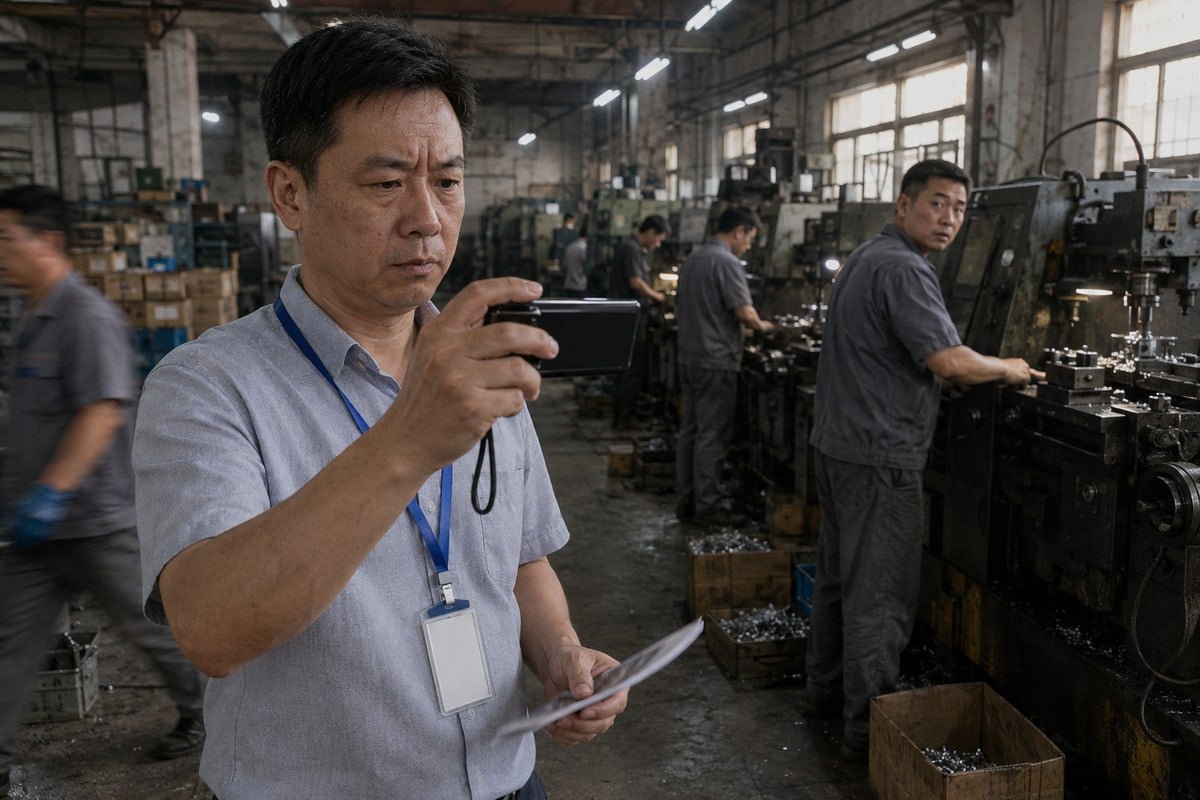
Misrepresentation has become more sophisticated. It is no longer just a trading company 2 borrowing a friend's workshop for photos. We now see AI-generated imagery and even manipulated video used to simulate high-tech production environments that do not exist. A reverse image search on facility photos takes two minutes and catches a surprising amount of this.
The Shadow Factory Problem
The harder case is the "shadow factory" loop. A supplier passes an official factory audit 3, wins the order, then quietly subcontracts production to unvetted, lower-tier workshops. Your approved quality management system never touches your actual goods. This is why a one-time audit is not enough. Our team follows production at the site named in the manufacturing agreement, and unannounced mid-production checks are the only reliable defense.
Another giveaway is the product catalog itself. A genuine manufacturer specializes. A catalog spanning power tools, cosmetics, and furniture almost always identifies a trading company, not a factory. Trading companies are not automatically bad partners, especially for smaller buyers mixing categories. The credibility problem is pretending to be a factory.
How We Run a Live Video Verification
- Schedule the call, but choose the route ourselves once it starts. No scripted paths.
- Ask the guide to walk from the front gate signage to the production floor in one continuous shot.
- Request close-ups of machinery nameplates and compare them against the quoted product's process requirements.
- Ask a line worker, not the salesperson, a basic question about the product.
- Cross-check the visible address against the business license address.
A genuinely busy factory may need to reschedule once. Repeated avoidance without a clear reason is the pattern that matters.
What communication warning signs suggest a Chinese supplier will be difficult to work with during production?
The hardest lesson our Suzhou team learned early on: a supplier who agrees to everything instantly is more dangerous than one who pushes back on your drawings.
The clearest warning signs are yes-man answers to every request, vague replies about materials, tolerances, MOQ, or lead times, details that change between email and WeChat, and no written confirmations. Good suppliers push back, ask technical questions, and document every agreement in writing.
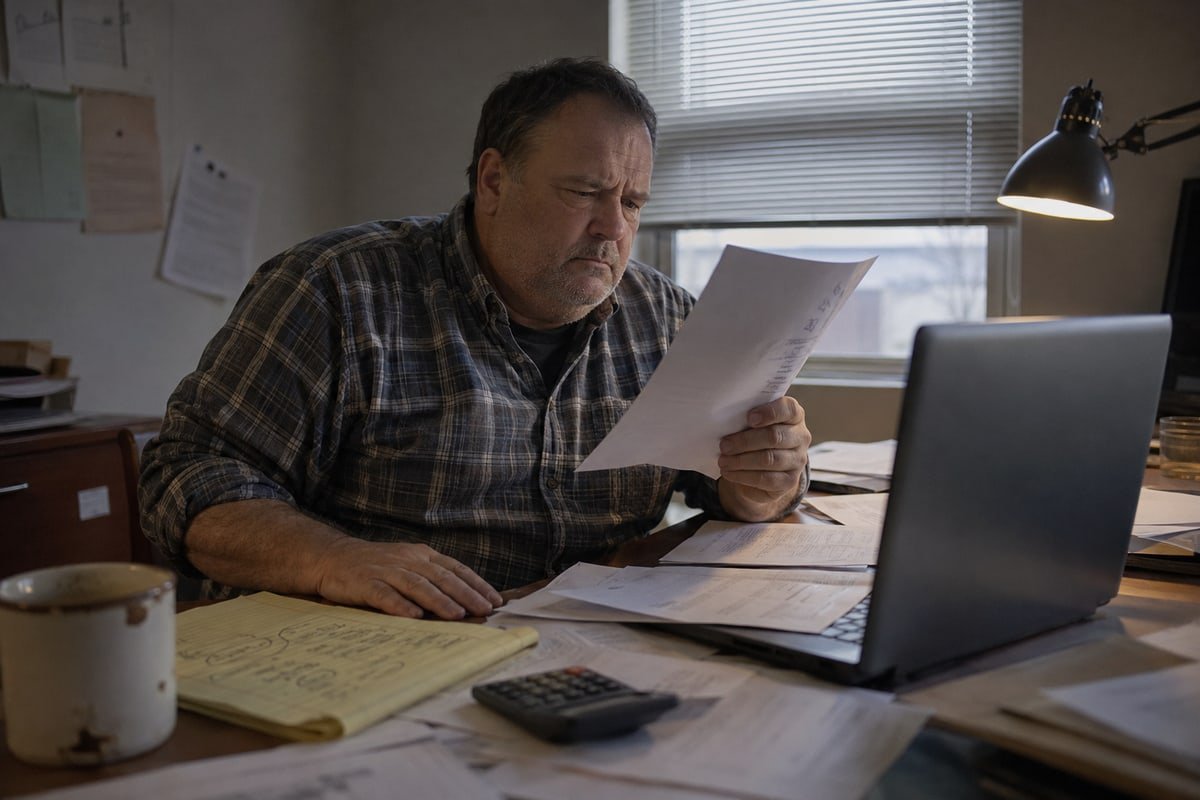
Communication quality during quoting predicts communication quality during production. A supplier who cannot explain their own production process before you pay will not suddenly become transparent after your deposit lands. When we screen suppliers for component buyers, we deliberately ask technical questions: material grade, achievable tolerances, packaging method, in-process QC steps. A real manufacturer answers in specifics. A risky one answers "yes, no problem" to everything, including requests that should be technically difficult.
The "yes man" pattern deserves special attention. If you ask for a custom modification plus a tight deadline and the supplier agrees without requesting your technical specifications, they have not actually evaluated your job. They are optimizing for your deposit, not your delivery.
Good Signals vs. Warning Signs
| Communication behavior | Good sign | Warning sign |
|---|---|---|
| Technical questions | Asks for drawings, tolerances, material specs | Agrees to everything without asking |
| Consistency | Same terms across email, calls, and chat | Prices or specs shift between channels |
| Documentation | Confirms changes in writing, updates the proforma invoice | Avoids written confirmation |
| Bad news | Flags problems early with options | Goes quiet when issues arise |
| Response pattern | Prompt within business hours, clear answers | Repeated vagueness and deflection |
One fairness note: a delayed reply is not proof of fraud. Time zones, Chinese public holidays 4, and production workload slow responses. We tell buyers to judge the pattern, not a single slow email. Repeated vagueness, evasion on basic questions, and refusal to confirm terms in writing are the behaviors that predict painful production runs, disputed inspections, and finger-pointing when the shipment is late.
How do I verify a supplier's real capabilities before placing a large purchase order?
Every large purchase order forces the same trade-off we weigh weekly: spend a little on verification now, or spend far more on failures after the container ships.
Verify the Chinese legal name and Unified Social Credit Code on Qichacha or Tianyancha, confirm the bank account matches the business license, commission a third-party factory audit, test approved samples against a written spec, verify ISO 9001 certificates with the issuer, and check litigation and tax records.
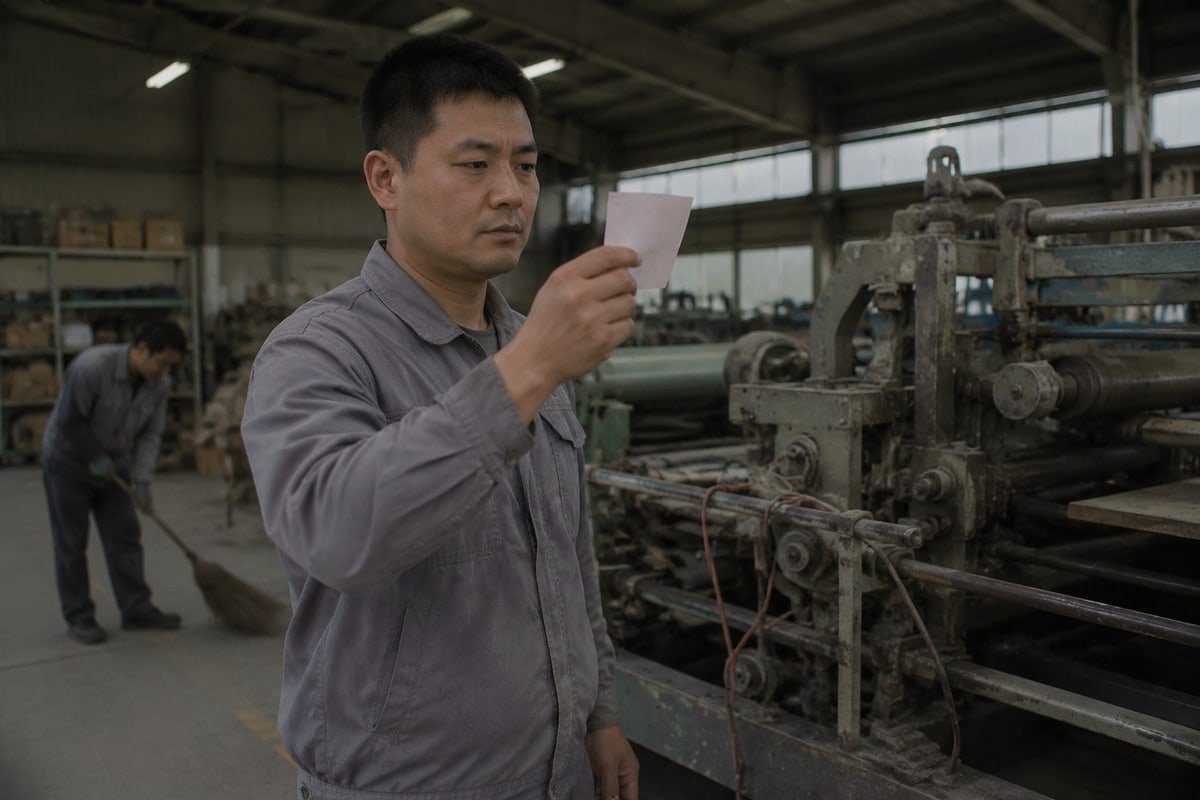
Verification is a sequence, not a single check. Here is the order we follow before recommending any supplier for a significant order.
- Business license verification. Request the license and confirm the Unified Social Credit Code against official registration records. The English company name alone proves nothing; only the Chinese legal name matches government data.
- Chinese-language credit platforms. A supplier with a polished English website but no corporate history, tax records, or legal standing on Qichacha or Tianyancha is a serious concern. We also check litigation records, tax credit ratings, and enforcement records to surface deeper legal or compliance risk.
- Bank account match. The beneficiary name on the proforma invoice must match the registered legal name. No exceptions, no personal accounts.
- Independent factory audit. An on-site audit confirms the address, machinery, workforce, and quality management system actually exist and fit your product.
- Certificate verification at the source. Forged PDFs are common. An ISO 9001 certification should be confirmed with the issuing certification body. For ESG-sensitive supply chains, environmental certificates should come with the granular energy-usage and waste-management logs that modern compliance reviews demand.
- Sample and spec testing. A sample is a reference point, not proof of consistency. The real test is whether bulk production matches the approved sample, verified through third-party inspection before balance payment.
- Contract protection. A manufacturing agreement naming the production site, specs, tolerances, and remedies turns verbal promises into enforceable terms.
Documents to Request Before Paying a Deposit
| Document | What it proves | How to verify it |
|---|---|---|
| Business license with Unified Social Credit Code | Legal existence and registered scope | Cross-check on Qichacha or Tianyancha |
| Bank account details | Payment goes to the real company | Match against the legal name on the license |
| ISO 9001 certificate | A functioning quality management system | Confirm directly with the certification body |
| Export records or export capability proof | Real international trade experience | Ask for redacted references and check them |
| QC procedures and inspection reports | Process control, not just promises | Compare against third-party inspection findings |
This is exactly where a sourcing agent on the ground earns its fee. Our team visits the factory, sits in the audit, watches the production run, and inspects before the balance payment. Problems get found in China, before the goods ship, not after they arrive at your warehouse.
Conclusion
One bad supplier can cost you a launch window. Verify documents, audit factories, test samples, and protect payments. When multiple red flags cluster, walk away or dig deeper.
Footnotes
1. The International Trade Administration provides guidance on secure payment practices and business verification in China. ↩︎
2. Definition and role of trading companies in international supply chains and intermediary trade. ↩︎
3. ISO provides the international standards for auditing management systems used in factory evaluations. ↩︎
4. Reference for the official holiday schedule in China which impacts manufacturing lead times and communication. ↩︎