
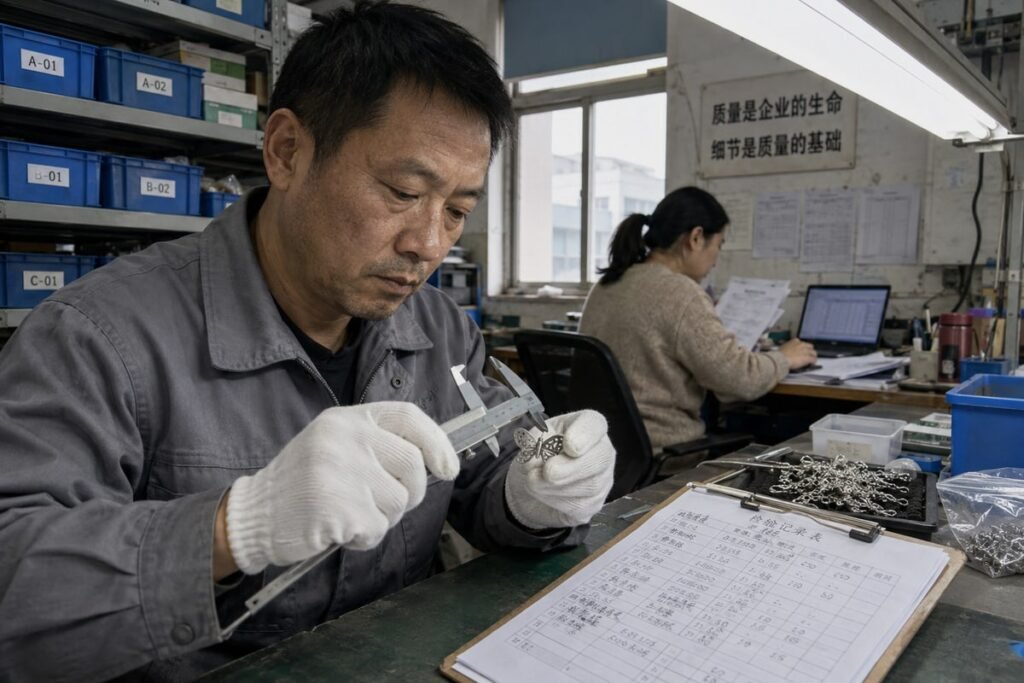
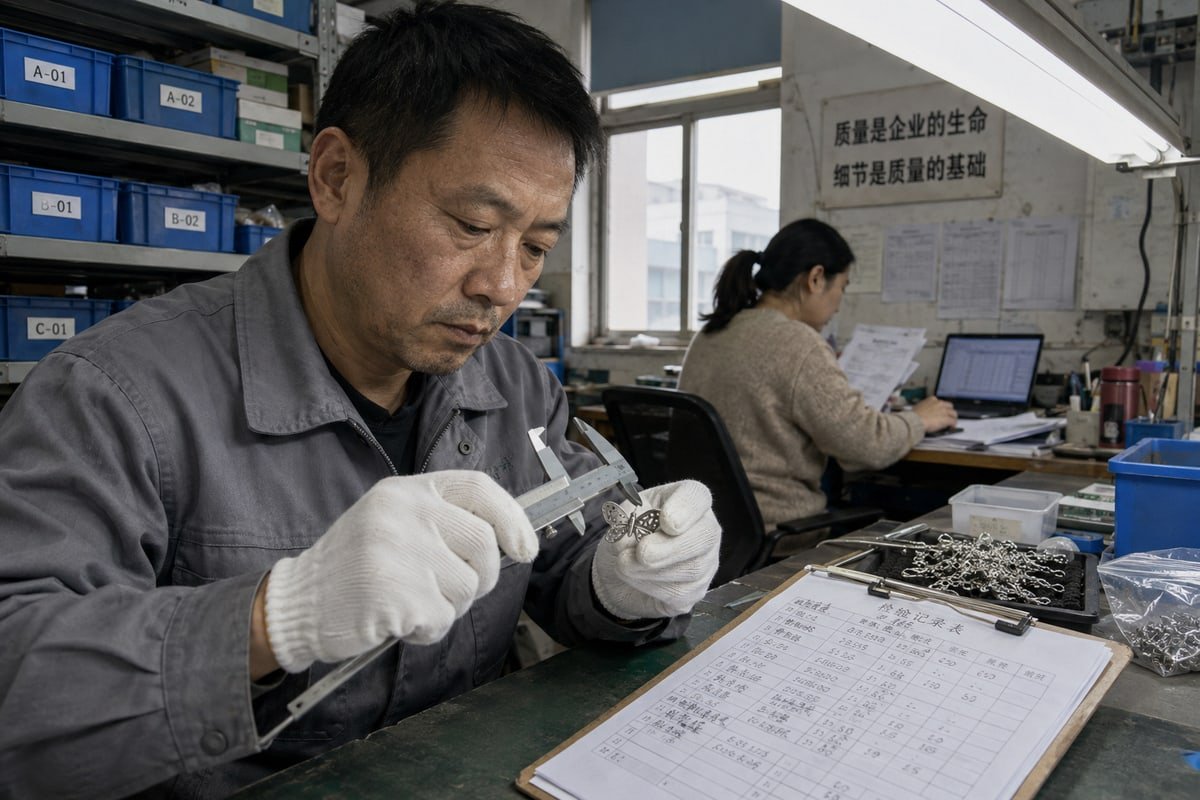
A vague RFQ to Chinese manufacturers gets vague quotes—or silence. Our sourcing team in Suzhou reviews supplier quotations weekly, and weak inquiries usually fail before pricing even starts.
To write an RFQ to Chinese manufacturers, include a product specification sheet with drawings, materials, and tolerances; state your order quantity and annual forecast; define quality standards and certifications; specify packaging, Incoterms, and target lead time; then request itemized pricing for units, samples, tooling, and freight.
That is the short answer. The rest of this guide walks through each part in practical detail, so your next RFQ reads like a serious business inquiry instead of a casual question.
What information should I include in my RFQ to get accurate quotations from Chinese suppliers?
A buyer once sent us a one-line inquiry for "metal clasps, best price." After our Suzhou team rebuilt it into a full spec package, accurate quotes arrived within days.
Include a product description with reference images, technical drawings, dimensions and tolerances, materials and finishes, a Bill of Materials for assemblies, order quantity plus a 12-month forecast, quality standards and certifications, packaging and labeling details, sample requirements, Incoterms, payment terms, and a quotation deadline.
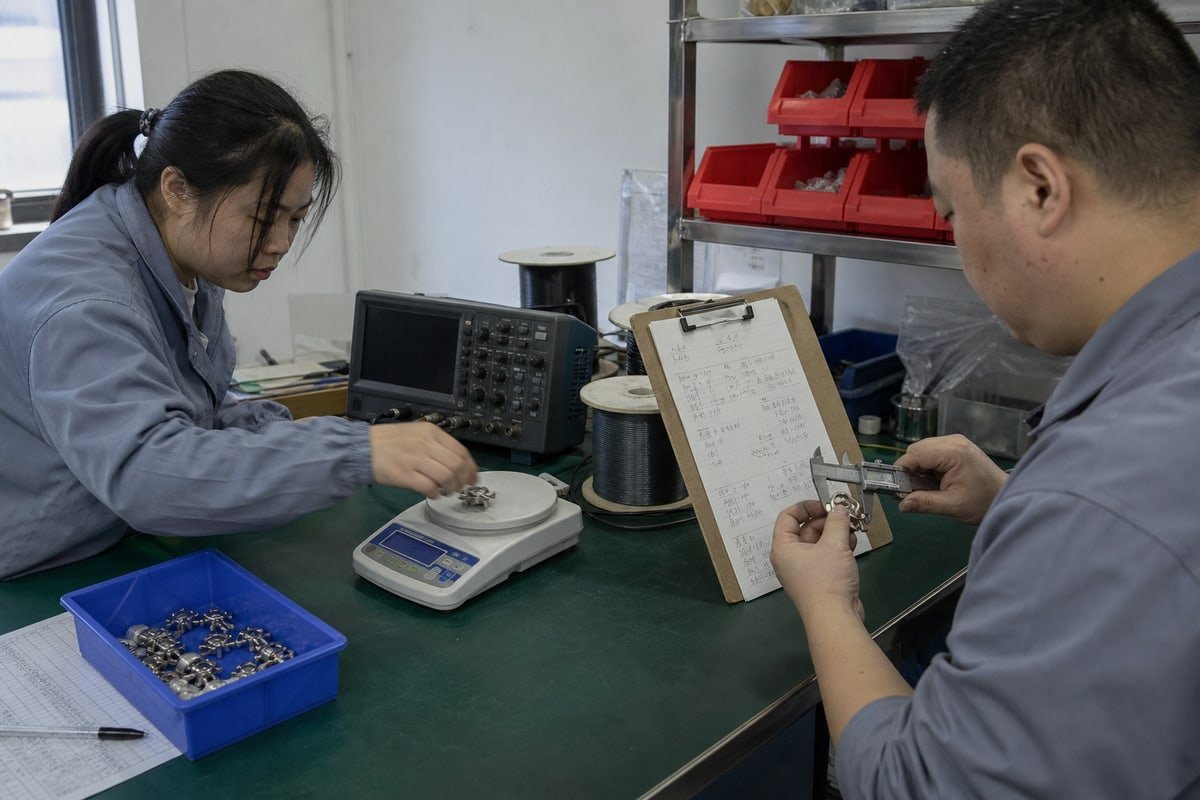
A supplier can only quote what you define. Every missing detail becomes a guess, and every guess becomes a price gap later. In our experience coordinating quotations for buyers in the US, Canada, and Europe, a complete RFQ package can run to 15 fields or more, covering everything from product revision to inspection criteria. That sounds heavy, but most of it fits on one structured sheet.
The specification section carries the most weight
This is where most quotes go wrong. Attach reference images, technical drawings, or an approved sample whenever possible. High-resolution 3D CAD files remove even more ambiguity for machined or molded parts. State dimensions with tolerances, material grade, surface finish, color standard, and functional requirements. For assembled products, attach a Bill of Materials so the factory prices every component, not just the housing.
Quantities, quality, and commercial terms
Give both your first-order quantity and a 12-month volume forecast. Factories use the forecast to decide pricing tiers, tooling amortization, and how seriously to treat you. For quality, define your Quality Control Standards up front: state AQL levels 1 for critical, major, and minor defects, and list any product certifications your destination market requires. Then close with the commercial frame.
| RFQ Field | What to Specify |
|---|---|
| Product description | Name, internal SKU, intended use, reference images |
| Technical detail | Drawings, dimensions, tolerances, materials, finish |
| Quantity | First order, price-break tiers, 12-month forecast |
| Quality | AQL levels, inspection method, certifications |
| Packaging | Retail packaging, master cartons, labeling, palletization |
| Samples | Quantity, deadline, cost and refund policy |
| Commercial terms | Incoterms, payment terms, currency, quotation deadline |
On payment, many suppliers propose 30% deposit and 70% balance before shipment. Treat that as a common starting point, not a fixed rule—it is negotiable, especially as order history builds.
How do I avoid common RFQ mistakes that lead to delays or wrong quotes from Chinese factories?
Early in my sourcing career, I learned a hard lesson: factories do not quote what you meant. They quote what you wrote. Every gap becomes someone else's assumption.
Avoid sending only a product name, omitting quantity tiers, skipping packaging and labeling specs, requesting one lump-sum price, and leaving out Incoterms or destination. Send a concise cover email with a structured spec attachment, and protect proprietary designs with an NNN Agreement.

Most failed RFQs fail for predictable reasons. When our team screens supplier responses for clients, we can usually trace a bad quote straight back to a hole in the original request. Here are the mistakes we see most often, and what each one costs you.
| Mistake | What Happens | The Fix |
|---|---|---|
| Product name only, no specs | Supplier guesses or ignores you | Attach a structured spec sheet |
| No quantity tiers | Quote assumes the factory's Minimum Order Quantity 2 | State tiers and forecast volume |
| Lump-sum price request | Tooling, samples, and freight hide inside the unit price | Ask for itemized line items |
| No Incoterms or destination | Quotes are not comparable | Specify a term such as FOB Shenzhen plus destination port |
| No packaging detail | Export cartons quoted, retail packaging excluded | Define inner packaging, master cartons, labeling |
| Casual freeform email | Reads as a price-shopping tourist | Short cover email plus attachment |
Balancing brevity with completeness
Buyers often push back here: "If I make the RFQ too long, won't suppliers ignore it?" It is a fair objection. Overly long, rambling emails do get skipped. But the answer is not less information—it is better structure. Keep the cover email to a few scannable lines, and put the detail in an organized attachment or spreadsheet. Suppliers respond well to that format because it signals a serious, organized buyer.
Protecting proprietary information
The second common objection is about IP. You should be specific without handing over your business strategy. Share what the supplier needs to quote—dimensions, materials, quality expectations—and hold back sensitive design files until supplier vetting is done and an NNN Agreement is signed. Being cautious is smart. Being vague is expensive.
Should I send my RFQ directly to factories or work with a sourcing partner in China?
There is a real trade-off here, and I weigh it with buyers almost every week: direct contact gives you control, while a China-based team gives you verification and follow-through.
Send RFQs directly if you have China purchasing experience, verified supplier contacts, and time to manage follow-up. Work with a sourcing partner when you need supplier vetting, factory audits, quote comparison, production follow-up, and quality inspection handled by one on-the-ground team.
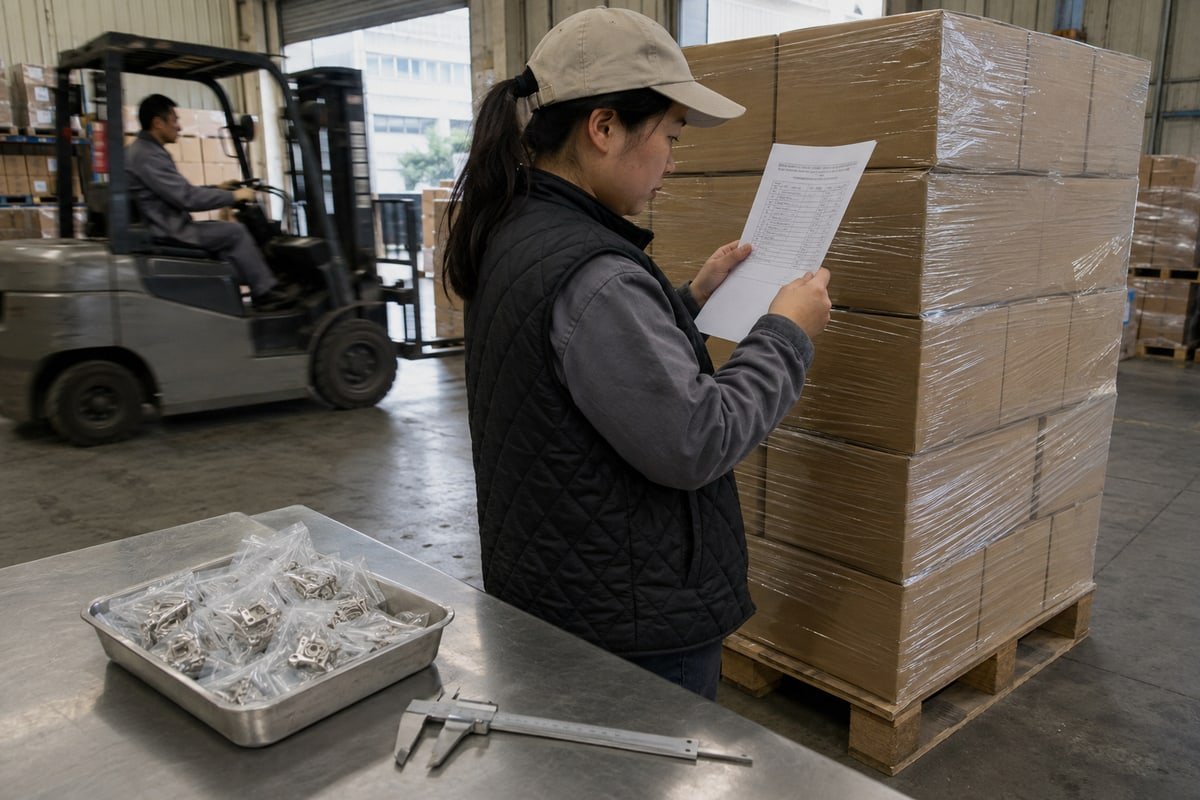
Neither route is automatically right. Here is how the two options compare in practice:
| Factor | Direct to Factories | Through a Sourcing Partner |
|---|---|---|
| Supplier identity | Hard to verify remotely | Verified through factory audits |
| Trading company risk | High on marketplaces | Production location checked on-site |
| Quote screening | You compare alone | Structured side-by-side comparison |
| MOQ flexibility | Factory terms apply | Negotiated using local relationships |
| Production follow-up | Email and video calls | In-person visits and inspections |
| Language and specs | Your responsibility | Handled by a bilingual team |
The biggest hidden risk in the direct route is not price. It is identity. A polished quotation proves nothing about who actually makes the product. Many “manufacturers” on online marketplaces are trading companies, and buyers increasingly ask for proof of factory legitimacy and production location before committing. That verification is nearly impossible to do well from another continent.
This is where our team in Suzhou earns its place. We sit inside the Yangtze River Delta, with practical access to manufacturing clusters across Jiangsu, Zhejiang, and Shanghai. When a client sends us an RFQ, we distribute it to pre-screened suppliers, visit factories, audit capabilities against the spec, and negotiate terms—including workable Minimum Order Quantity levels for smaller buyers that factories might otherwise deprioritize. We are not a factory ourselves. We act as the buyer's purchasing team on the ground, which matters most when something in production goes sideways and someone needs to be physically present to fix it.
If you already have audited suppliers and an established relationship, going direct is reasonable. If you are quoting a new product with unknown suppliers, the partner route removes the most expensive unknowns.
How do I compare quotations from multiple Chinese manufacturers after sending my RFQ?
Three quotations for the same hardware fitting once landed on my desk, and the cheapest one quietly excluded tooling, testing, and export packing. That quote was actually the most expensive.
Compare quotations using a standardized spreadsheet with identical fields: unit price by quantity tier, tooling costs, sample and testing fees, packaging, Incoterms basis, lead time, payment terms, and quotation validity. Convert every quote to landed cost before ranking suppliers on price.
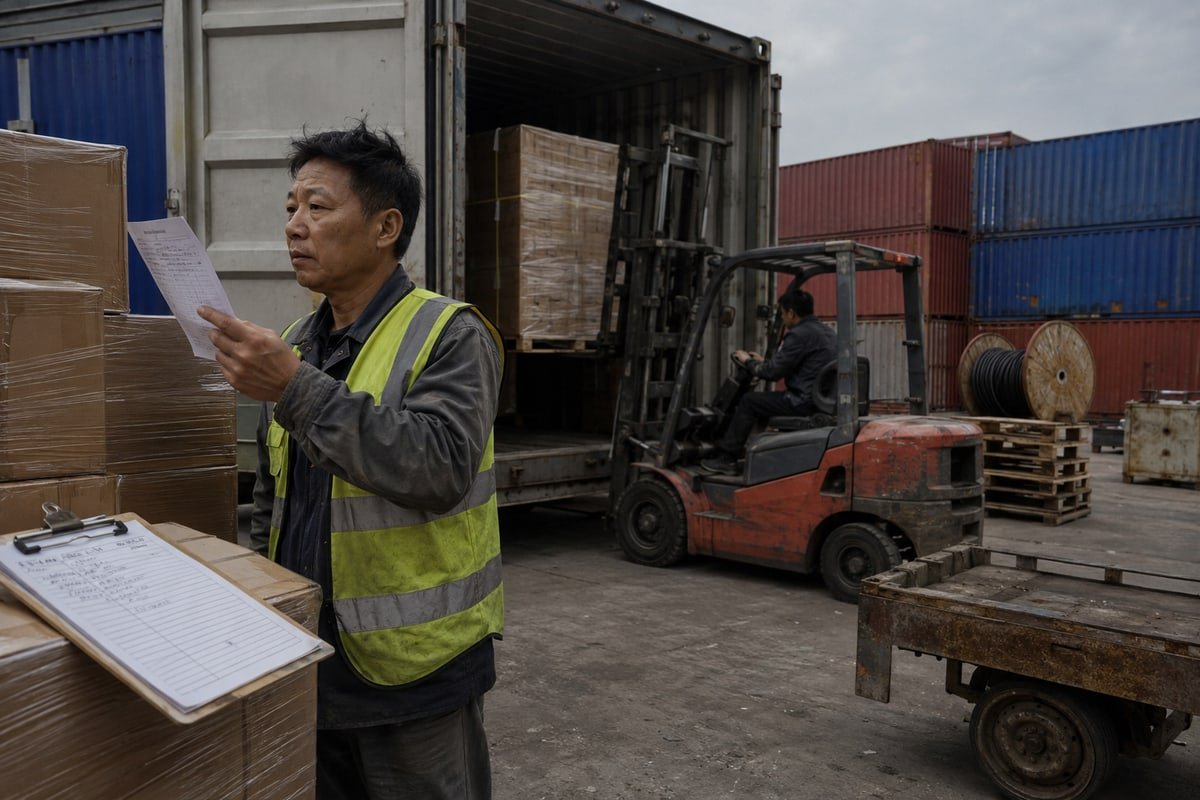
The only fair comparison is an apples-to-apples comparison. When we build quote comparisons for clients, we follow the same process every time:
- Mandate a uniform response format. Send suppliers an Excel template with fixed fields. Freeform quotes cannot be compared reliably.
- Break out every cost line. Unit price by tier, tooling costs, mold and setup fees, sample production charges, sample freight, testing or inspection fees, and retail packaging setup must appear as separate figures—never one lump sum.
- Fix the trade-term basis. Request at least FOB and, where useful, DDP pricing so logistics and customs assumptions 3 are visible. A low EXW price often loses to a higher FOB price once handling is added.
- Normalize currency and validity. Ask for quotes in USD and RMB, or agree on an exchange-rate assumption. Confirm the validity window—around seven days is common, so plan your decision timeline accordingly.
- Score the non-price factors. Lead time, payment stages, communication quality, and sample turnaround all predict how production will actually go.
A simple comparison matrix
| Field | Supplier A | Supplier B | Supplier C |
|---|---|---|---|
| Unit price at 1,000 / 5,000 pcs | — | — | — |
| Tooling costs | — | — | — |
| Sample cost and lead time | — | — | — |
| Testing / inspection fees | — | — | — |
| Incoterms basis (FOB / DDP) | — | — | — |
| Production lead time | — | — | — |
| Payment terms | — | — | — |
| Quotation validity | — | — | — |
For buyers selling into the EU, two newer fields are worth adding: Tier-2 transparency, meaning where the supplier's raw materials and components come from, and estimated product carbon footprint 4 per unit, which prepares you for emerging reporting frameworks like CBAM. Some buyers also ask about digital workflow compatibility—whether a supplier can share real-time production data. Few factories excel here yet, but the question itself reveals how organized a supplier is.
Conclusion
A strong RFQ turns guesswork into comparable numbers. Define specs, quantities, quality, and terms clearly. If managing Chinese suppliers from overseas feels risky, our Suzhou team carries that load.
Footnotes
1. ISO is the international authority for the sampling procedures and AQL standards used in manufacturing quality inspections. ↩︎
2. Wikipedia provides a detailed explanation of Minimum Order Quantity (MOQ) and its impact on manufacturing and inventory. ↩︎
3. The European Commission provides official guidelines on logistics and customs valuation for goods imported into the EU. ↩︎
4. The EPA provides authoritative guidance and data for calculating the greenhouse gas emissions associated with product manufacturing. ↩︎