
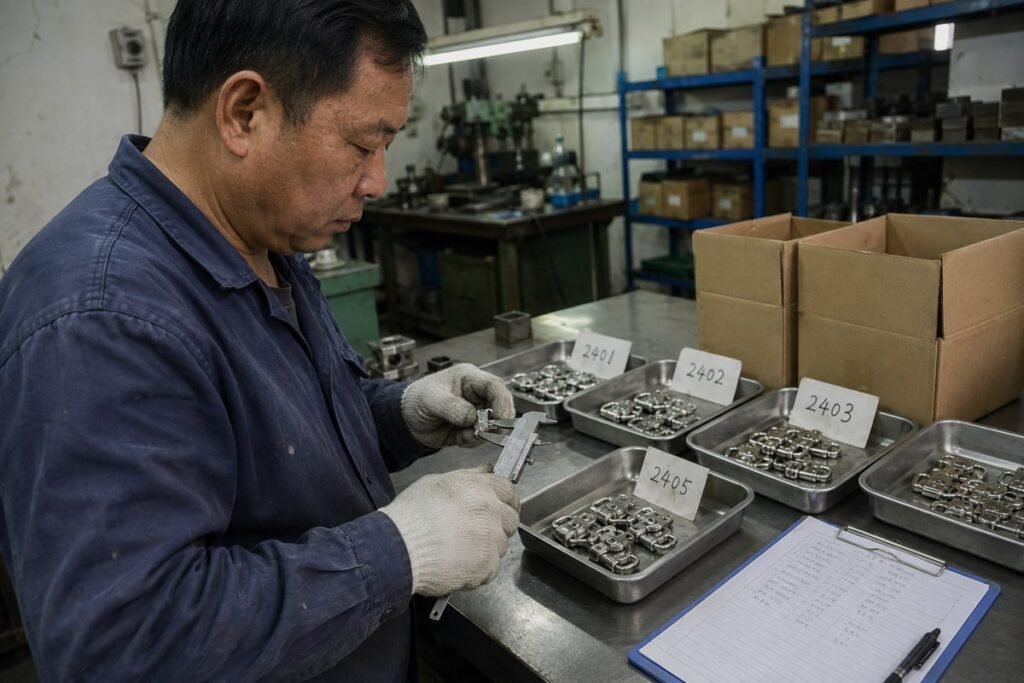
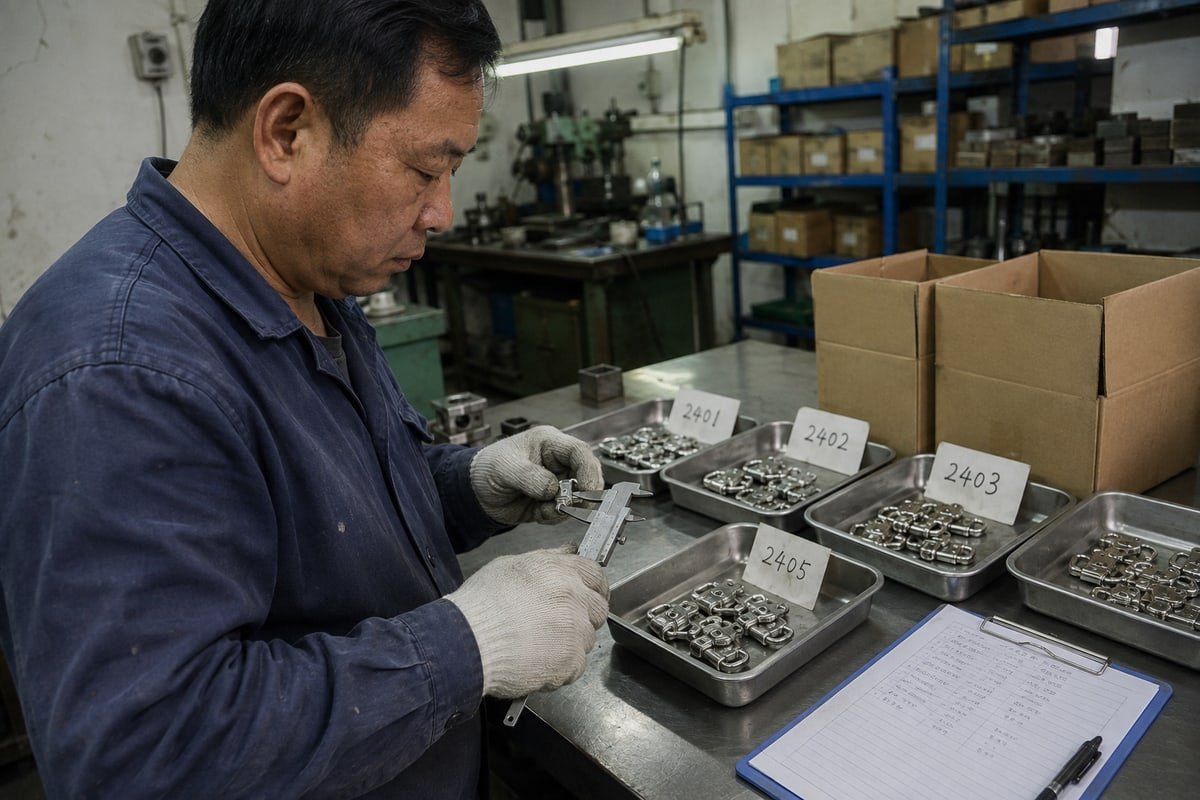
Five Chinese suppliers, one identical part, a 40% price spread — which quote is real? When Chinese suppliers give different prices for the same product, our Suzhou sourcing team investigates why.
Chinese suppliers give different prices for the same product because each quote reflects different assumptions about material grade, tolerances, packaging, tooling, quality control, Incoterms, and order volume — plus different cost structures and business models. Price gaps usually signal hidden specification differences, not simply cheap versus expensive factories.
In other words, most suppliers are not pricing the same thing. They are pricing their own version of it. Once you understand what each quote actually includes, the spread starts to make sense. This article breaks the problem into four practical questions buyers ask us every week.
How can I tell which suppliers are quoting fair prices for my order volume?
A Canadian hardware buyer recently sent us three quotes for the same stainless fitting 1 and asked which was honest. Our answer surprised him: none of them were quoting his product.
To judge whether a quote is fair for your volume, compare quotes against a written specification, confirm each supplier's real MOQ tier, verify whether you are dealing with a factory or trading company, and benchmark material and labor costs against the supplier's region and factory type.

Fairness only exists relative to a defined product. If your RFQ leaves gaps, every supplier fills those gaps with its own defaults. One assumes 304 stainless steel. Another assumes 201. One quotes bulk packaging. Another quotes retail boxes. The quotes look inconsistent, but each one may be internally honest.
Why identical photos produce different prices
A photo shows appearance. It does not show material grade, plating thickness, tolerances, or testing. When we prepare RFQs for clients, we write out full product specifications before requesting a single quote. That one step removes most of the unexplained spread.
| RFQ element | What suppliers assume if you leave it blank | Typical effect on price |
|---|---|---|
| Material grade | Their cheapest workable option | Pricing guides suggest low-end material substitutions can run roughly 15–25% below standard-grade benchmarks |
| Tolerances and finish | Workshop-level precision | Tighter tolerances raise cost through slower cycles and higher reject rates |
| Packaging | Bulk poly bags | Retail packaging alone can shift price by 10–20% |
| Quantity | Their preferred MOQ tier | Per-unit price falls as volume rises, so mismatched volumes are not comparable |
| Testing and certificates | None included | Compliance work adds real manufacturing overhead |
Benchmark against region and supplier type
Costs also vary by geography. Labor in some inland regions can run 30–40% below coastal areas like Guangdong in low-end factory scenarios, and export-oriented coastal factories carry more overhead for testing and compliance certifications. The trading company vs factory question matters too: a trading company's quote includes coordination and export handling, while a factory quote may not. Neither is automatically fairer — they are pricing different scopes of work. Our team in Suzhou verifies which type of supplier is actually behind each quote before we compare numbers.
Why do MOQ and customization requirements change the price so much?
Every custom part we negotiate carries the same trade-off: push the Minimum Order Quantity 2 down and the unit price climbs. Tooling and setup costs explain most of it.
MOQ and customization change price because fixed costs — tooling, molds, setup, sampling, and line changeover — are spread across the order quantity. Small orders carry more fixed cost per unit, while custom materials, finishes, and packaging add engineering work that standard catalog products avoid.
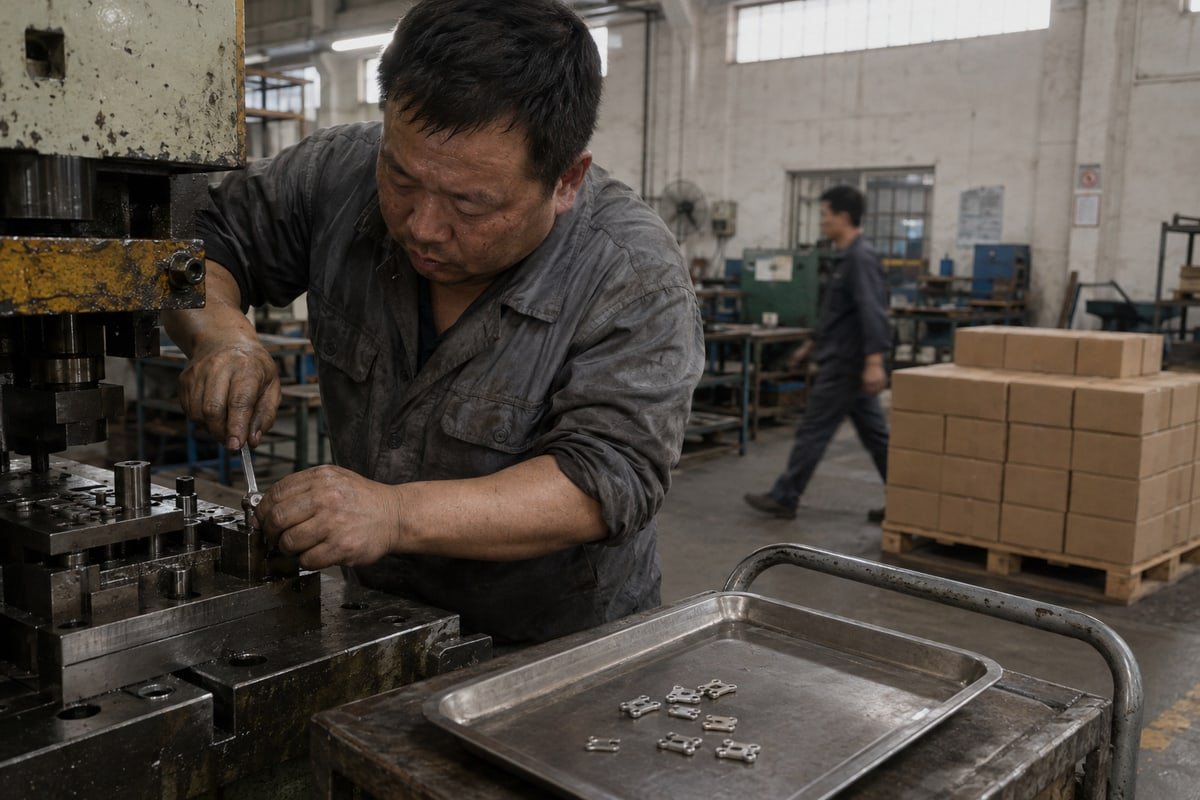
For parts that need molds, dies, fixtures, or print screens, how a supplier treats tooling can explain more quotation spread than almost anything else. Three factories can have nearly identical production costs and still quote wildly different unit prices, simply because each handles tooling differently.
| Tooling treatment | How it appears in the quote | Effect on comparability |
|---|---|---|
| Amortized into unit price | Higher unit price, no separate charge | Looks expensive at low volume, competitive at high volume |
| Quoted as a separate line | Lower unit price plus a one-time tooling fee | Easiest to compare, if you remember to add it back |
| Offered free with volume commitment | Lowest visible unit price | Cost is recovered through the MOQ you are locked into |
There is also a difference between prototype quoting and mass-production quoting. A workshop pricing a one-off sample uses different math than a factory pricing a repeat production run. Comparing the two directly misleads you.
Here is the process we follow to get comparable custom quotes:
- Build a complete Bill of Materials so every supplier prices identical inputs.
- Specify the exact quantity, or request pricing at two or three fixed volume tiers.
- Require tooling, sampling, and setup as separate line items.
- Confirm who owns the tooling after payment.
- Ask how the price changes at your realistic reorder volume, not just the first order.
Smaller buyers feel this hardest. Factories prioritize large customers, so a startup ordering below standard MOQ often gets a defensive, padded quote. Part of our work is matching buyers with suppliers whose economics actually fit their order size, then negotiating quantity tiers both sides can live with.
How do I compare quotes from multiple Chinese suppliers without missing hidden costs?
Our team learned this the hard way on early consolidation projects: quotes that look identical on paper land at very different total costs once freight, duties, and rework appear.
Compare quotes on a landed-cost basis: standardize the specification, require the same Incoterms, and ask each supplier to itemize tooling, packaging, testing, compliance certifications, and payment terms separately. Then add freight, duties, inspection, and sourcing agent fees to see the true total cost per unit.
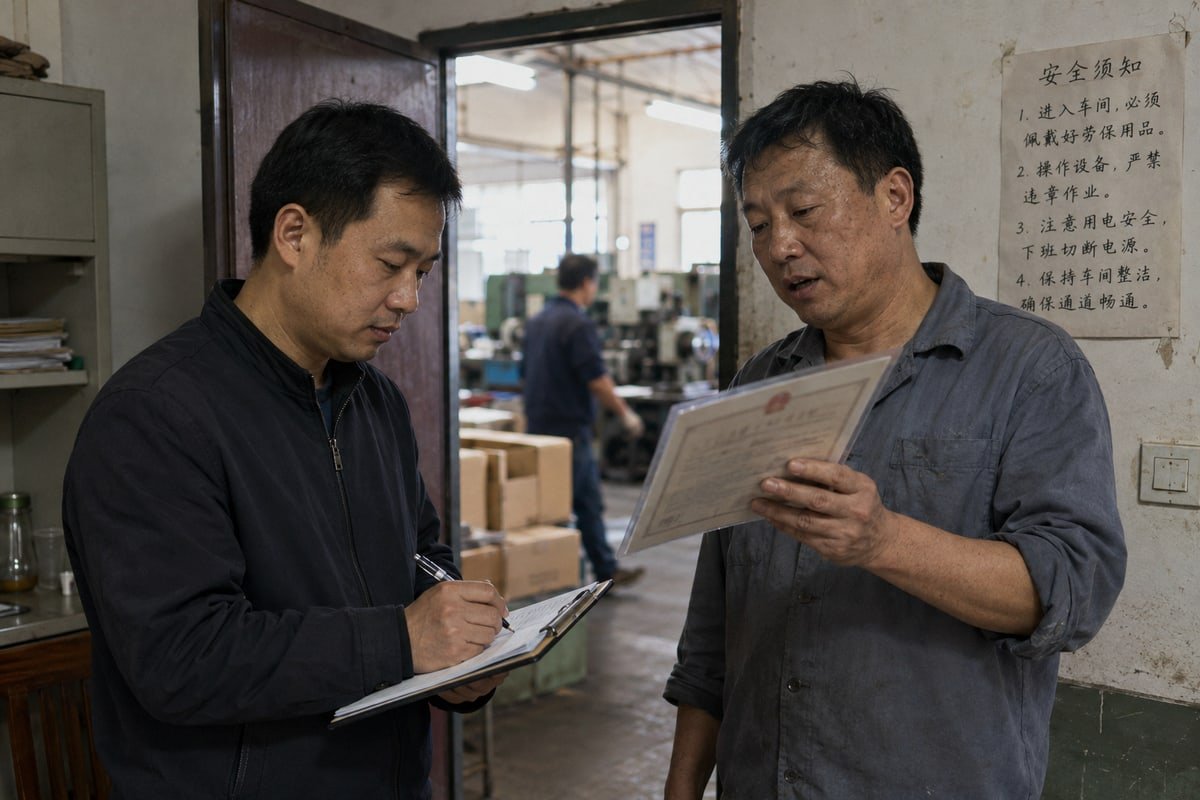
The unit price is only one line in your real cost. We have seen buyers pick a quote that was 8% cheaper on paper, then lose that margin twice over in freight surprises and rejected goods. A disciplined comparison closes those gaps before you commit money.
The hidden cost checklist we apply to every quote
| Hidden cost area | Question to ask the supplier | Risk if you skip it |
|---|---|---|
| Incoterms | Is this EXW, FOB, or something else? | An EXW quote looks cheaper but shifts inland freight and export handling onto you |
| Packaging | Bulk or retail? Who supplies inserts and cartons? | Packaging differences alone can create a 10–20% gap on consumer goods |
| Testing and QC | Which quality control standards apply, and is inspection included? | A quote without QC is not comparable to one with it |
| Certifications | Are compliance certifications included and verifiable? | Missing documents can block customs clearance in your market |
| VAT treatment | Is the export VAT rebate reflected in the price? | Rebate handling varies by region and product, and it quietly moves the number |
| Third-party costs | What are the inspection and sourcing agent fees for this project? | Support costs are real, but they are visible and controllable — unlike defect costs |
Standardize before you compare
One factory quotes with a retail box included. Another quotes bulk packing. A third separates tooling and delivery terms. Unless the RFQ is standardized, apples-to-apples comparison is impossible. When we run quote comparisons for clients, we rebuild every offer into one landed-cost format, at the same Incoterms, before anyone picks a winner. Only then does the cheapest number mean anything.
Should I always choose the lowest quote, or does that increase my sourcing risk?
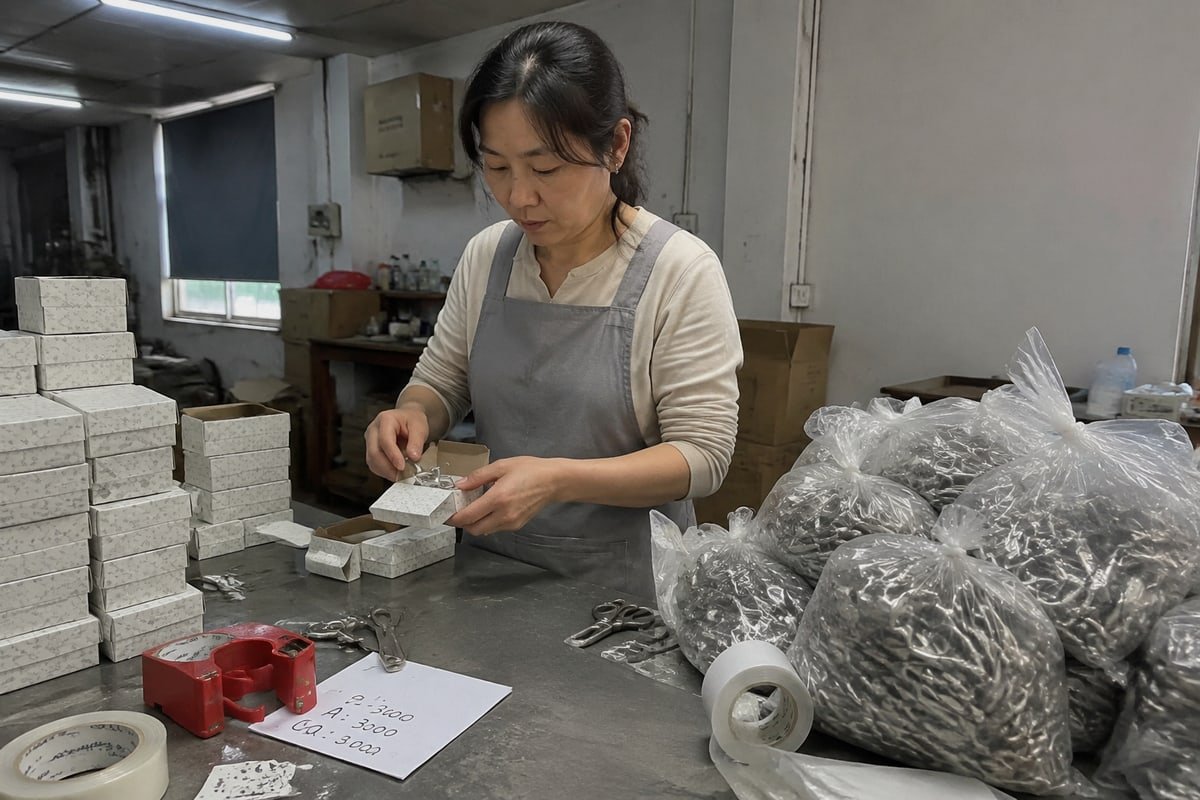
During a pre-shipment inspection 3, our inspectors measured wall thickness on a batch of fittings and found the steel grade downgraded from the approved sample. That supplier had quoted lowest.
No — the lowest quote is not automatically the best choice. Unusually low prices often reflect downgraded raw material quality, skipped quality control standards, missing compliance certifications, or penetration pricing that rises after the first order. Treat a low quote as a prompt to verify assumptions, not proof of a bargain.
Some buyers argue the lowest price is always best because savings are immediate and measurable. There is truth in that when specifications, QC, and terms are genuinely identical. But in our experience, they rarely are. The cheapest quote frequently omits something the higher quotes include — testing, better tolerances, warranty support, or honest material grades. The saving is visible; the risk is not.
A second objection we hear: factories just quote their costs, so a low quote means an efficient factory. Sometimes. But quotes are also strategic. A factory with idle capacity may price low to fill production slots. A factory with a full order book pads its price. Some suppliers quote low to win the first order and recover margin later through increases or substitutions. Others practice outright price discrimination based on your country or perceived buying power. Price reflects the market position of the supplier, not just its cost sheet.
External factors widen the spread further. Tariffs, fuel surcharges, and raw material swings hit suppliers differently depending on inventory timing. Provincial energy quotas under dual-control policies 4 can raise overhead or disrupt reliability for some factories. Larger suppliers with currency hedging can hold USD prices steady while smaller ones cannot. Even a supplier's corporate social credit standing affects its access to affordable working capital — and desperate suppliers quote desperately.
| Red flag in a low quote | What it may hide | How we verify it |
|---|---|---|
| Price far below the cluster of other quotes | Material substitution or skipped QC | Factory audit plus material certificates and sample testing |
| Vague answers on certificates | Fake or absent compliance documents | Independent verification before deposit |
| Eagerness despite tiny order size | Idle capacity or penetration pricing | Ask for reorder pricing in writing |
| No warranty or after-sales terms | Zero support once goods ship | Negotiate defect remedies into the PO |
Problems should be discovered in China, before the goods ship — not after they arrive at your warehouse. That principle drives how we vet every low quote.
Conclusion
Price spreads are information, not noise. Read them correctly and you buy better; ignore them and you pay later. Our Suzhou team helps buyers decode quotes before money moves.
Footnotes
1. ISO standards for stainless steel components ensure material consistency and quality in global manufacturing. ↩︎
2. Explains the economic rationale behind MOQ requirements in manufacturing and supply chain management. ↩︎
3. The WTO provides the international framework and rules for pre-shipment inspection services in global trade. ↩︎
4. The International Energy Agency monitors China’s energy regulations and their impact on industrial sectors. ↩︎