
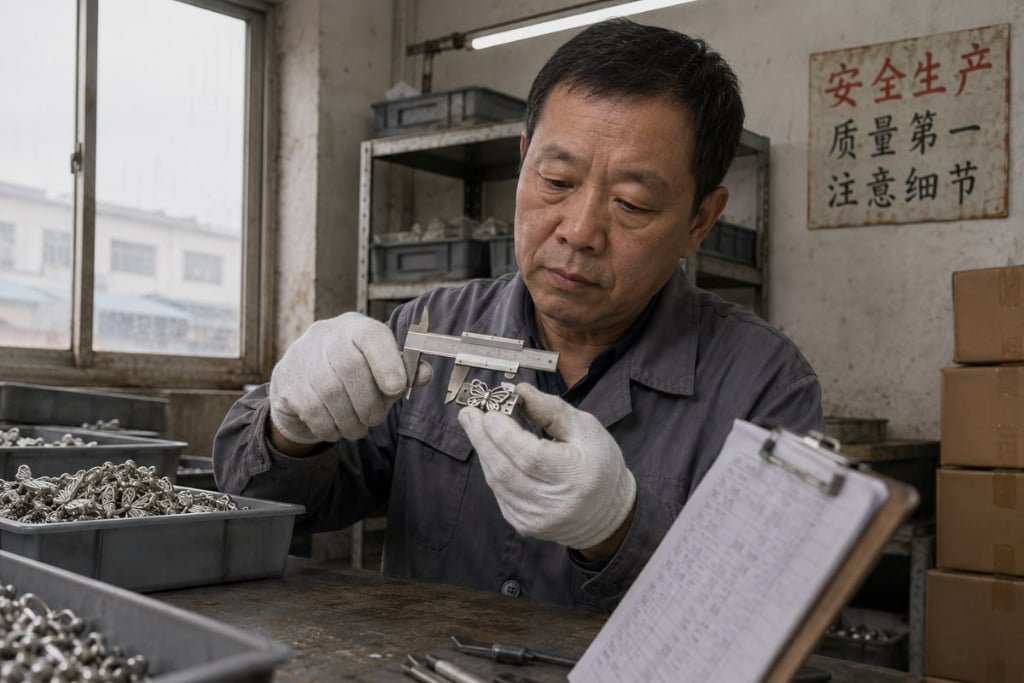
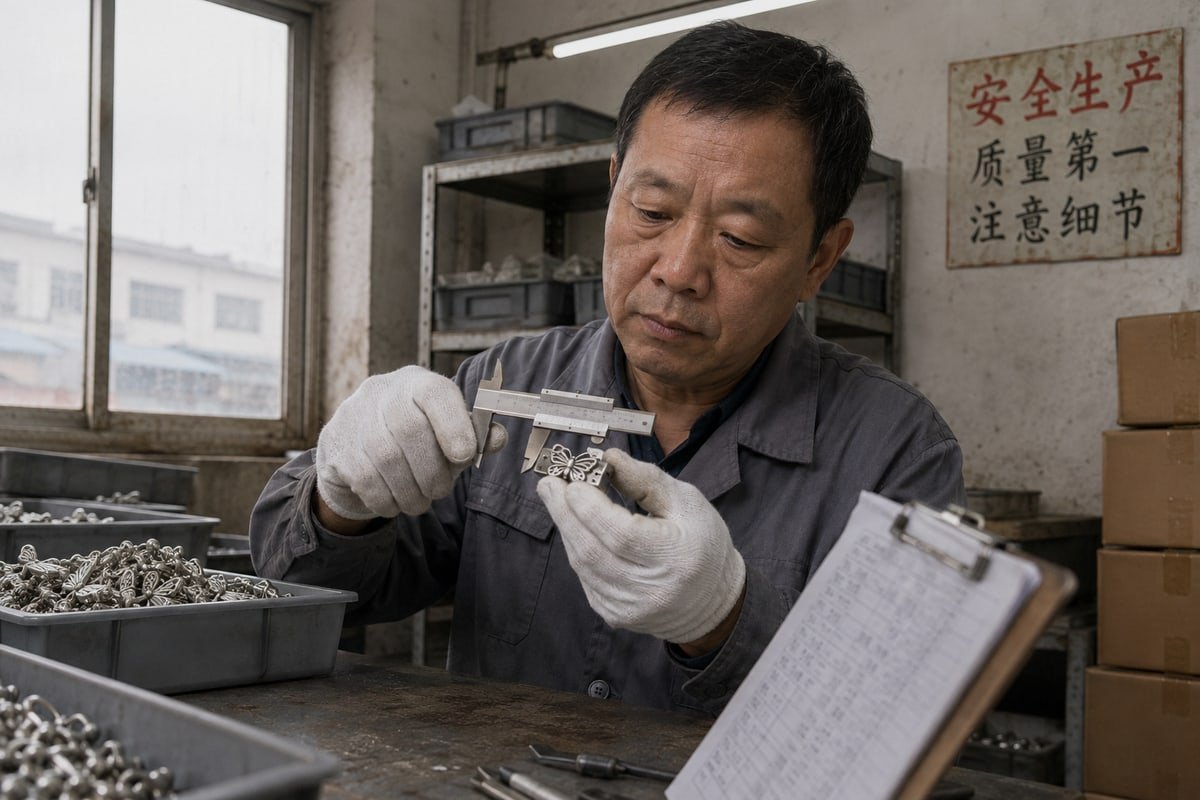
The approved sample looked right. Then bulk production arrived off-spec. Our inspection team in Suzhou sees this gap constantly—and it is preventable with the right controls before mass production starts.
To ensure bulk production matches sample quality, convert the approved sample into a signed golden sample, freeze specifications and materials, run a pre-production sample on the real line, monitor production in-process, and verify the finished order with an AQL-based pre-shipment inspection before release.
Matching the sample is not a single QC event. It is a process-control problem. A sample proves the factory can make one good unit. It does not prove the factory can make five thousand. Below, I will walk through the system we use on real orders: locking the standard, writing it into the agreement, timing the inspections, and verifying the supplier’s internal controls.
How can I stop mass production quality from drifting away from my approved sample?
Last year we inspected a hardware order where unit 500 measured 0.4mm wider than unit 50. Same factory, same week. The line had drifted, and nobody had noticed.
Stop quality drift by treating the approved sample as a controlled standard: sign and date one golden sample, lock the tech pack and Bill of Materials, require written approval for any change, and check early production units against the sample before the full run continues.
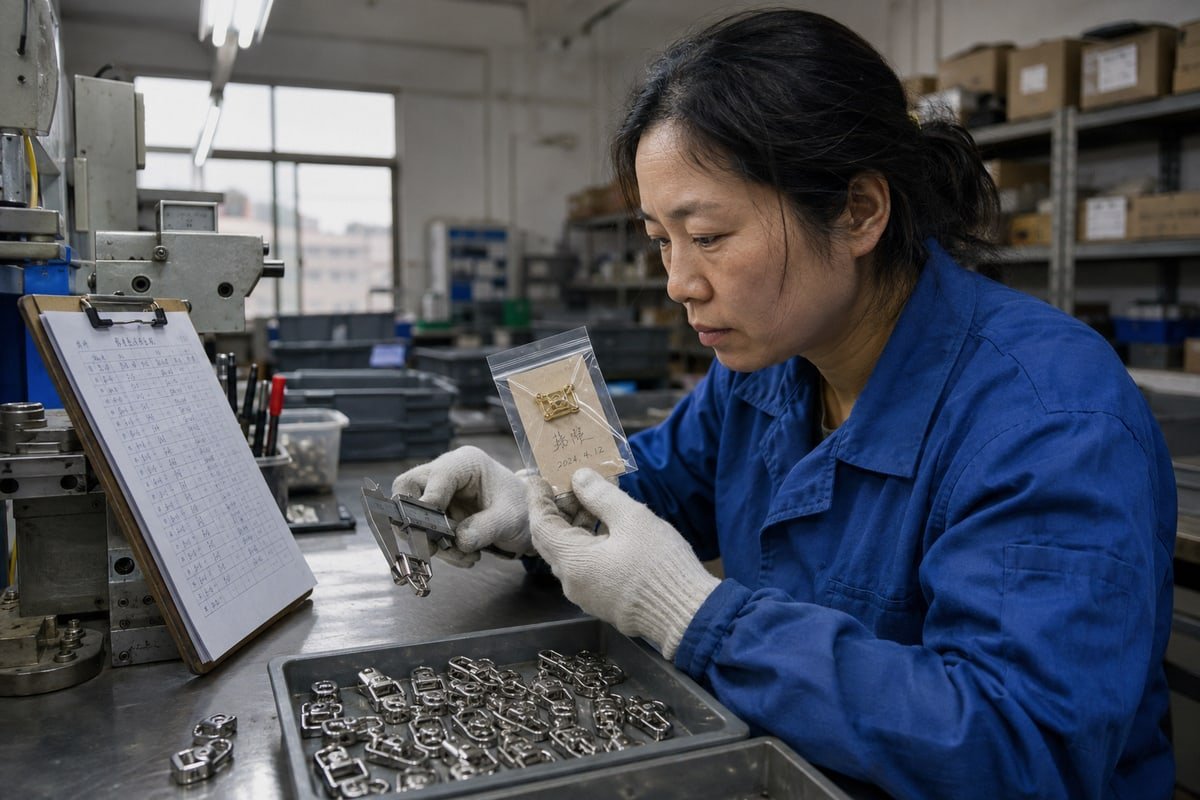
Quality drift rarely comes from bad faith. It comes from small, unmanaged changes. A different fabric lot arrives. A machine setting gets adjusted. A new operator joins the line. Each change seems minor. Together, they push bulk output away from your approved sample.
There is also a structural reason for the gap. A sample is often made by a senior technician, by hand, with no time pressure. Mass production is made by a line of operators working to a daily target. Those are two different jobs. If the process is not industrialized, the sample is a proof of concept—not a promise of mass production consistency.
Know which sample actually governs production
Version confusion causes more disputes than any other single issue we see. Development samples, revised samples, and pre-production samples pile up over months. If the factory references version two and you reference version four, both sides will believe they are right. Identify one master reference. Sign it, date it, photograph it, and keep a duplicate on your side.
The five drift categories and how to block them
| Drift cause | Typical example | Prevention |
|---|---|---|
| Material variation | Different dye lot, ingredient lot, or LED bin | Approve lots and supplier codes in writing before production |
| Process variation | Changed machine settings, new operators, altered sequence | Validate the line with a pre-production sample; document settings |
| Spec ambiguity | No written manufacturing tolerances, vague color targets | Convert the sample into a measurable product specification sheet |
| Unapproved substitutions | Swapped trims, coatings, packaging, or labels | Require written change approval in the purchase order |
| Weak inspection timing | Defects found only after packing | Add in-line production monitoring and early-unit checks |
Some factories will argue a sample is only a guide and that bulk will naturally vary. Our answer is simple: if variation matters to you, define the acceptable limits in writing. Undefined variation is where drift lives.
What should I include in a golden sample agreement to protect my bulk order?
A US buyer asked me why his factory rejected a claim when bulk differed from the sample. Simple answer: nothing was signed, dated, or written into the purchase order.
A golden sample agreement should identify the signed and dated master sample, list measurable manufacturing tolerances, reference the frozen product specification sheet and Bill of Materials, define the AQL for inspection, tie payment to inspection results, and require written approval before any change.
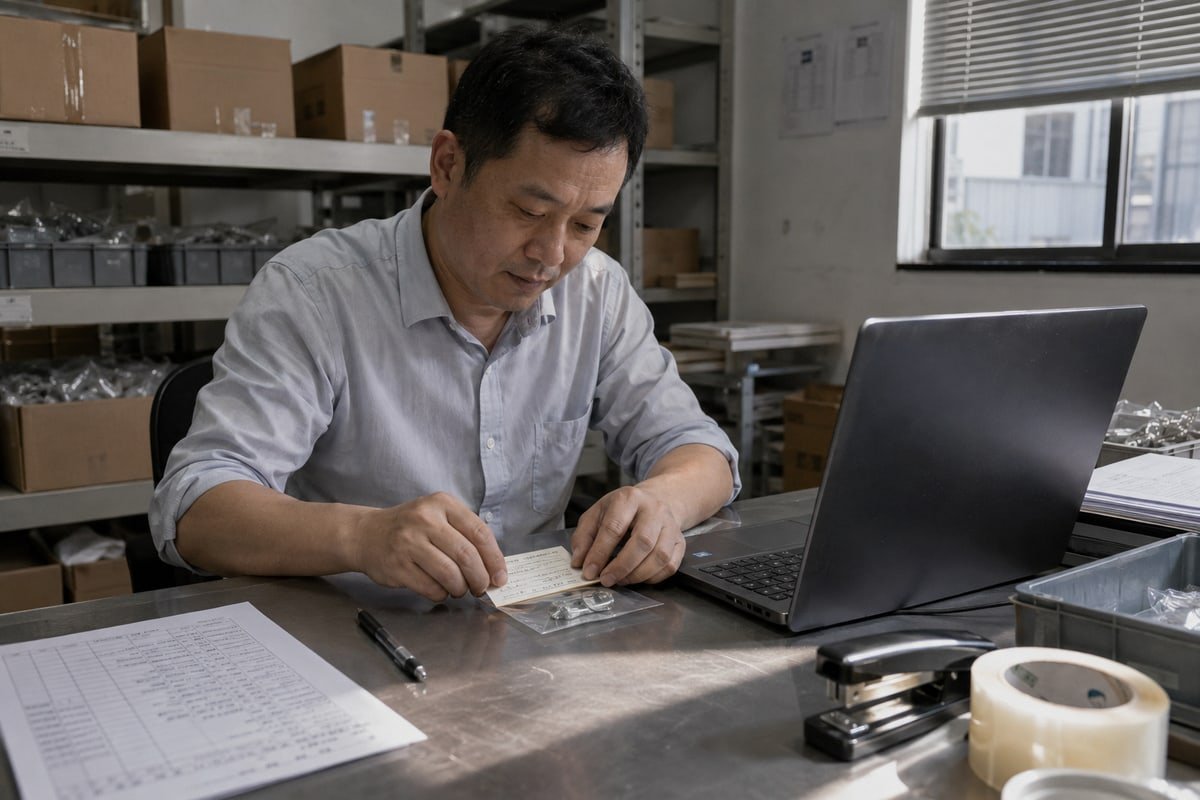
Quality alignment is contractual, not just technical. When a dispute happens, the only thing that counts is what was agreed in writing before production started. A golden sample protocol works because it removes the argument over which sample was approved. Both parties sign and date one physical unit. The factory keeps it. You keep a duplicate or a full photo record. Third-party inspectors reference it during every quality control inspection.
But the sample alone is not enough. It must be backed by objective criteria. "Match the sample closely" is not enforceable language. "Length 120mm ±0.5mm" is. Your agreement should translate subjective qualities into measurable proxies wherever possible.
Measurable criteria by product category
| Category | What to specify with tolerances |
|---|---|
| Textiles and apparel | GSM, thickness, usable width, stretch recovery, colorfastness, shrinkage, seam construction |
| Cosmetics and formulated goods | pH, viscosity, emulsification temperature, batch traceability, stability at 40 °C / 75% RH |
| Ceramics | Dimensions, weight, glaze defect limits, color variation, wobble/stability |
| Electronics and LED | Component bins, electrical values, optical targets, packaging and label accuracy |
Clauses we recommend writing into the purchase order
Beyond the sample itself, we push clients to include: the frozen tech pack and Bill of Materials 1 as attachments; approved material swatches with supplier lot codes; the Acceptable Quality Level 2 for the final inspection; the requirement of a pre-production sample from the actual line; payment milestones tied to third-party inspection 3 results; and a clause stating that any substitution—material, construction, finishing, packaging, or labels—needs written buyer approval first. For batch-controlled products such as cosmetics, add retained samples kept for the shelf life plus six months. Tighter controls do add cost and time. In our experience, they cost far less than rework, returns, or a rejected shipment.
How do I use inspections and production follow-up to catch quality issues before shipment?
Every inspection costs money and time. Skipping them costs more. We weigh this trade-off on every project we follow, and inspection timing usually matters more than inspection quantity.
Use a multi-gate system: approve a pre-production sample from the actual line, inspect the first finished units, run in-line quality control inspection during production, and finish with an AQL-based pre-shipment inspection that compares finished goods directly against the golden sample.
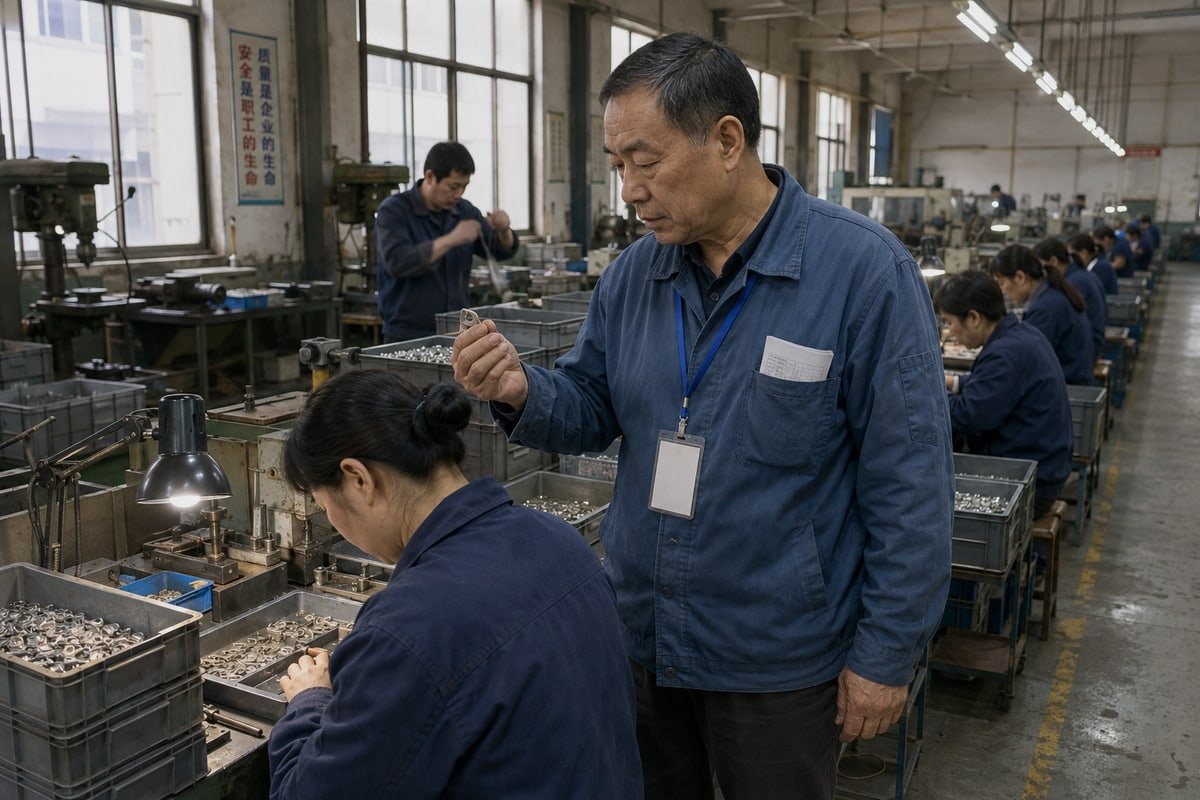
The worst time to discover a defect is after the whole order is packed. At that point, your options are rework, discount negotiation, or rejection—all expensive. A multi-gate inspection plan finds problems while they are still cheap to fix. When we run production follow-up for clients from our base in Suzhou, we structure it around four gates.
The four inspection gates
| Gate | Timing | What it verifies |
|---|---|---|
| Pre-production sample | Before mass production starts | Made on the actual production line, not a sampling room; validates machine settings and operator methods |
| First article / top-of-production | First units off the line | Direct comparison against the golden sample; stop the line if deviations appear |
| In-line inspection (DUPRO) | 20–60% of production complete | Process stability, workmanship, in-line production monitoring of critical assembly stages |
| Pre-shipment inspection | Order 100% complete, 80%+ packed | AQL statistical sampling against the spec, packaging, labels, and quantities |
The pre-production sample deserves emphasis. Many factories produce it in a specialized sampling room with their best technician. Insist that it comes off the real line. Otherwise you have validated nothing about mass production.
For subjective checks, control the conditions. One supplier guide for ceramics recommends comparing 10–20 units against the reference and checking 5–10 units per SKU for dimensions and weight under consistent lighting. For textiles, approve bulk lab dips and fabric swatches separately for every production run, because dye lots vary between runs even at good mills.
Some newer tools are pushing this further—AI computer vision comparing units against a digital twin of the approved sample, and process telemetry monitoring on machines. Most buyers do not need that yet. Disciplined gates, applied on time, catch the large majority of issues before shipment.
Which supplier controls should I verify to make sure bulk output stays consistent across the whole order?
One lesson from years of production follow-up in the Yangtze River Delta: a factory's internal controls predict mass production consistency better than any sample they send you.
Verify that the supplier controls incoming materials against approved swatches and lot codes, follows documented Standard Operating Procedures, keeps machine settings stable, trains operators on the standard, retains reference samples, and records batch traceability so deviations can be found and corrected quickly.
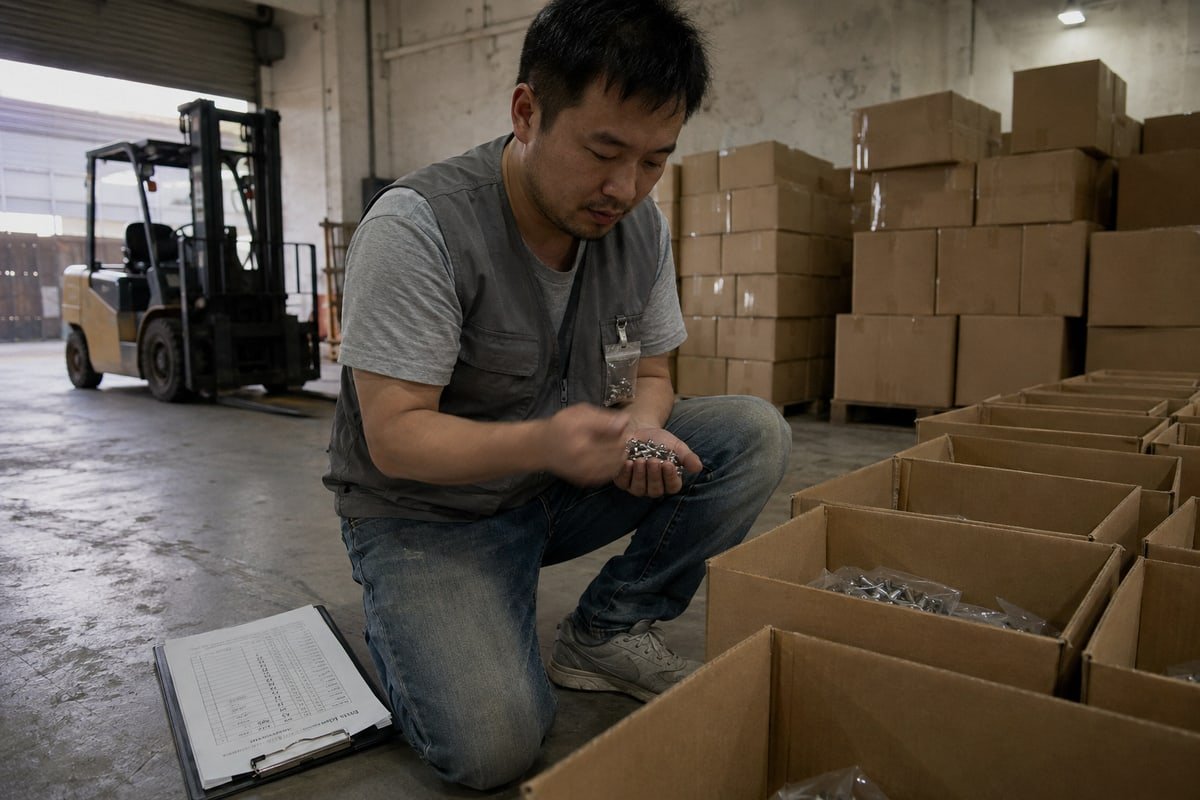
Your inspections check the output. The supplier's own systems control the process. Both are needed, because no external inspector watches every unit. When we audit factories for clients, we look past the showroom and check whether the daily production system can hold a standard across thousands of units. Here is the sequence we verify, in order of impact:
- Incoming material control. Does the factory check raw materials 4 against approved swatches, supplier codes, and lot references before they enter production? Substituted fabric lots, trims, coatings, ingredients, and component bins are the single most common hidden cause of bulk divergence.
- Documented Standard Operating Procedures. Are work instructions written and posted at each station, or does the process live in one supervisor's head? Undocumented processes drift the moment that person is absent.
- Machine and process parameter control. Are settings recorded and locked for the run? For formulated goods, this means logged emulsification temperature, homogenisation time, pH, and viscosity per batch.
- Operator training against the standard. Do line workers have access to the golden sample or boundary samples showing acceptable and unacceptable output?
- Internal quality assurance protocols. Does the factory run its own in-process checks with records, or rely entirely on final sorting?
- Retained samples and batch traceability. Are reference units kept from each run, with batch codes that let you trace a deviation back to a specific lot, shift, or machine?
A supplier that resists showing these controls is telling you something. On projects we manage, weak answers here usually mean we recommend either corrective actions before the order or a different factory entirely. Verifying this before you commit is far cheaper than discovering it at the pre-shipment inspection.
Conclusion
An approved sample proves one good unit exists. Consistency demands more: a signed golden sample, frozen specs, validated lines, timed inspections, and verified supplier controls—enforced before shipment, not after arrival.
Footnotes
1. Authoritative business definition of the comprehensive list of items required to create a finished product. ↩︎
2. The international standard for sampling procedures by attributes used in manufacturing quality control. ↩︎
3. International standard for the operation of various types of bodies performing inspection in manufacturing. ↩︎
4. Authoritative definition of the basic substances or components used in the primary production of goods. ↩︎