
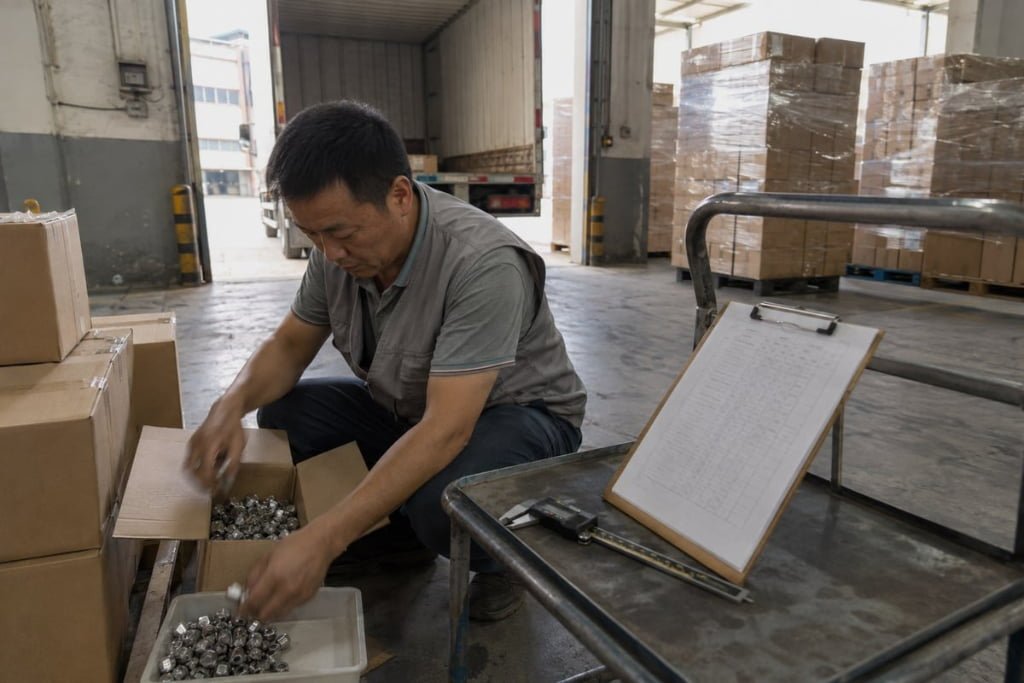
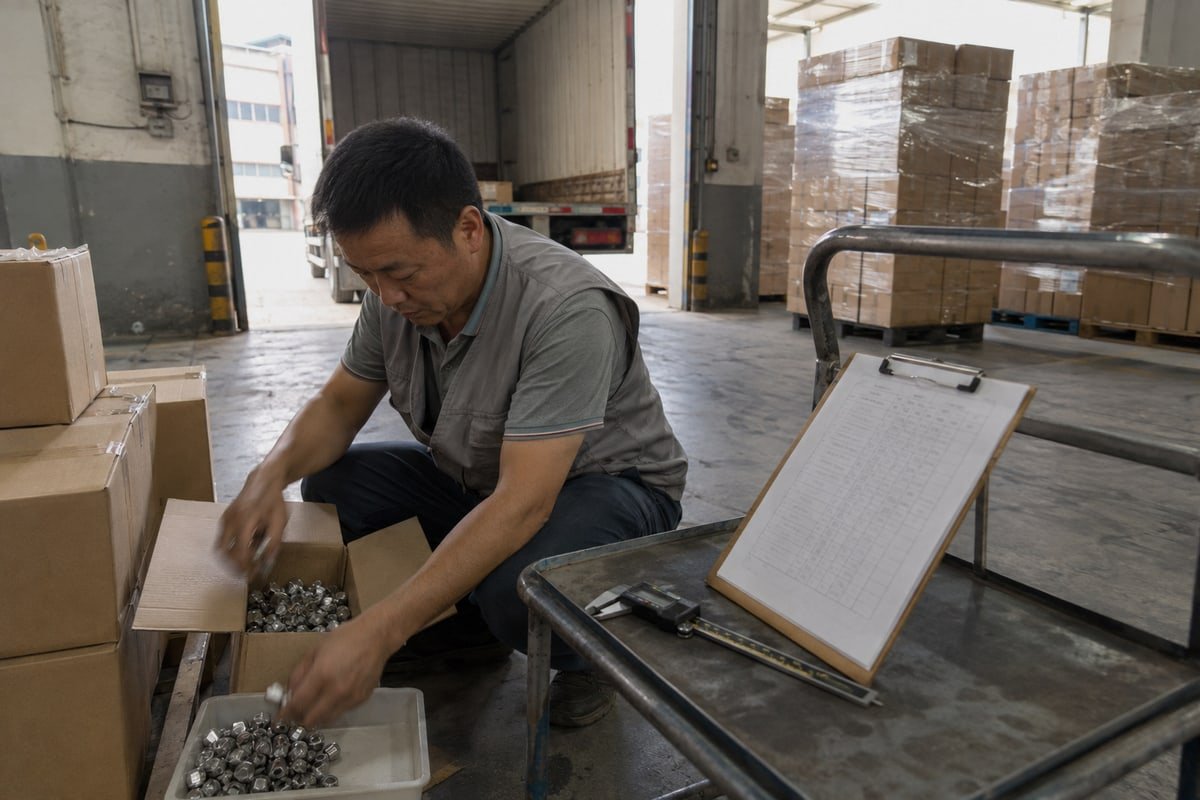
A container arrives full of defects—after [final payment](https://tommysourcing.com/?p=797). Our sourcing team in Suzhou sees this story too often, and AQL exists to prevent exactly that scenario.
AQL (Acceptable Quality Limit) is a statistical sampling standard, based on ISO 2859-1 and ANSI/ASQ Z1.4, that importers use to accept or reject a shipment by inspecting a random sample and comparing defect counts against pre-agreed limits—typically 0 for critical, 2.5 for major, and 4.0 for minor defects.
That definition packs in a lot. In this article, I will unpack it piece by piece. You will learn what AQL means in plain English, how to pick the right level for your order, what happens when a shipment fails, and how we apply these standards with Chinese suppliers every week.
What is AQL and why does it matter for my product inspections?
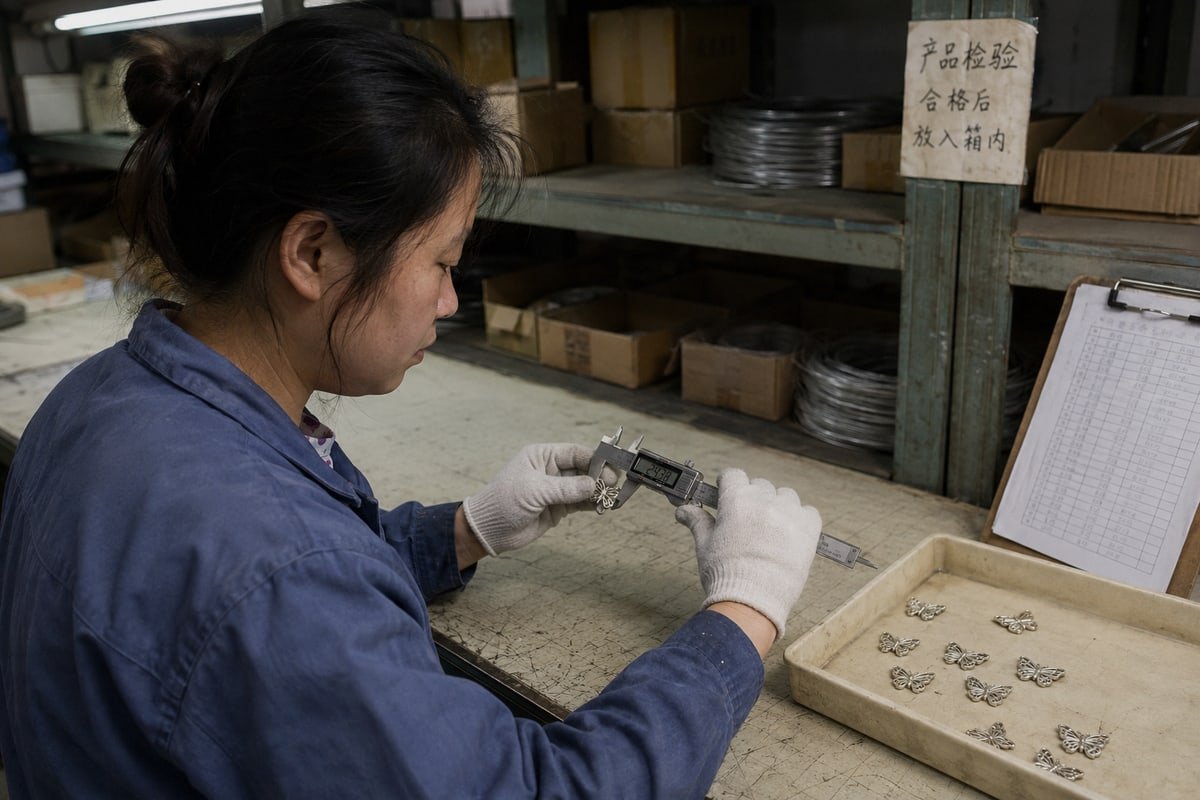
Last month our inspector in Suzhou measured a small metal clasp with a digital caliper, logging each unit against a sample plan. That routine check saved a buyer's entire order.
AQL is the worst defect level you will tolerate in an order, measured through statistical sampling rather than 100% inspection. It matters because it turns quality into an objective pass/fail decision, letting importers control defect risk without paying to check every single unit.
Full inspection of a 10,000-unit order is slow and expensive. Skipping inspection entirely is reckless. AQL sits in the middle. It gives you a mathematically sound way to judge a whole lot by checking a random sample. That is why AQL sits behind almost every pre-shipment inspection 1 we coordinate for buyers in the US, Canada, and Europe.
Two Names, One Meaning
You will see both "Acceptable Quality Level" and "Acceptable Quality Limit 2" in sourcing materials. The standards bodies more recently renamed it "acceptable quality limit," but industry usage is still mixed. Do not let the wording confuse you. The operational meaning is identical: it is the threshold that decides whether your lot passes or fails.
Defect Classification: Critical, Major, Minor
AQL inspections separate defects by severity. Getting this defect classification right is the most practical part of the whole system, because different defect types carry different tolerances. Consumer-goods sourcing commonly uses the 0 / 2.5 / 4.0 pattern for critical, major, and minor defects.
| Category | What It Covers | Common AQL | Example on a Metal Fitting |
|---|---|---|---|
| Critical | Safety hazards or legal violations | 0 (zero tolerance) | Sharp burr that can cut skin |
| Major | Product fails to function or sell | 2.5 | Clasp will not close; dimension out of tolerance |
| Minor | Cosmetic flaws; unit still usable | 4.0 | Light scratch; small packaging scuff |
What AQL Does Not Do
Here is the honest part many guides skip. AQL is probabilistic. A lot can pass sampling and still contain some defective units. It is a risk-management tool, not a promise of perfection. In my experience, buyers who understand this pair AQL with clear specifications and supplier accountability—and they get far better outcomes than buyers who treat a passed inspection as a quality guarantee.
How do I choose the right AQL level for my order size?
Every sampling plan we set involves a trade-off: inspect more units and pay more, or inspect fewer and accept more risk. Order size drives that decision.
Start with General Inspection Level II under ANSI/ASQ Z1.4 or ISO 2859-1, find your sample size code letter from the lot size, then apply AQL 0 for critical, 2.5 for major, and 4.0 for minor defects. Tighten these values for high-risk or premium products.

The AQL table looks intimidating until you see it applied step by step. I walk new buyers through it in five minutes. Here is the same walkthrough.
Step-by-Step: Reading the AQL Table
- Confirm your lot size. This is the total order quantity for one product.
- Pick an inspection level. General Inspection Level II is the industry default.
- Cross-reference lot size and level to find your sample size code letter.
- Convert the code letter into a sample size.
- Read the acceptance number (Ac) and rejection number (Re) for each AQL value.
- Inspect the random sample. If defects exceed Ac, the lot is rejected.
Inspection Levels Compared
| Level | Sample Size | Best For |
|---|---|---|
| General Level I | Smaller | Low-risk goods, trusted suppliers, budget limits |
| General Level II | Standard | Most shipments; the default balance of cost and risk |
| General Level III | Larger | High-risk goods, new suppliers, past quality failures |
A Worked Example
Suppose you order 5,000 metal fittings. Under Level II, the table gives code letter L and a sample size of 200 units. Here is how nearby lot sizes compare at AQL 2.5 for major and 4.0 for minor defects:
| Lot Size | Code Letter | Sample Size | Major (2.5) Ac / Re | Minor (4.0) Ac / Re |
|---|---|---|---|---|
| 501–1,200 | J | 80 | 5 / 6 | 7 / 8 |
| 1,201–3,200 | K | 125 | 7 / 8 | 10 / 11 |
| 3,201–10,000 | L | 200 | 10 / 11 | 14 / 15 |
So for your 5,000-unit order: inspect 200 units. Eleven major defects means rejection. Ten means acceptance. Any critical defect fails the lot, because critical is set at zero.
Small Lots and Stricter Plans
One nuance for e-commerce and DTC brands: standard AQL tables lose statistical confidence on very small lots. For micro-batch and on-demand orders, zero-acceptance sampling plans (c=0) make more sense—any defect in the sample rejects the lot. We also tighten AQL values for products where a single failure damages the brand, regardless of order size.
What happens if my shipment fails an AQL inspection?
A US hardware importer once called me in a panic after a pre-shipment inspection failed on major defects. His deadline was three weeks away. We still saved the order.
A failed AQL inspection means the defects found in the sample exceeded the rejection number, so the lot is rejected. The importer then typically withholds final payment and requires the supplier to sort, rework, or replace the goods, followed by a re-inspection before shipment.
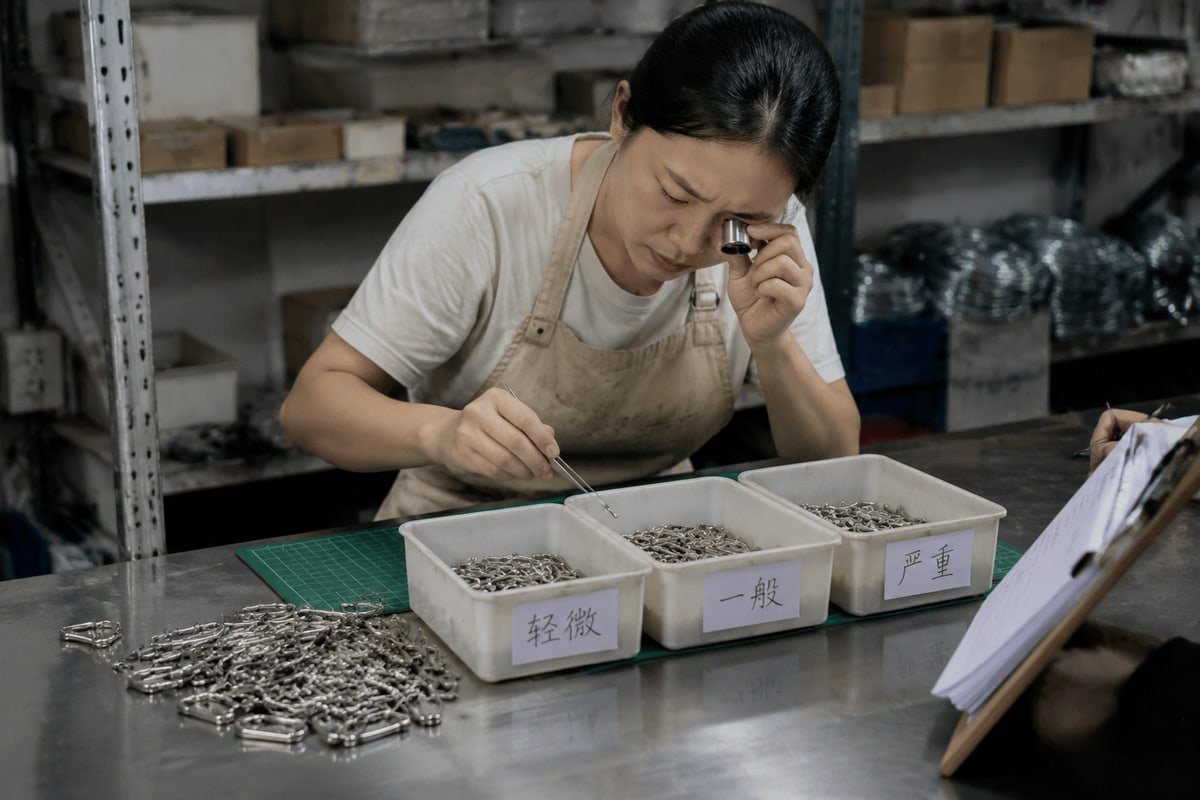
A rejection is not the end of the order. It is a decision point. You, the buyer, still control what happens next. In practice, we see five common paths.
| Option | What It Means | When It Fits |
|---|---|---|
| Accept on concession | You accept the lot despite the failure | Defects are cosmetic and deadlines are tight |
| Sort and rework | Factory does 100% sorting, fixes defective units | Defects are repairable; time allows |
| Replace units | Factory produces new units to replace rejects | Defects cannot be reworked |
| Negotiate a discount | You accept goods at a reduced price | Defects lower value but goods are sellable |
| Reject the order | You refuse shipment entirely | Critical defects or repeated failures |
Why Payment Timing Is Your Leverage
Here is the lesson that hardware importer learned: never release the balance payment before a passed inspection. Once the supplier holds full payment, your negotiating position collapses. We structure purchase orders 3 so that re-inspection costs after a failure fall on the supplier. That clause alone changes factory behavior.
Switching Rules and Supplier History
The standards also include switching rules. A supplier with repeated failures moves to tightened inspection—larger scrutiny, stricter acceptance. A supplier with a clean record can move to reduced inspection. We keep inspection records 4 for every buyer so these adjustments rest on data, not guesswork. After any failure, we also push the factory for a corrective action plan, because sorting one lot without fixing the root cause just delays the next failure.
How can Tommysourcing help me apply AQL standards with my Chinese suppliers?
One lesson from years of coordinating inspections across the Yangtze River Delta: AQL only works when the supplier agrees to it in writing before production starts.
Tommysourcing acts as your on-the-ground quality team in China. We write AQL terms into purchase orders, build product-specific quality control checklists, arrange pre-shipment inspections at the factory, report results with photos, and coordinate rework and re-inspection before you release final payment.
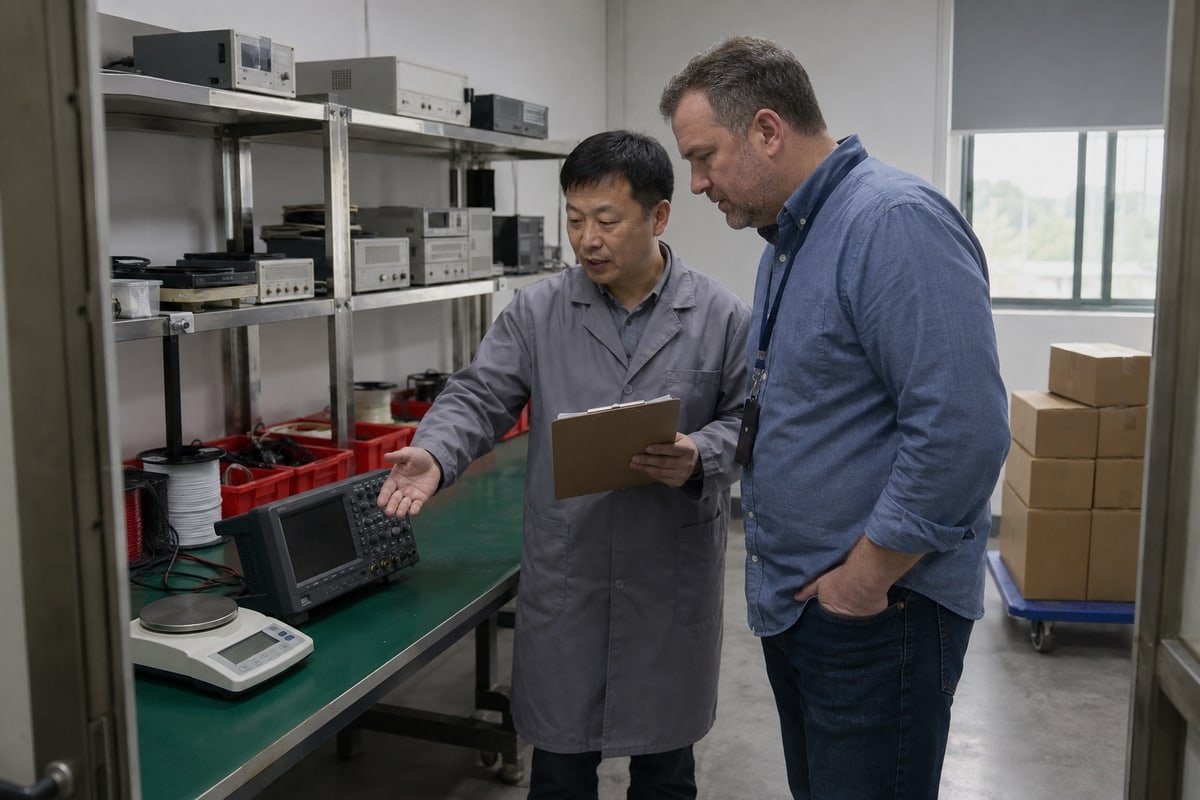
AQL is only as strong as its enforcement. A table on paper does nothing if nobody stands in the factory counting defects against it. That is the gap we fill for importers who cannot be in China themselves.
Before Production
We define the specification with you first: dimensions, tolerances, materials, packaging, and labeling. Then we build a quality control checklist that classifies every possible defect as critical, major, or minor, and we write the agreed AQL values into the purchase order. Some of our brand-owner clients now add environmental defects—such as non-recyclable packaging errors—into the major category, and we build that into the checklist too. The supplier signs before production begins. This single step prevents most disputes later.
During Production and at Pre-Shipment
Our team follows production progress so problems surface early, not at the final check. At the pre-shipment inspection, the inspector selects cartons at random on-site—not cartons the factory sets aside—which defeats the classic "golden sample" trick of staging perfect boxes for inspection. Units are pulled per the ANSI/ASQ Z1.4 sample size, then measured, function-tested, and checked against the checklist. For hardware and metal components, that means calipers on critical dimensions, not just a visual glance.
After the Inspection
You receive a report with defect counts, photos, and a clear pass/fail result against the acceptance numbers. If the lot fails, we negotiate rework, supervise re-inspection, and hold the shipment until you approve. Because we also handle multi-supplier consolidation from our warehouse, we can apply consistent AQL standards across every factory in your supply chain—one standard, one report format, one point of contact. Smaller buyers benefit most here, since they rarely have leverage to demand this discipline from factories on their own.
Conclusion
AQL turns quality risk into a clear pass/fail decision. Set it before production, inspect before final payment, and let our Suzhou team enforce it at the factory.
Footnotes
1. The WTO provides the international regulatory framework for pre-shipment inspection activities in global trade. ↩︎
2. Provides a comprehensive overview of the AQL concept and its history in industrial quality control. ↩︎
3. The International Trade Administration offers guidance on international purchase orders and commercial documentation for importers. ↩︎
4. ISO standards like ISO 9001 mandate the maintenance of inspection records to ensure quality traceability. ↩︎