
Every month, buyers ask our Suzhou sourcing team the same question: OEM vs ODM manufacturing in China tariffs, freight and logistics 1? Pick wrong, and you burn tooling budgets—or watch competitors clone your product.
OEM manufacturing in China is better when you need a unique design, intellectual property ownership, and long-term defensibility. ODM is better when you need faster time to market, lower upfront cost, and smaller minimum order quantities. Many brands validate demand with ODM, then transition to OEM at scale.
These two models are not just sourcing labels. They are two different business strategies. Each one changes your cost, timeline, risk, and ownership. This guide breaks down the real differences, with numbers, so you can build a China sourcing strategy that fits your business stage rather than someone else’s playbook.
How do I know if OEM or ODM is the right fit for my product idea?
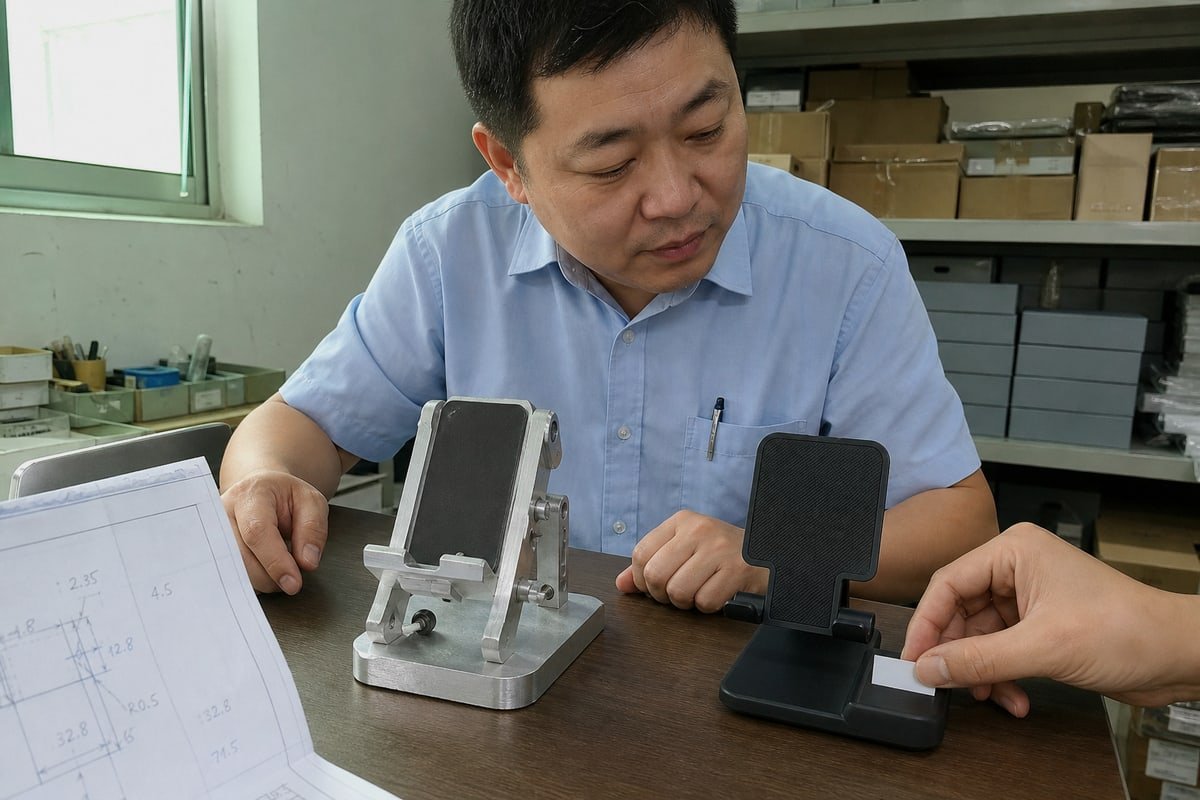
A Canadian client recently sent us two briefs: a patented kitchen tool and a generic phone stand. Same buyer, two very different answers. The product itself usually decides the model.
Choose OEM if your product needs unique features, custom engineering, and exclusivity you can defend. Choose ODM if you are testing demand, launching a lightly differentiated product, or working with limited capital. The deciding factors are differentiation, budget, timeline, and how much control you need.
Let me put both models in plain English before we compare them.
OEM and ODM in Plain English
With OEM (Original Equipment Manufacturing), the factory builds your product to your drawings, your Bill of Materials (BOM), and your specifications. You fund the tooling. You drive the product development lifecycle. You own the concept.
With ODM (Original Design Manufacturing), the factory already has a working design. You select it, apply private label branding, change the packaging, and maybe adjust the color or a minor feature. It sits close to white label solutions, but usually with a bit more room for customization.
Here is the side-by-side view we walk clients through:
| Factor | OEM | ODM |
|---|---|---|
| Design ownership | Buyer owns the design | Factory owns the base design |
| Customization depth | Full control of materials, features, form | Logo, color, packaging, minor tweaks |
| Time to market | Roughly 6–12 months | Roughly 1–3 months |
| Upfront investment | High (R&D, molds, validation) | Low (mostly branding setup) |
| Typical MOQ | Higher | Lower |
| Best for | Differentiated brands, long-term moat | Fast launches, demand testing, trend products |
The Tooling Test We Apply
When the model is unclear, we use a simple rule of thumb from our factory visits: if the supplier can run your order on tooling it already owns, you are in ODM territory. If new molds must be cut just for you, you are in OEM territory. In practice, the boundary blurs. Some factories offer deep customization on an ODM base. Some buyers commission a new product but let the supplier handle most of the engineering. That is fine—just be honest about which side of the tooling line you sit on, because it determines who controls your product later.
One more warning from recent experience. With Factory-to-Consumer platforms like Temu and TikTok Shop, many Chinese ODM factories now launch their own retail brands. They can compete against their own clients using the same designs and better cost data. If your product idea is your moat, ODM hands the blueprint of that moat to a potential competitor. And if your volumes eventually become very large, a dedicated contract manufacturing arrangement can offer tighter cost and quality control than either classic model.
What are the real cost and MOQ differences between OEM and ODM sourcing in China?
When we compare quotations for clients, the ex-factory price is never the full story. Tooling, sampling, certification, and freight change the math more than most buyers expect.
OEM typically requires $17,000–$58,000 to reach a first shipment, with MOQs of 1,000–5,000+ units and 3–9 month lead times. ODM usually costs $7,550–$11,300, with MOQs of 200–1,000 units and 1–2 month lead times, making it roughly 60–80% cheaper upfront.
Those ranges come from published industry estimates, and they match what we see in quotations across the Yangtze River Delta. Let me break the stack down.
The Full Cost Stack
| Cost item | OEM | ODM |
|---|---|---|
| Development, engineering, NRE | $5,000–$50,000+ | Minimal to none |
| Tooling and mold costs | Buyer typically pays and should own | Factory already owns tooling |
| Sampling and validation | Multiple prototype rounds | Off-the-shelf samples, small fees |
| Branding and packaging | Included in project scope | The main upfront cost |
| Total to first shipment | $17,000–$58,000 | $7,550–$11,300 |
| Lead time | 14–20 weeks (3–9 months in complex cases) | 4–8 weeks (often 1–2 months) |
| Typical MOQ | 1,000–5,000+ units | 200–1,000 units |
Why ODM MOQs Run Lower
The minimum order quantity (MOQ) gap has a structural cause. An ODM factory can aggregate orders from multiple clients on the same base design, so your 300 units join a much larger production run. An OEM run exists only for you, so the factory needs enough volume to amortize setup, tooling, and line changeover. In our negotiations, we can often push OEM MOQs down for early orders, but there is a floor the factory cannot cross without losing money.
Landed Cost, Not Unit Price
Here is the nuance most comparison articles skip. Once you add tariffs, freight, and logistics, the ODM-versus-OEM gap narrows. A cheaper ODM unit still carries the same duty rate and container cost as a custom one. And at scale, OEM economics can flip the equation entirely: a differentiated product supports higher pricing, better margins, and fewer direct competitors. ODM wins the first purchase order. OEM often wins year three. We tell clients to model landed cost over a two-to-three-year horizon, not just the first invoice.
Who owns the product design and intellectual property in OEM versus ODM manufacturing?
One of the hardest calls we have made was telling a brand owner that the exclusive ODM product he had sold for two years had appeared on Temu under the factory's own label.
In OEM manufacturing, the buyer owns the product design, tooling, and intellectual property when contracts are written correctly. In ODM manufacturing, the factory owns the base design, molds, and often the safety certifications, so the buyer only owns its brand, logo, and packaging.
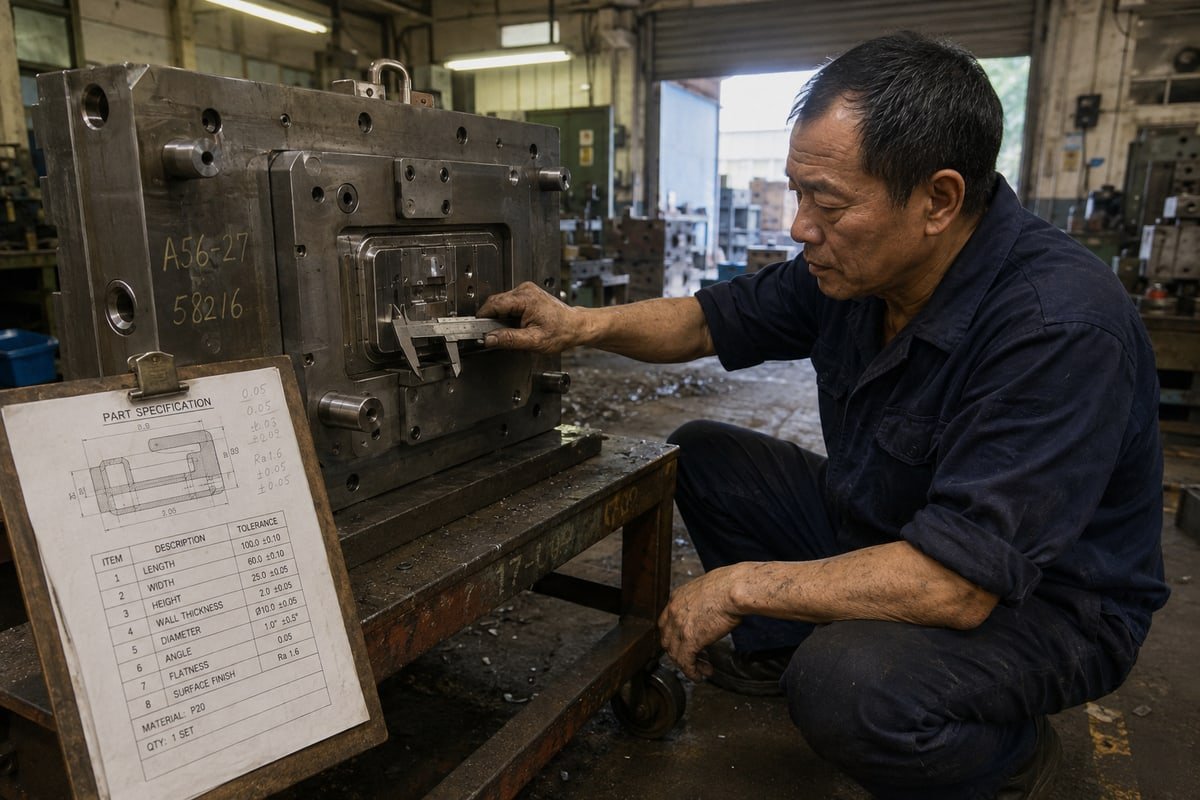
Intellectual property ownership is the single biggest differentiator between these models, and it hides in details most buyers never read. Here is who owns what by default:
| Asset | OEM | ODM |
|---|---|---|
| Design files and blueprints | Buyer | Factory |
| Tooling and molds | Buyer (if paid for and documented) | Factory |
| Safety certifications | Buyer or buyer-named | Usually held by the factory |
| BOM and sub-tier visibility | Full, auditable | Often a black box |
| Brand and trademark | Buyer | Buyer |
| Exclusivity | Enforceable by contract | Same base product sold to others |
Three Ownership Traps Buyers Miss
First, the certification trap. In many ODM deals, the factory holds the primary safety certifications. If the relationship sours, you can lose the legal right to sell that product in regulated markets 2 like the US or EU without costly, slow re-testing. We have watched buyers discover this only after a dispute.
Second, the valuation trap. OEM-based brands command significantly higher multiples during acquisition. Proprietary IP and exclusive tooling 3 create a defensible moat. A simple ODM private-label catalog does not, and buyers of businesses know it.
Third, the transparency trap. OEM gives you full auditability of your raw material supply chain, which matters for ESG and ethical reporting. ODM sub-tier sourcing is often opaque, and that opacity is becoming a compliance liability in Western markets.
How to Protect Yourself
Sign an NNN agreement—non-disclosure, non-use, non-circumvention—under Chinese law before sharing designs. Put tooling ownership in writing, in a separate mold agreement, with your company named as owner. Use a proper contract manufacturing agreement 4 that covers transfer rights if you ever move factories. In OEM vs ODM manufacturing in China, paperwork done early is far cheaper than litigation done late.
How do I find and verify a reliable OEM or ODM manufacturer in China?
Last spring, our team audited three factories quoting the same hinge component near Suzhou. Only one owned the CNC machines and tooling. The other two were trading companies.
Verify a Chinese OEM or ODM manufacturer by checking business licenses, conducting an on-site factory audit, confirming who owns the tooling, testing pre-production samples against a written spec sheet, and signing NNN and contract manufacturing agreements before paying any deposit.
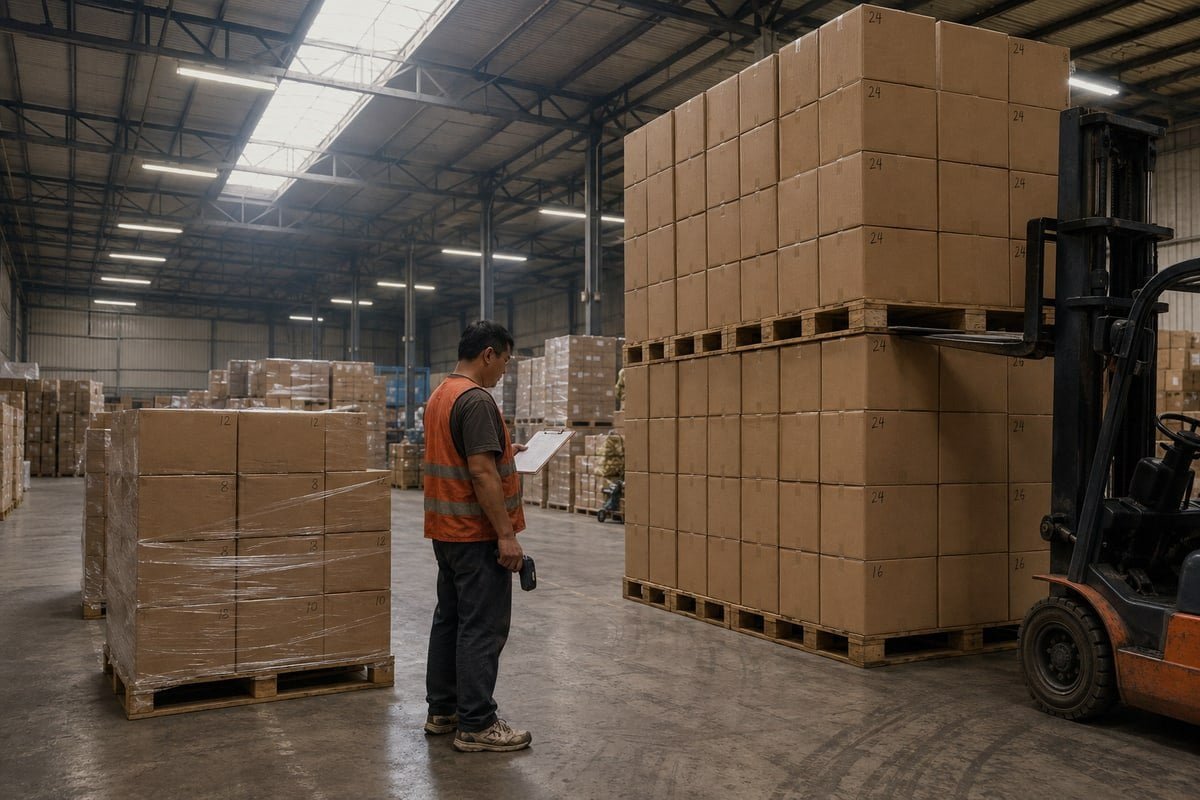
Finding a supplier is easy. Verifying one is where deals succeed or fail. Here is the process our team runs on the ground, and any serious buyer can adapt it.
- Check the business license and scope. The registered business scope should include manufacturing, not just trading. The registered address should match the factory location.
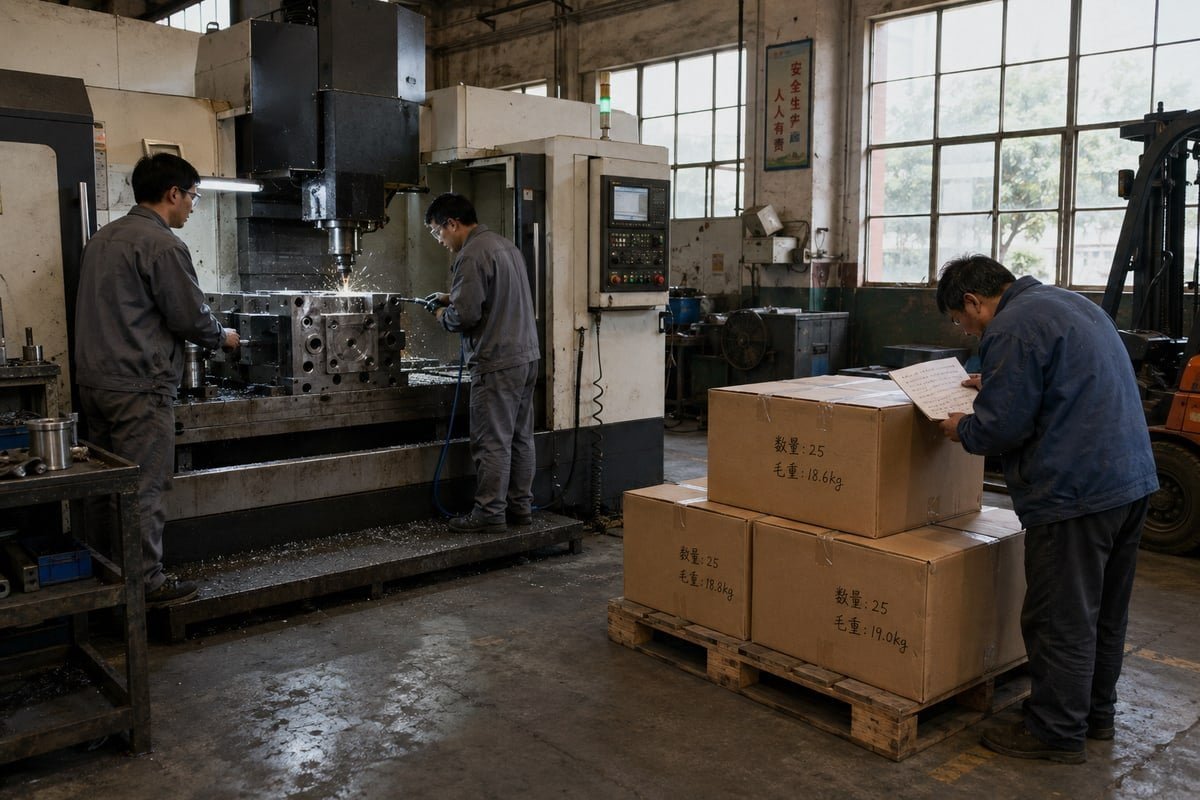
- Audit the factory in person. Walk the floor. Confirm the machines, the workers, and the production lines actually exist. Ask to see the tooling room. If the supplier can produce your product on its own existing tooling, you are looking at an ODM setup—know that before you negotiate exclusivity.
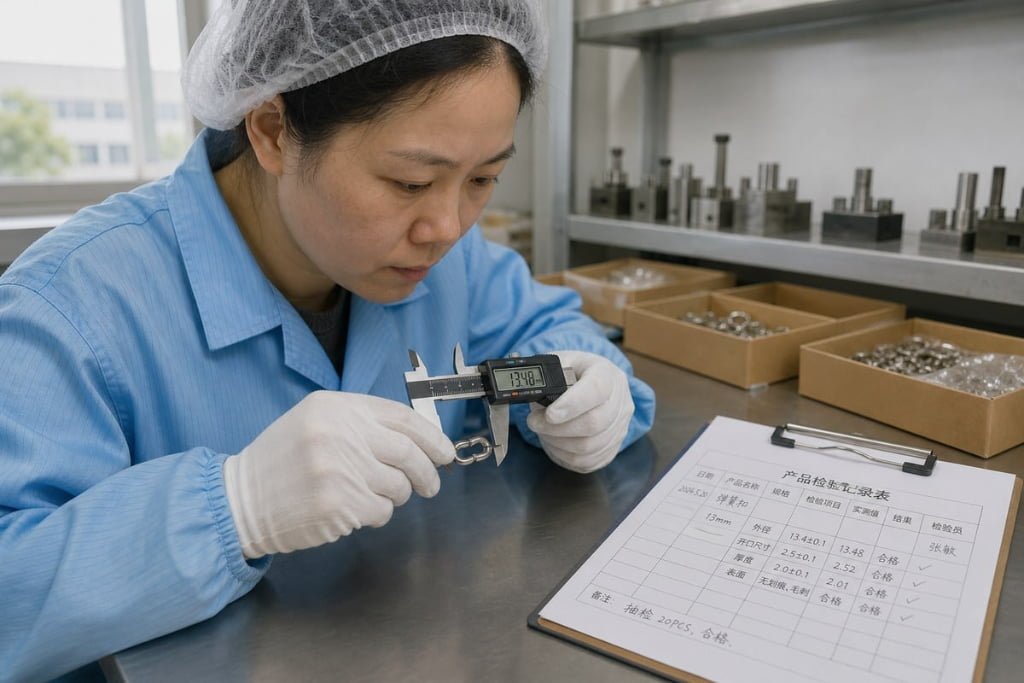
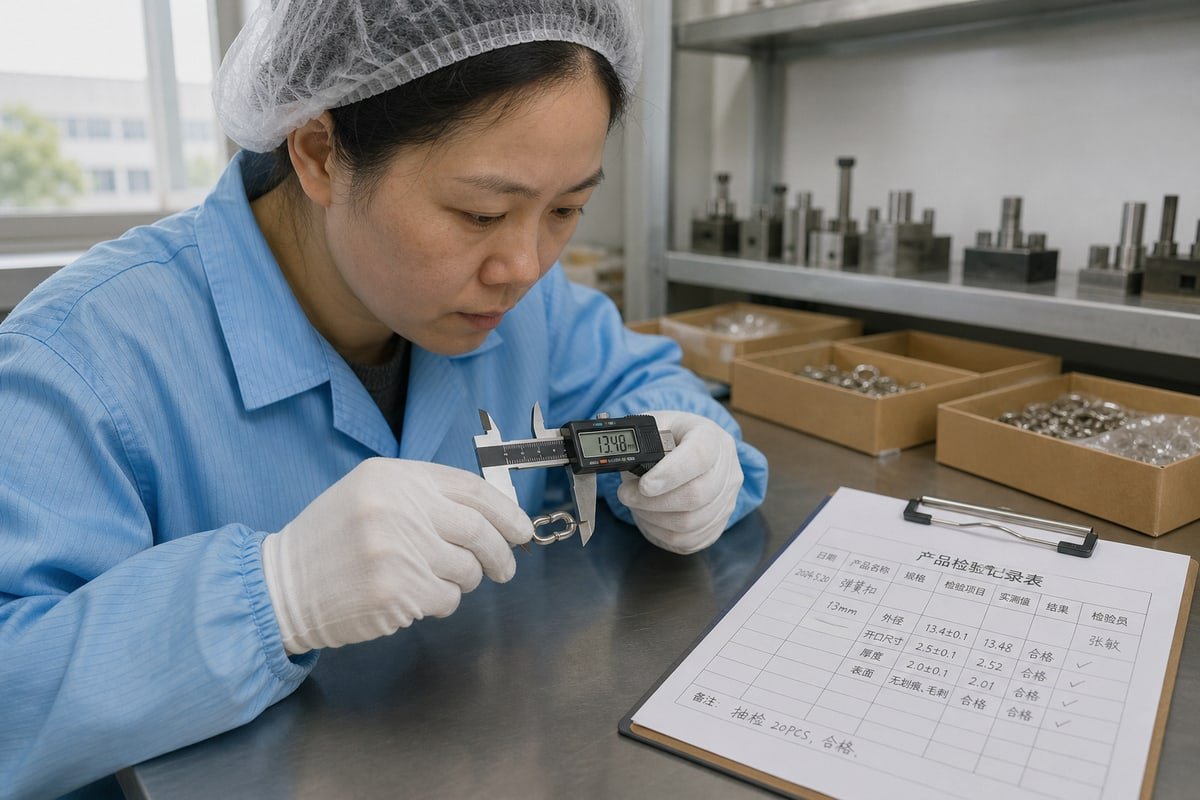
- Review quality assurance protocols. A capable factory has documented incoming inspection, in-process checks, and final inspection. On our audits, we watch inspectors measure components with calipers against tolerance sheets. If dimensional checks are ad hoc, custom OEM work will be painful.
- Lock the specification. Issue a written spec sheet and BOM. Verbal agreements do not survive production.
- Approve a golden sample. Both sides sign a sealed reference sample. Every future shipment is judged against it.
- Sign the paperwork first. NNN agreement, tooling ownership clause, and contract manufacturing agreement—all before the deposit moves.
- Inspect before shipment. Problems should be discovered in China, not after the container lands at your warehouse.
Where a Sourcing Partner Fits
Managing this remotely from the US, Canada, or Europe is the real challenge. Our Suzhou team handles supplier screening, factory audits, production follow-up, and pre-shipment inspection across the Yangtze River Delta manufacturing clusters, so buyers get factory-direct pricing with local oversight. Smaller buyers benefit most: we can often negotiate practical MOQs that factories would not offer an unknown overseas name.
Conclusion
OEM buys uniqueness and control; ODM buys speed and low risk. Choose by business stage—validate with ODM, scale with OEM—and let our Suzhou team verify on the ground.
Footnotes
1. The WTO provides data and resources regarding international trade tariffs and logistics frameworks. ↩︎
2. The European Commission details compliance requirements for products sold within its regulated single market. ↩︎
3. WIPO explains how proprietary assets like tooling and IP contribute to business value and protection. ↩︎
4. The ITA provides resources on drafting manufacturing agreements to protect interests in foreign markets. ↩︎