
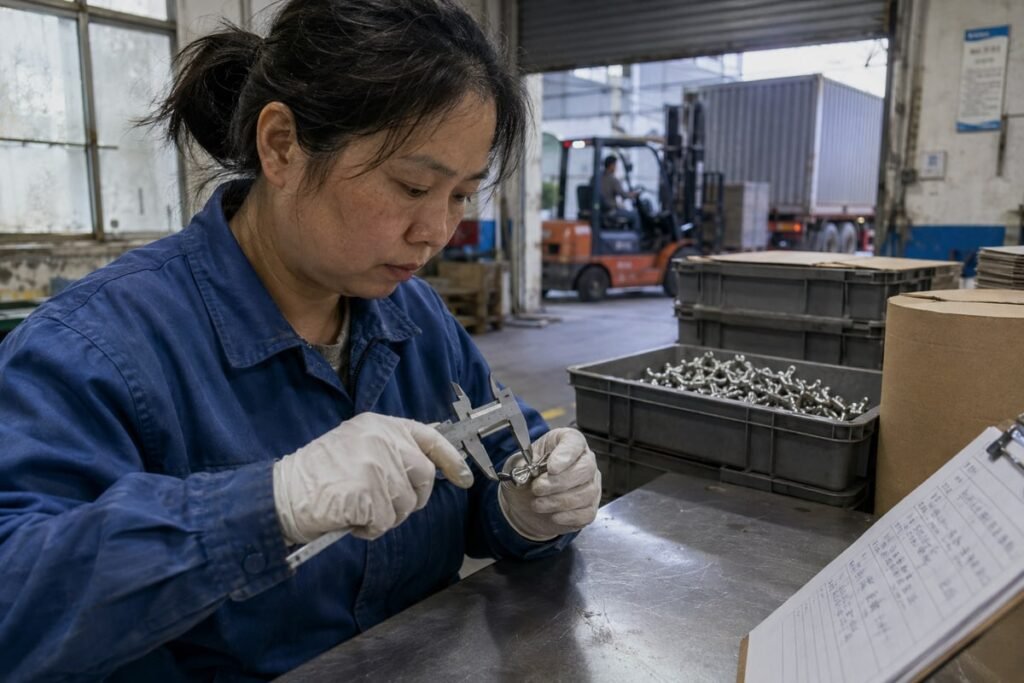
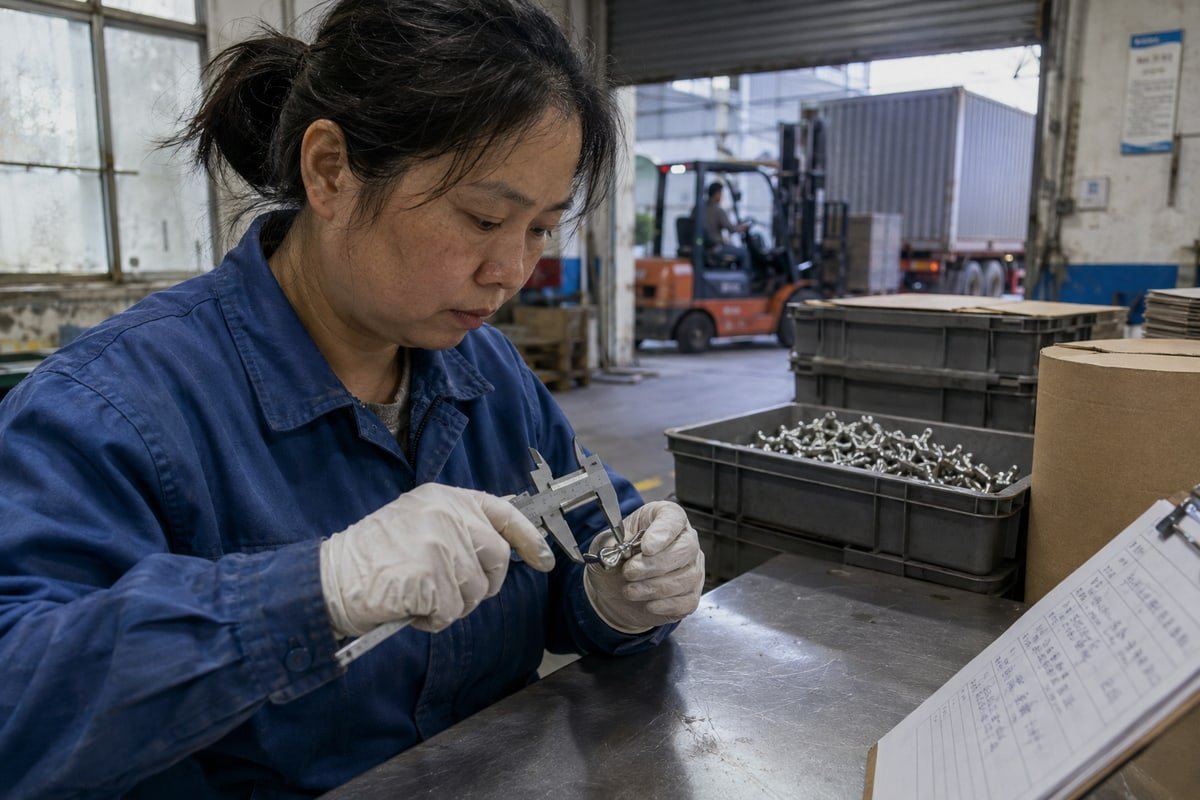
Quality control in China failed one of our clients before he found us: a full container of unusable fittings. Our Suzhou team now inspects everything before it ships.
Importers ensure quality control in China by defining measurable specifications, vetting suppliers through factory audits, using third-party inspection services at pre-production, during-production, and pre-shipment stages, applying AQL sampling standards, holding final payment until inspection approval, and enforcing corrective action before goods leave the factory.
That answer sounds simple on paper. In practice, most quality failures trace back to one skipped step in that chain. Below, I walk through each stage the way our team actually runs it for importers in the US, Canada, and Europe—starting before the first purchase order and ending only when the container doors close.
How can I verify a Chinese supplier's quality standards before placing my first order?
A US hardware importer emailed us last spring with a quotation that looked perfect. Our audit team visited the "factory" and found a trading company renting a single desk.
Verify a Chinese supplier before ordering by commissioning an independent factory audit, checking business licenses and ISO 9001 certification, reviewing production equipment and QC systems, testing approved samples against a written product specifications sheet, and confirming the factory—not a trading company—will actually produce your goods.
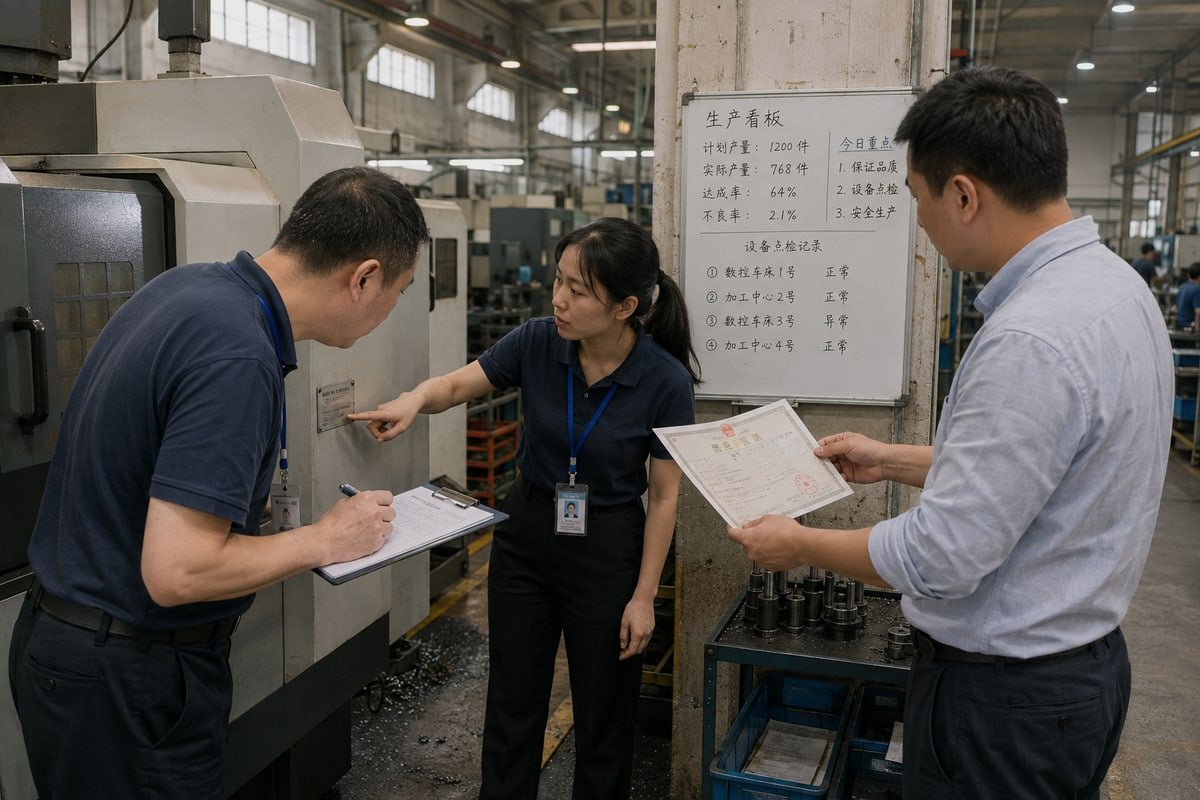
A quotation proves nothing about capability. A supplier can agree to any standard in an email. The real question is whether the factory can meet that standard consistently, at volume, on your timeline. That is why supplier vetting has to happen before money moves, not after.
Self-Assessment vs. Independent Audit
Many suppliers will send you a self-assessment form or a folder of certificates. Treat these as a starting point only. Certificates can be borrowed, expired, or issued to a different legal entity. An independent factory audit puts a trained person inside the building. In our experience running audits across the Yangtze River Delta, the gap between the sales presentation and the actual workshop is often the single biggest risk a first-time buyer faces.
What a Factory Audit Should Cover
| Audit Area | What to Verify | Red Flag |
|---|---|---|
| Legal identity | Business license matches the quoting company | Name on license differs from contract |
| Production equipment | Machines exist, run, and are maintained | Idle lines, missing maintenance logs |
| QC systems | Incoming, in-process, and final checks documented | "We check everything" with no records |
| Staff and training | Trained QC personnel on the line | One person doing all quality tasks |
| Traceability | Material batches and records can be traced | No documentation for past orders |
Lock the Standard with a Golden Sample
Before mass production, we always push clients to complete a full product specifications sheet 1—materials, dimensions, tolerances, testing methods, packaging, labeling, and acceptable defect levels—in writing. Then both sides sign and seal a golden sample. That sample becomes the binding benchmark every future inspection is measured against. Vague instructions are the number one failure point we see. A signed golden sample removes the argument before it starts.
What quality inspection options should I use during production in China?
Every inspection line item on a client's budget competes with margin. So we weigh defect cost against inspection spend before recommending a plan.
Use four staged inspections during production in China: pre-production inspection to verify materials and readiness, during-production (DUPRO) inspection to catch process drift early, pre-shipment inspection under AQL sampling to confirm finished quality, and container loading supervision to verify quantities, cartons, and labeling before departure.
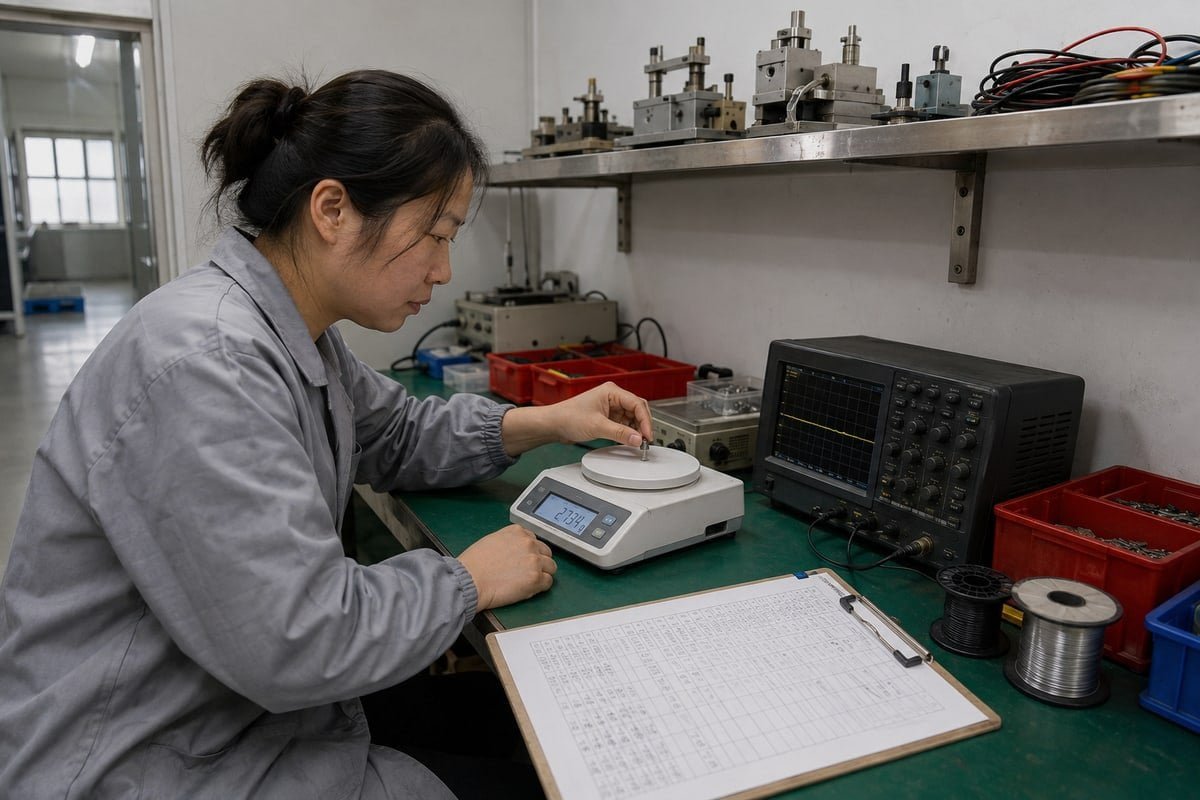
The biggest mistake I see importers make is treating quality control in China as one final check. A single pre-shipment inspection tells you the goods are bad only after they are all finished. At that point, your options are expensive. Staged inspections exist to catch problems while they are still cheap to fix.
The Four Inspection Stages Compared
| Stage | When It Happens | What It Catches | Typical Cost |
|---|---|---|---|
| Pre-production (PPI) | Before mass production starts | Wrong materials, unready tooling | ~USD 200–400 per visit |
| During-production (DUPRO) | 20–60% of units completed | Process drift, early defect patterns | ~USD 200–400 per visit |
| Pre-shipment (PSI/FRI) | 80–100% completed and packed | Final workmanship, quantity, packaging | ~USD 200–400 per visit |
| Container loading supervision | At loading | Carton mix-ups, quantity shortfalls, damage | ~USD 200–400 per visit |
Booking is faster than most buyers expect. Third-party inspection services can often be scheduled within 48–72 hours, though we recommend planning 3–5 days ahead to hold your production timeline.
How AQL Sampling Works
A pre-shipment inspection does not test every unit. Inspectors pull a statistical sample under the Acceptable Quality Limit (AQL) framework 2, usually based on ISO 2859-1, and use it to judge whether the whole lot is acceptable. For AQL to work, you must give the inspector your PO, product specifications sheet, AQL plan, packaging rules, and any special test requests. Otherwise, they inspect against their assumptions, not your requirements.
Match Inspection Depth to Risk
Not every order needs all four stages. New suppliers, complex products, large orders, or a history of defects justify the full verify foreign business partners 3 PPI + DUPRO + PSI sequence. A stable repeat order of a simple product may only need a PSI. For regulated categories, add accredited lab testing against standards such as ISO, ASTM, EN, or CPSIA—visual inspection alone cannot confirm chemical or safety compliance.
How do I handle product defects or failed inspections before goods are shipped?
A batch of matte-black hinge fittings taught me this lesson: our inspector's digital caliper found dimensions drifting out of tolerance on the final day of production.
Handle failed inspections by rejecting the batch in writing, classifying defects as critical, major, or minor, requiring a documented corrective action plan from the factory, arranging rework or replacement at the supplier's cost, re-inspecting before release, and withholding the final balance payment until the goods pass.
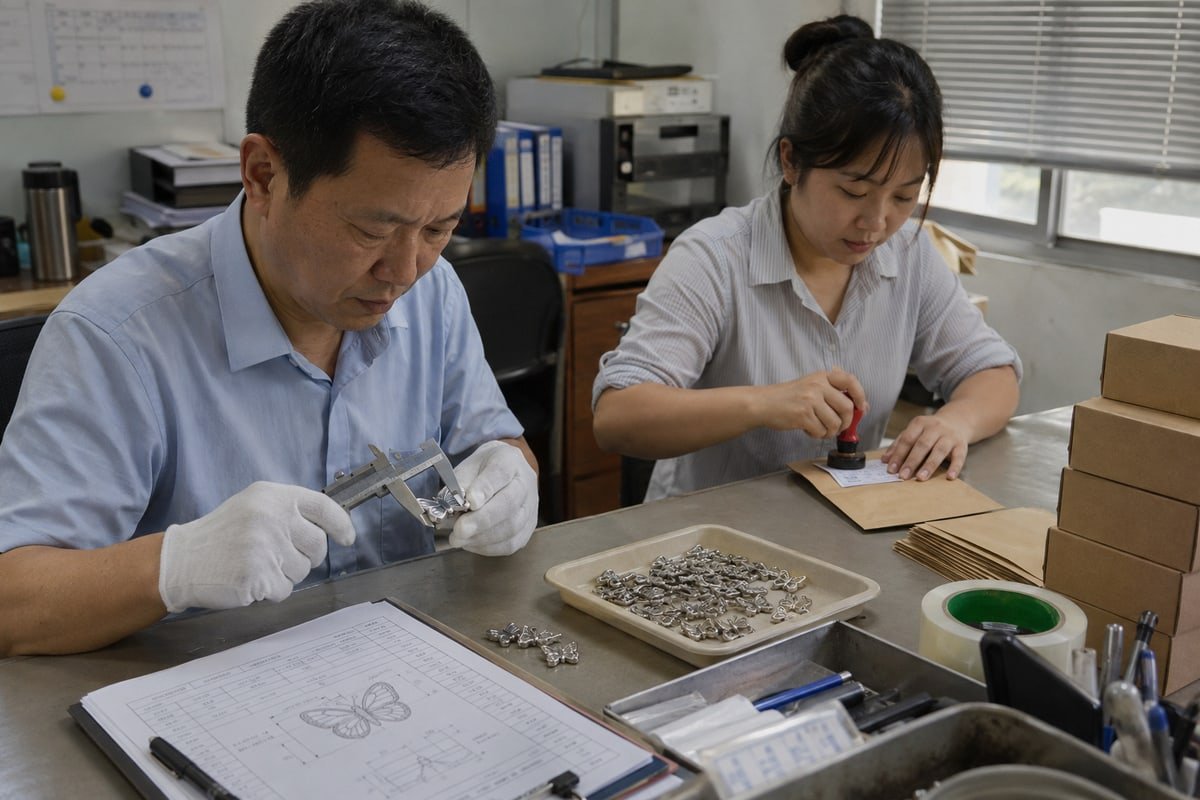
An inspection report is only useful if it triggers action. I have watched importers receive a failed report, feel pressured by the shipping deadline, and approve the goods anyway. Every one of them regretted it. Once goods leave China, your leverage drops to nearly zero.
Classify Defects Before You Negotiate
Defect classification keeps the conversation objective instead of emotional. Most QC frameworks work like this:
| Defect Class | Definition | Typical Acceptance | Example |
|---|---|---|---|
| Critical | Safety, legal, or usability failure | Zero acceptance | Sharp burr on a metal fitting, missing safety label |
| Major | Likely to cause a return or complaint | Low tolerance | Out-of-tolerance dimension, weak clasp mechanism |
| Minor | Cosmetic issue unlikely to affect use | Higher tolerance | Light scratch, slightly uneven finish |
Critical defects are generally treated as zero-acceptance. Major and minor defects get counted against the AQL limits you set before production.
A Step-by-Step Response Process
- Review the full report the same day: photos, measurements, defect counts, and packaging evidence.
- Issue a written rejection that references your product specifications sheet and the signed golden sample.
- Require a corrective action plan stating the root cause, the fix, and the rework timeline.
- Confirm rework or replacement happens at the factory's cost, not yours.
- Book a re-inspection—either 100% sorting verification or a fresh AQL sample.
- Release the balance only after the re-inspection passes.
Payment Terms Are Your Strongest Tool
Structure payments so a large final balance—commonly around 70% of the order value—is held until a third-party inspection report confirms the batch meets the agreed standard. In our Suzhou team's experience, factories move fast on corrective action when payment depends on it. After the wire transfer clears and the container sails, that same factory has very little incentive to fix anything. Then update your spec sheet so the same defect cannot recur on the next order.
Can I manage quality control across multiple Chinese suppliers without an on-the-ground team?
Four factories, one week, one client: our Suzhou inspectors covered hinge hardware in Jiangsu, fasteners in Zhejiang, and packaging near Shanghai for a single Canadian wholesaler.
Yes. Importers can manage quality control across multiple Chinese suppliers by appointing one China-based sourcing partner or third-party inspection network to coordinate audits, staged inspections, consolidated reporting, and warehouse re-checks, applying stricter controls to high-risk suppliers and lighter checks to stable repeat orders.
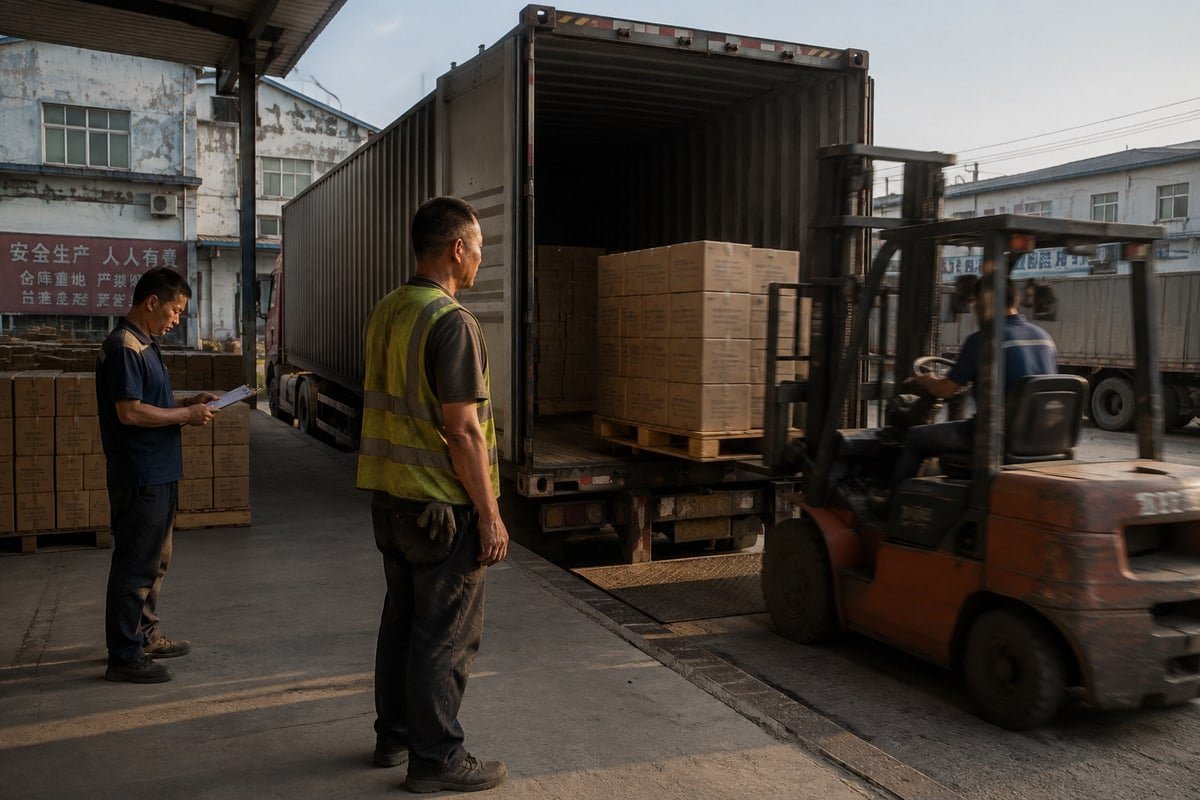
Managing five Chinese suppliers means five production schedules, five quality standards, five sets of documents, and five chances for something to go wrong. You do not need to open a China office to control that. You need one coordination point on the ground and a risk-based plan that spends inspection budget where defect cost is highest.
Tier Your Suppliers by Risk
Modern QC programs are becoming systematic rather than uniform. Instead of treating every factory the same, tier them and sequence your QC investment over two to three quarters:
| Tier | Supplier Profile | Recommended QC Depth |
|---|---|---|
| Tier 1 / High risk | New supplier, complex product, large order value | Factory audit + PPI + DUPRO + PSI |
| Tier 2 / Medium risk | Known supplier, occasional issues | DUPRO + PSI |
| Tier 3 / Low risk | Stable repeat orders, simple product | PSI only, spot audits yearly |
Communicate Past the Sales Filter
Export sales agents often filter what reaches you. When our team follows production, we communicate directly with factory floor managers—usually over WeChat—so schedule slips and material substitutions 4 surface in real time instead of after the deadline passes. Distance and language make this hard from overseas; a local team removes that barrier.
Use a Consolidation Warehouse as a Second Checkpoint
When goods from multiple suppliers flow through one consolidation warehouse, you gain a final control point. Incoming quantities, carton marks, labeling, and FBA prep can all be verified again before loading. For e-commerce and retail buyers, this catches the labeling and carton errors that cause chargebacks. It also supports growing traceability expectations—including documentation demands linked to regulations like UFLPA—and helps confirm goods were actually produced at the audited facility, not quietly subcontracted to an unvetted shadow factory.
Conclusion
Defects discovered overseas are expensive; defects discovered in China are fixable. Own your quality control system—specifications, audits, staged inspections, and corrective action—and every shipment becomes more predictable.
Footnotes
1. US government resource providing guidance on developing product specifications for international trade and manufacturing. ↩︎
2. Official ISO standard for sampling procedures used in quality inspections and attribute testing. ↩︎
3. Official ITA resource for vetting international suppliers; replaces the broken 404 link with current authoritative content. ↩︎
4. US government resource for protecting intellectual property and managing supply chain risks in global trade. ↩︎