
Every week, importers show our Suzhou sourcing team a two-dollar factory quote that somehow becomes a four-dollar delivered product. Calculating landed cost when importing from China prevents that shock.
To calculate landed cost when importing from China, add your product cost, freight, insurance, customs duties and taxes, brokerage and clearance fees, port handling, and inland delivery, then divide the total by the number of sellable units received to find your true per-unit cost.
That formula sounds simple. The hard part is knowing which numbers to plug in and which charges hide until the invoice arrives. Let me walk you through it step by step.
What costs should I include when calculating my true landed cost from China?
A buyer in Ohio once asked us to compare two supplier quotes. The cheaper factory price produced the more expensive shipment once duties and destination charges were added.
Include the supplier invoice price, China-side origin charges, international freight, marine insurance, customs duties and taxes, import VAT where applicable, customs brokerage fees, port handling fees, and final delivery to your warehouse. Add inspection, banking, and currency costs for a complete picture.
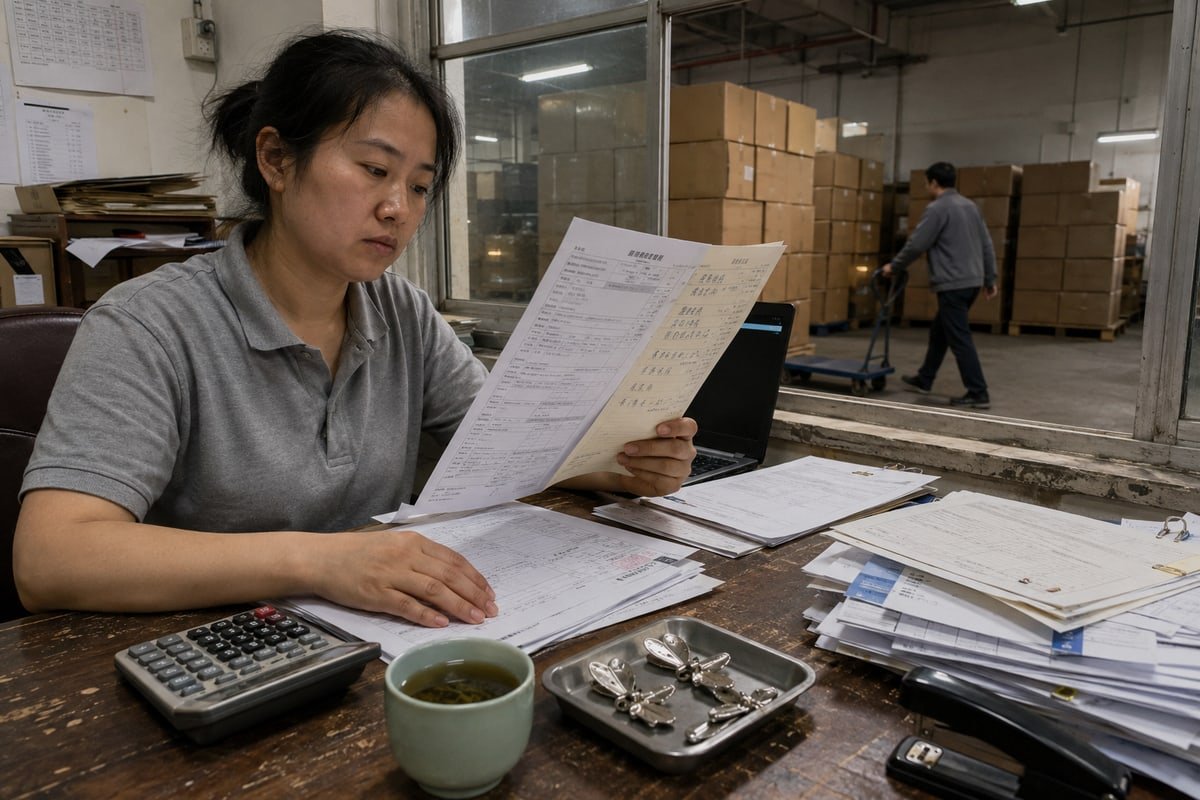
Landed cost is the full delivered cost of your goods, in saleable condition, at your warehouse or fulfillment center. It is not the factory quote plus a shipping estimate. When we build a landed cost sheet for a client, we work through every bucket in the table below.
The Full Cost Component Checklist
| Cost bucket | What it covers | Typically charged as |
|---|---|---|
| Product cost | Supplier invoice under EXW, FOB, or CIF terms | Per unit |
| Origin charges | Inland trucking in China, export clearance, terminal handling | Per shipment |
| International freight | Ocean or air freight forwarding charges | Per container, CBM, or kg |
| Marine insurance | Loss or damage in transit | Percentage of cargo value |
| Customs duties and taxes | Duty based on HS Code classification, plus any tariff layers | Percentage of customs value |
| Import VAT or GST | Destination-country tax, sometimes recoverable | Percentage of value plus duty |
| Customs brokerage fees | Entry filing and documentation | Flat fee per entry |
| Port handling fees | Terminal handling and drayage | Per container or shipment |
| Final delivery | Trucking from port to your warehouse | Per shipment |
| Miscellaneous | Inspection, banking, currency conversion | Varies |
How Incoterms Change What You Add
Incoterms decide which of these costs are already inside the supplier's price. An EXW quote includes almost nothing, so you add every line above. An FOB quote already covers China-side trucking and export clearance. A CIF quote also includes freight and insurance. The mistake I see most often is double-counting: buyers add freight on top of a CIF price, or forget origin charges on an EXW price.
Here is a quick illustration. Take $5,000 in goods, plus $800 freight, $50 insurance, $300 duty, $600 tax, $200 brokerage and handling, and $150 inland delivery. That totals $7,100. If 1,000 sellable units arrive, your landed cost is $7.10 per unit.
Some buyers push back and say overhead, finance costs, and loss allowances do not belong in the calculation. My answer: use a basic landed cost for pricing decisions, and a fully loaded version for internal profitability analysis. Both are valid. Just know which one you are looking at.
How do I calculate landed cost for products shipped by sea versus air from China?
Sea or air is the trade-off we weigh most often when clients consolidate cargo through our Suzhou warehouse. The math behind each mode is completely different.
For sea freight, calculate cost per container or per cubic meter, plus port handling and drayage. For air freight, multiply the chargeable weight—the greater of actual or volumetric weight—by the airline rate. Duties, taxes, and clearance fees then apply to both modes.
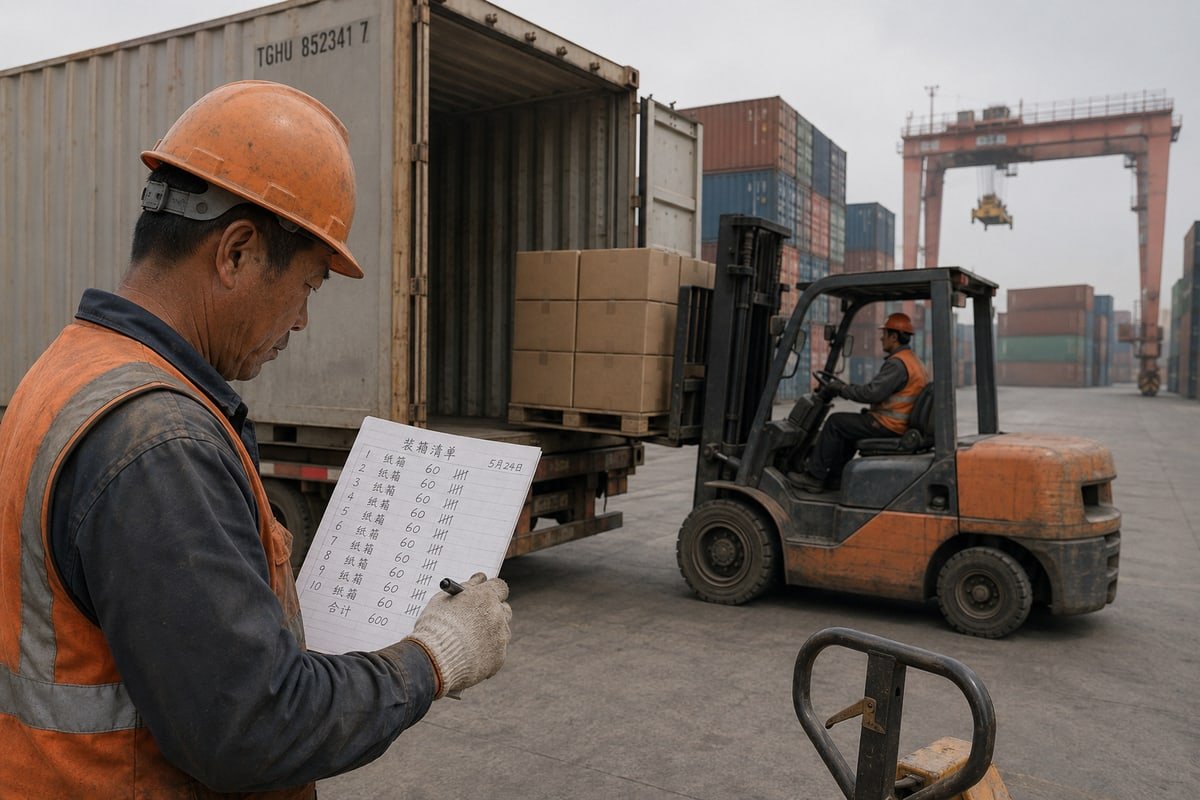
The mode you choose changes which line items dominate your landed cost sheet. It also changes which mistakes hurt you. Let me break both down.
Sea Freight Math
Ocean cargo is priced by space. A full container 1 (FCL) carries a flat rate, so your job is to fit as many sellable units inside as possible. Less-than-container loads (LCL) are priced per cubic meter, with minimum charges. Destination costs are heavier on the sea side: port handling fees, drayage from the terminal, and possible storage charges all stack on top of the base freight.
Air Freight and Chargeable Weight
Airlines bill on chargeable weight. That is the greater of your actual weight and your volumetric weight 2, which is usually carton dimensions in centimeters divided by 6,000. Bulky but lightweight goods get punished here. I have seen buyers budget air freight on actual weight alone, then discover their fluffy, oversized cartons doubled the bill.
| Factor | Sea freight | Air freight |
|---|---|---|
| Pricing basis | Per container (FCL) or per CBM (LCL) | Chargeable weight in kg |
| Typical transit window | 30–60 days door to door | Roughly a week |
| Best suited for | Heavy, bulky, high-volume orders | Light, high-value, urgent goods |
| Hidden cost risk | Demurrage, detention, port congestion | Volumetric weight surprises |
| Capital tied up in transit | High | Low |
| Per-unit freight at volume | Low | High |
The Cost of Capital in Transit
One factor most calculators skip: inventory carrying cost. Ocean cargo from China ties up your capital for a 30–60 day shipping window. If you finance inventory, the interest on that money is a real landed cost. Air freight costs more per kilogram but releases your cash weeks earlier. For high-value goods, that trade-off sometimes favors air, even when the freight quote looks worse.
What hidden fees or charges are most often missed when I estimate my import costs?
One demurrage invoice taught our team more about import costs than any spreadsheet. A client's container sat at port during peak season, and the storage bill grew daily.
The most commonly missed charges are the Merchandise Processing Fee, Harbor Maintenance Fee, Section 301 tariffs, anti-dumping duties, demurrage and detention, drayage, warehouse handling, and currency conversion losses. Together, these can quietly add a meaningful percentage to any landed cost estimate.

Hidden fees are rarely hidden on purpose. They simply sit in documents most buyers never read until after the shipment moves. Here is where we tell clients to look.
US-Specific Government Fees
For US-bound cargo, two non-duty fees apply to almost every entry. The Merchandise Processing Fee 3 (MPF) and the Harbor Maintenance Fee (HMF) are both calculated as small percentages of your cargo value, and HMF applies specifically to ocean shipments. They are modest individually, but they are mandatory, and they belong in every estimate.
The bigger risk is tariff layering. Section 301 tariffs on many Chinese goods can add 25% or more on top of the base duty rate 4 tied to your HS Code classification. I have watched a product's duty bill triple because the buyer checked only the base rate. Anti-dumping duties are even sharper: they target specific products from specific origins and can exceed the value of the goods themselves. Always verify both before you place a large order.
| Hidden charge | Why it gets missed | How to budget for it |
|---|---|---|
| MPF and HMF | Small percentages buried in entry paperwork | Include on every US entry |
| Section 301 tariffs | Layered on top of the base duty rate | Check current lists; can add 25%+ |
| Anti-dumping duties | Product and origin specific | Screen your HS code before ordering |
| Demurrage and detention | Triggered by unpredictable port delays | Add a 3–5% risk buffer |
| Currency exchange rates | Rates shift between deposit and balance payment | Build in a small currency margin |
| Drayage and warehouse handling | Quoted separately from ocean freight | Request all-in destination quotes |
| Carbon border levies | Emerging environmental rules | Watch CBAM-style regulations in Europe |
The Delay Costs Nobody Budgets
Demurrage and detention charges hit when containers overstay their free time at ports or with truckers. They are unpredictable, so we recommend a 3–5% risk buffer on estimates during peak seasons. Currency exchange rates create a quieter leak: a rate move between your deposit and balance payment changes your real product cost. Finally, European buyers should watch emerging carbon border adjustment taxes, which will add a green layer to landed cost for high-emission product categories.
How can I reduce my landed cost without sacrificing quality or reliability?
Repacking one client's product in our warehouse shrank each carton enough to fit more units per container. That single change lowered per-unit landed cost more than any freight negotiation.
Reduce landed cost by optimizing packaging to cut volumetric weight, consolidating multiple suppliers into one shipment, verifying HS Code classification before ordering, choosing the right Incoterms, improving container cube utilization, and comparing suppliers on total delivered cost instead of factory price alone.
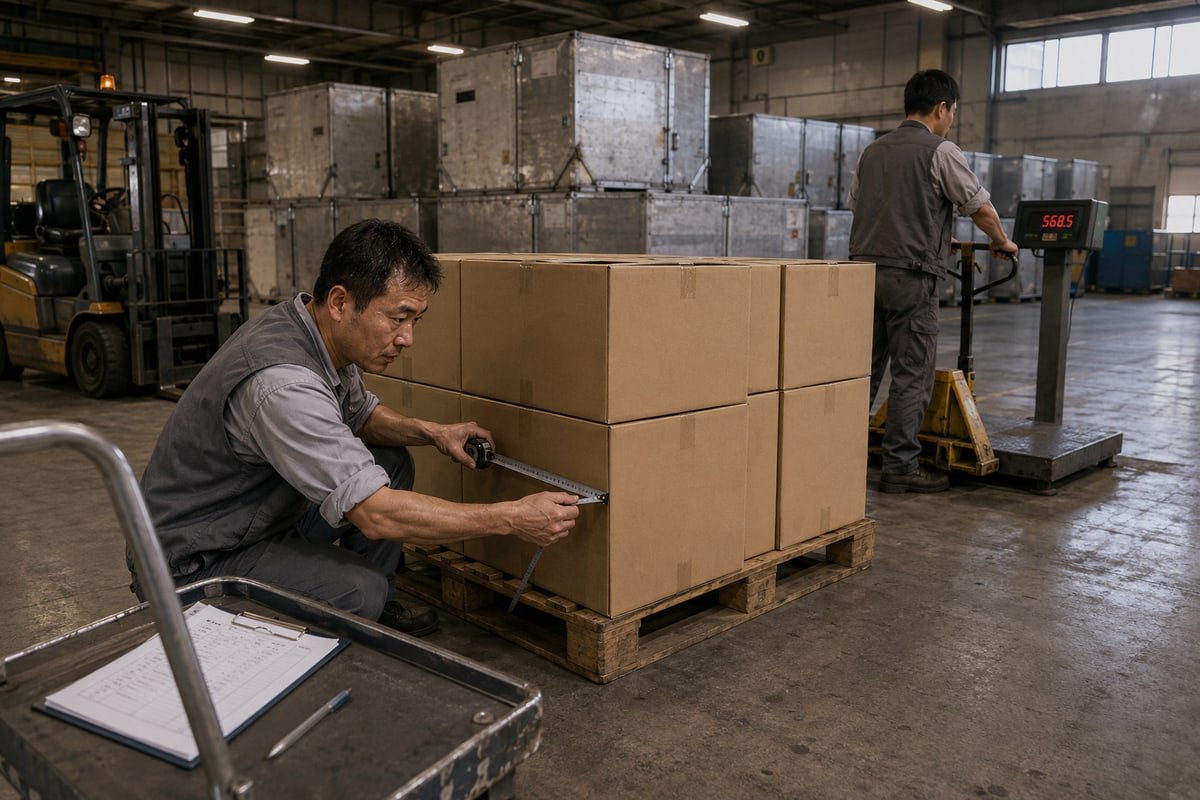
Cutting landed cost is not about squeezing suppliers until quality breaks. Cheap goods that arrive damaged or misclassified cost more, not less. In our sourcing projects, we work through these levers in order.
Six Levers That Lower Landed Cost Safely
- Optimize packaging first. Shrinking carton dimensions can drop your shipment into a lower volumetric weight bracket or raise your container cube utilization. This often beats freight rate negotiation because the saving repeats on every future shipment.
- Consolidate suppliers. If you buy from three or four factories, separate LCL shipments multiply minimum charges, documentation, and customs brokerage fees. We collect goods from multiple suppliers at our warehouse, inspect them, and ship one consolidated load under one set of charges.
- Verify classification early. The right HS Code classification can mean a legitimate difference in duty. The wrong one risks penalties or an anti-dumping surprise. Confirm it with a broker before ordering, not after.
- Match Incoterms to your capability. Experienced importers often save with FOB and their own freight forwarder. Newer buyers may do better with DDP, where duties, taxes, and delivery are bundled and predictable.
- Protect your denominator. Pre-shipment inspection in China costs little compared to a container of defects. Every defective unit you catch before loading keeps your sellable-unit count high and your per-unit landed cost low.
- Compare suppliers on delivered cost. A factory quote is only the starting number. Two quotes that differ by ten cents can flip once packaging efficiency, defect rates, and freight distance enter the math.
Quality and cost reduction are not opposites here. Most of these levers actually improve reliability while trimming the total.
Conclusion
Landed cost is a decision tool, not an afterthought. Calculate it before every order, compare suppliers on delivered cost, and let our Suzhou team handle the China side.
Footnotes
1. International Maritime Organization standards for the safety and regulation of shipping containers in global trade. ↩︎
2. Technical explanation of how carriers calculate shipping costs based on a package’s volume and dimensions. ↩︎
3. Official U.S. Customs and Border Protection guidance on mandatory fees for imported merchandise. ↩︎
4. The WCO manages the Harmonized System which determines base duty rates for international trade. ↩︎