
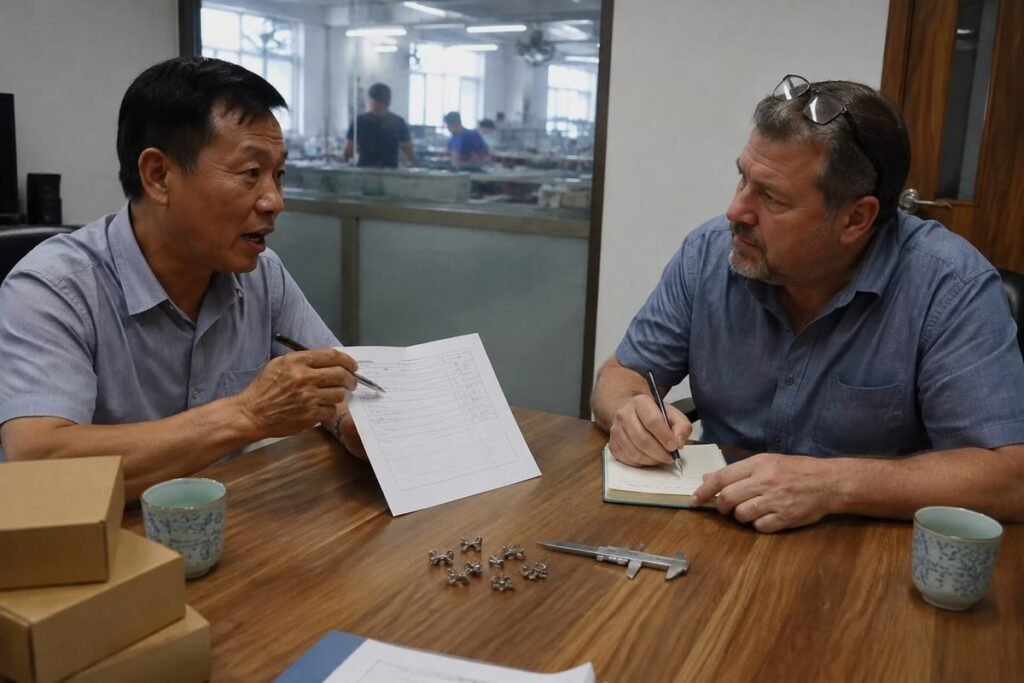
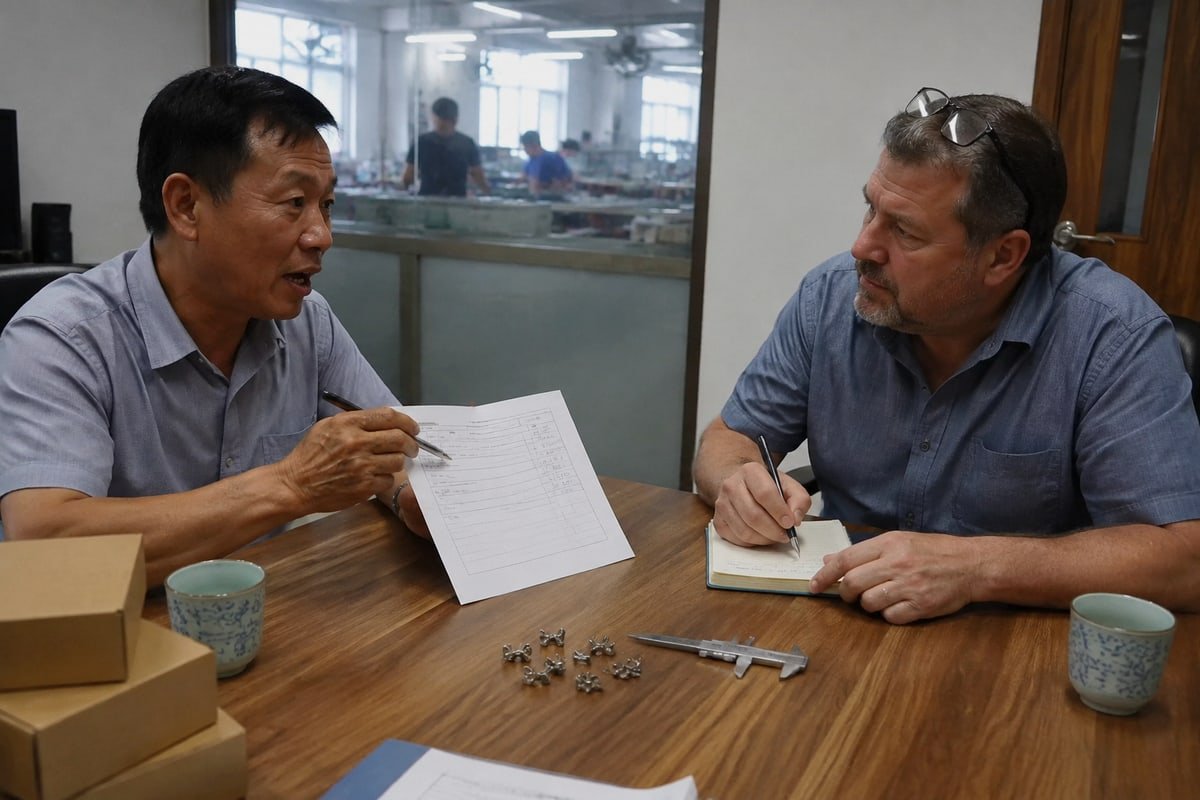
Your quote says 5,000 units. You need 500. From our sourcing office in Suzhou, we hear this daily — and negotiating a lower [MOQ](https://tommysourcing.com/?p=851) with Chinese factories is usually possible.
To negotiate a lower MOQ with Chinese factories, offer a 10–15% higher unit price, present a documented 12-month purchasing forecast, simplify specifications with standard materials and packaging, combine SKUs into one master MOQ, and frame the first order as a trial with committed reorders.
MOQ is not a wall. It is a risk number. The factory sets it to protect against setup costs, material minimums 1, and dead inventory. If you reduce that risk, the number moves. This article shows you exactly how to do that, step by step, without damaging supplier trust or blowing up your landed cost.
What strategies help me convince Chinese factories to lower their MOQ?
Last month we weighed a 12% price premium against a 60% smaller first run for a hardware client. The factory agreed within two calls. That trade is the core strategy.
The most reliable strategies are: ask for the true production minimum, offer a 10–25% unit price premium, pay a one-time setup fee, schedule production during off-peak months, place a trial order backed by a written forecast, and accept standard materials and packaging.
A lower MOQ is a trade, not a concession. The factory loses efficiency on a short run. So you must give something back. In our negotiations across the Yangtze River Delta, the buyers who succeed always answer one question first: what does the factory get in return?
Understand Why the MOQ Exists
Factories set MOQs for practical reasons. Machines need setup time. Upstream vendors impose raw material minimums. Molds and tooling must be amortized. Packing lines need volume to run efficiently. And every small order disrupts the production schedule. When you know which driver applies, you know which lever to pull.
Trade Value Instead of Applying Pressure
The strongest lever is price. Sourcing guides consistently suggest that a 10–15% higher unit price can buy a 40–50% MOQ reduction, and some factories will accept up to a 25% premium on very small batches. The unit price impact matters, but a smaller run often frees up more cash than the premium costs. Here are the levers we use most, in order of reliability:
| Tactic | What the Factory Gets | Typical Effect on MOQ |
|---|---|---|
| Unit price premium (10–25%) | Protected margin on a short run | 40–50% reduction is realistic |
| One-time setup or changeover fee | Downtime and labor costs covered | Significant reduction, price stays cleaner |
| Trial order plus 12-month forecast | A credible path to volume | Factory treats you as a future account |
| Off-peak production scheduling | Work during idle capacity months | More flexibility, sometimes better pricing |
| Larger deposit or faster payment | Lower cash-flow risk | Moderate reduction |
Ask for the True Minimum
The number on a quotation is often the sales team's number, not the engineering number. We ask directly: "What is the lowest unit count you can produce, even if the unit price is higher?" Then: "This is a trial order to test quality and demand. If successful, we expect to reorder at higher volume." Simple, honest framing works better than pressure.
One caveat from experience: some suppliers say yes to a lower MOQ but compensate through longer production lead times 2 or stricter terms. Always calculate the full landed cost, not just the piece price, before you accept.
How can I find suppliers who are willing to work with smaller order quantities?
A US startup once sent our team five quotes from Alibaba suppliers, all demanding 3,000 units. Inside the Yangtze River Delta, we found mid-sized workshops willing to run far less.
Find low-MOQ suppliers by targeting mid-sized factories, trading companies with stock programs, and SME industrial parks in Tier 2 and Tier 3 cities. Compare three to five quotations, filter Alibaba suppliers by trial-order willingness, and consider factories inside cross-border e-commerce pilot zones.
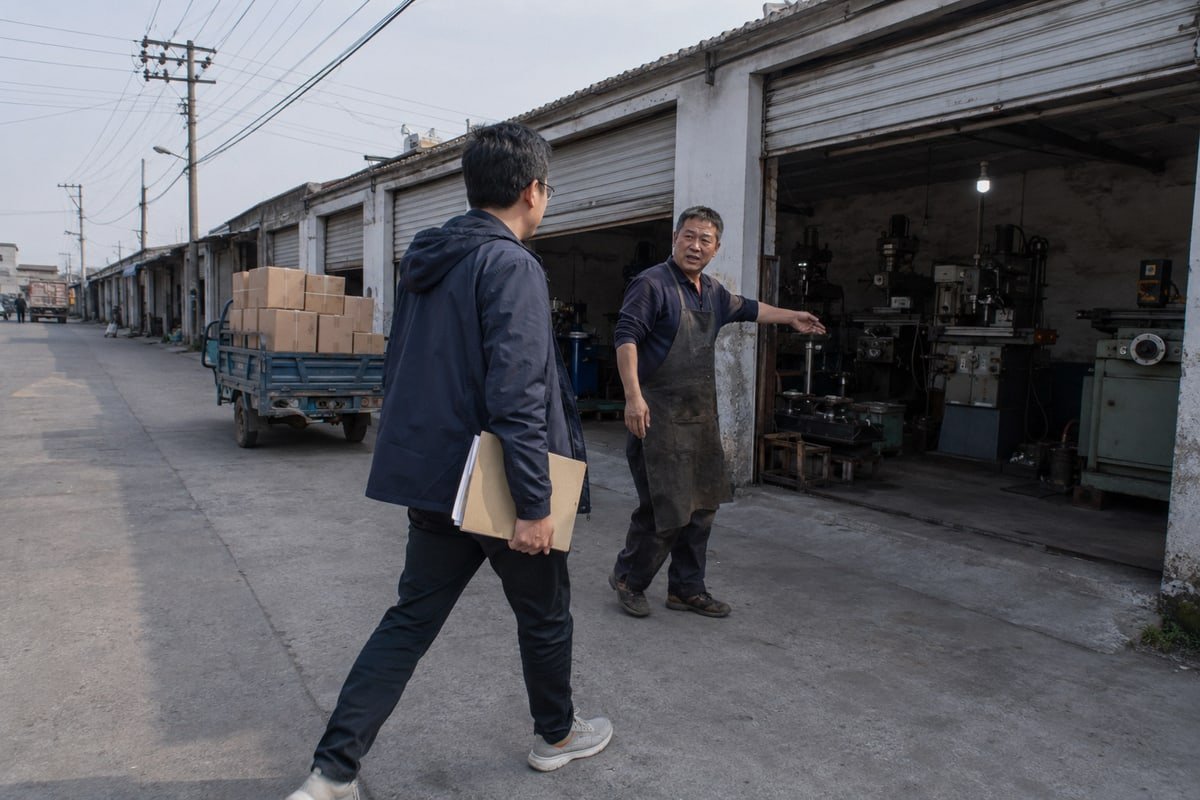
Not every supplier type has the same flexibility. Before you negotiate, choose the right kind of counterpart. Here is how the main options compare:
| Supplier Type | MOQ Flexibility | Main Trade-off |
|---|---|---|
| Large factory | Low, unless you are a strategic account | Best pricing at scale, rigid terms |
| Mid-sized factory | High — often the sweet spot | Slightly higher unit cost |
| Trading company | High, can sell from stock | Extra margin, less production control |
| 1688 / domestic stock channels | Very high for standard goods | Chinese-language platforms, no export support |
| Sourcing agent–assisted | High, via local relationships | Service fee, but negotiation leverage improves |
Look Beyond the First Page of Alibaba
Listed MOQs on Alibaba are marketing numbers. They are a starting point for discussion, nothing more. When we screen suppliers for clients, we send the same trial-order framing to every candidate and watch who engages seriously. That response tells you more than the listing does.
Location Matters More Than Buyers Expect
Specialized SME industrial parks in Tier 2 and Tier 3 cities often receive local government support for small-batch exporters, which makes those factories structurally friendlier to small runs. Factories inside cross-border e-commerce 3 pilot zones can also access tax incentives for small-batch, direct-to-consumer exports. These are real advantages, but they are hard to identify from overseas without someone visiting in person.
Benchmark Before You Commit
Always compare three to five suppliers before negotiating. Without a benchmark, you cannot tell whether a quoted MOQ is unusually high or simply normal for the category. We build this comparison into every sourcing project, because one data point is not leverage — five are.
What should I offer factories in exchange for a reduced minimum order quantity?
During a factory audit near Suzhou, an owner told us plainly: he does not fear small orders, he fears dead stock. That comment reshaped how we structure every offer.
Offer factories a higher unit price, a larger deposit or faster payment, standard in-stock materials, simplified custom packaging, one master MOQ across mixed SKUs, a signed manufacturing agreement with a 12-month volume commitment, and tiered pricing that rewards the factory as reorders grow.
Every offer works because it removes a specific risk from the factory's side of the table. Match your offer to the factory's actual fear, and the negotiation gets easy. Here is the mapping we use:
| What You Offer | Factory Risk It Removes |
|---|---|
| 10–25% unit price premium | Lost efficiency on short runs |
| Deposit or faster payment terms | Cash-flow exposure |
| In-stock raw materials and standard components | Sub-supplier material minimums |
| Master MOQ across colors, sizes, and SKUs | Underutilized production slots |
| Written 12-month forecast or annual commitment | Fear of a one-off order |
| Tiered pricing on future reorders | Doubt about long-term value |
Simplify the First Run
Complexity drives MOQ. Standard colors, stock components, and plain export cartons let the factory bypass its own sub-supplier minimums. For private label manufacturing, we often advise clients to launch with a stock product plus a logo, then add full custom packaging on the second order. A design-for-manufacturability review helps here too: removing one custom-molded feature can eliminate the sub-supplier dependency that triggered the high MOQ in the first place.
Commit on Paper, Not Just in Words
A verbal promise to reorder means little. A short manufacturing agreement with a phased volume ramp means a lot. One practical structure: a sample order first, then a paid trial run at reduced MOQ, then tiered pricing that lowers your unit cost as volumes climb. The factory sees a pathway. You keep your cash. Both sides win.
One honest caveat: if your product needs custom tooling, heavy customization, or specialized raw materials, the MOQ has far less room to move. In those cases, negotiate the tooling terms separately rather than fighting the quantity itself.
How can a sourcing partner help me negotiate better MOQ terms with Chinese manufacturers?
One lesson from coordinating purchase orders across Jiangsu and Zhejiang: factories rarely lower MOQ for a stranger emailing from overseas. They lower it for someone standing in their workshop.
A sourcing partner negotiates in Mandarin, benchmarks quotations against local market rates, verifies which MOQs are real production minimums, consolidates orders across suppliers, supervises quality so factories perceive less risk, and documents MOQ, pricing, lead time, and reorder terms in writing.

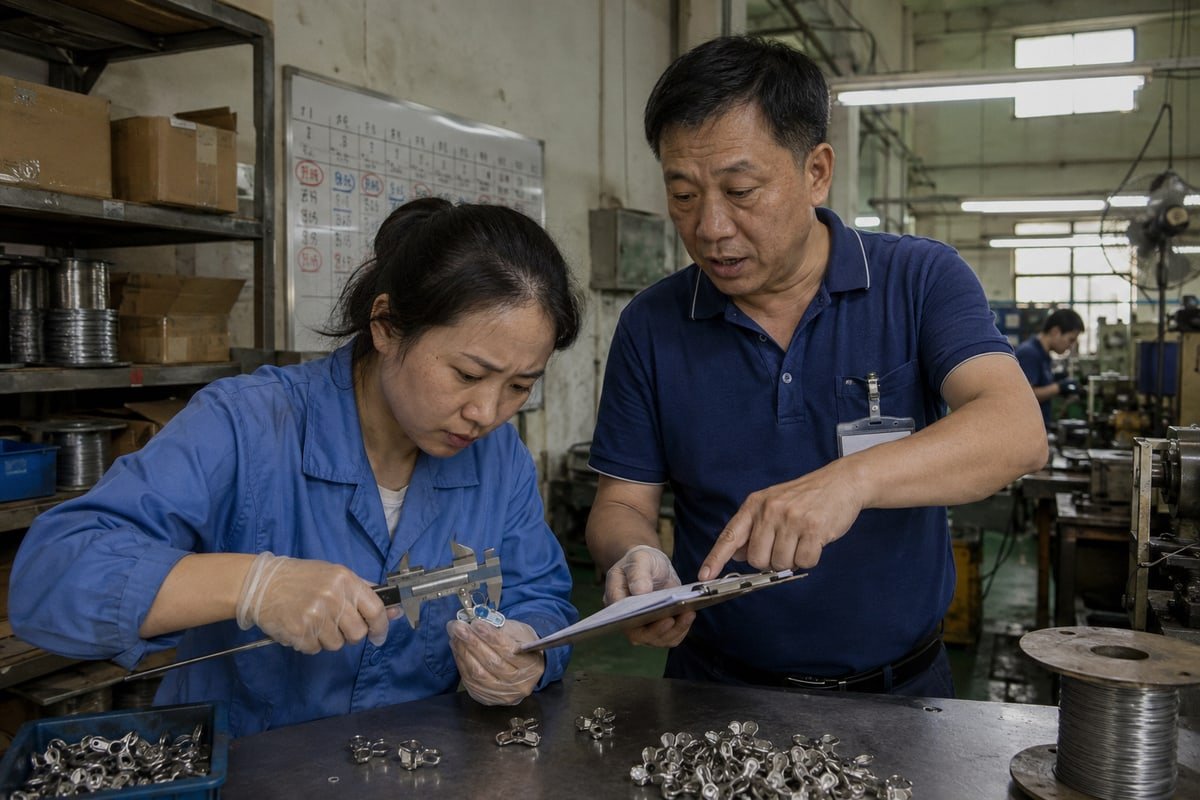
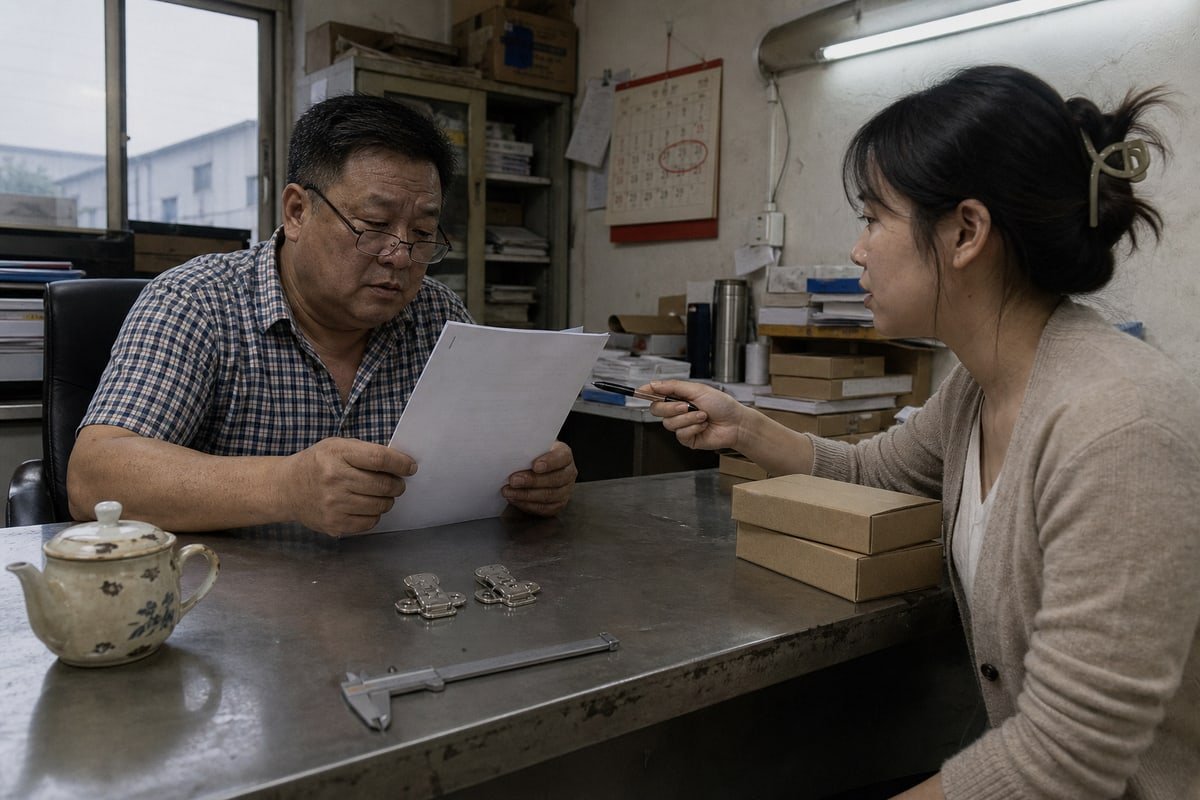
A factory's willingness to accept a small order depends heavily on trust. When our team visits a plant, checks components with calipers on the inspection bench, and discusses the order in Mandarin, the factory stops seeing a risky overseas stranger. It sees an accountable local counterpart. That shift alone changes MOQ conversations.
Local Presence Changes the Math
A sourcing agent based in the region can verify whether a quoted MOQ reflects real constraints or just sales policy. We audit the factory, review its material sourcing, and identify which sub-supplier minimums actually drive the number. Then we negotiate against facts, not against a PDF quotation.
Consolidation Makes Small Orders Viable
Small orders often fail on supply chain logistics 4, not on production. Buying 500 units from three factories means three shipments, three sets of documents, and painful freight costs. Tommysourcing warehouses goods from multiple suppliers, inspects them, and arranges consolidated shipping in one combined load — often with DDP delivery. Smaller production runs suddenly make commercial sense.
Lock the Agreement in Writing
After the factory says yes, everything must go on paper. Here is what we confirm on every reduced-MOQ deal:
| Term to Confirm | Why It Matters |
|---|---|
| Agreed MOQ and unit price | Prevents silent price changes on the invoice |
| One-time trial vs. permanent arrangement | Avoids disputes on the reorder |
| Production lead time | Small runs sometimes wait behind big ones |
| Packaging and customization details | Confirms what "standard" actually includes |
| Reorder expectations and price breaks | Protects your future tiered pricing |
We also coordinate the sample order and pre-shipment inspection, so quality problems surface in China — before the goods ship, not after they arrive at your warehouse.
Conclusion
MOQ is a risk number, not a wall. Trade price, simplicity, and credible forecasts for smaller runs, then lock every term in writing. Our Suzhou team can negotiate beside you.
Footnotes
1. ISO standards help factories manage resources and material minimums through standardized quality management processes. ↩︎
2. The ICC establishes Incoterms which define delivery obligations and directly impact production lead times and logistics costs. ↩︎
3. The International Trade Administration provides official data on China’s cross-border e-commerce regulations and specialized trade zones. ↩︎
4. The World Bank provides authoritative economic data and logistics performance indicators for China’s trade sector. ↩︎