
Every quotation our Suzhou sourcing team collects includes one line that worries new buyers: MOQ. Misjudge MOQ in China, and your import budget or cash flow can collapse fast.
MOQ in China means minimum order quantity — the smallest number of units, or lowest order value, a supplier will accept per order. Chinese factories set MOQs to cover setup, material, labor, and packaging costs, so wholesale buyers must meet the threshold or negotiate alternative terms.
The Chinese term is 最小订货量, and you will see it on nearly every supplier quotation. But MOQ is not just a rule. It is a pricing and production threshold. Once you understand why it exists, you can negotiate it, work around it, or find suppliers built for your order size. Let me walk you through how we handle it every week for our clients.
How can I negotiate a lower MOQ with Chinese suppliers?
A startup buyer once asked our team to push a fastener factory from 5,000 units down to 500. We landed at 1,200 — by changing the offer, not just the price.
To negotiate a lower MOQ, ask the supplier for their lowest acceptable quantity at a higher unit price, offer a setup fee for the trial run, reduce your SKUs and colors, accept stock materials and packaging, and commit to a reorder plan.
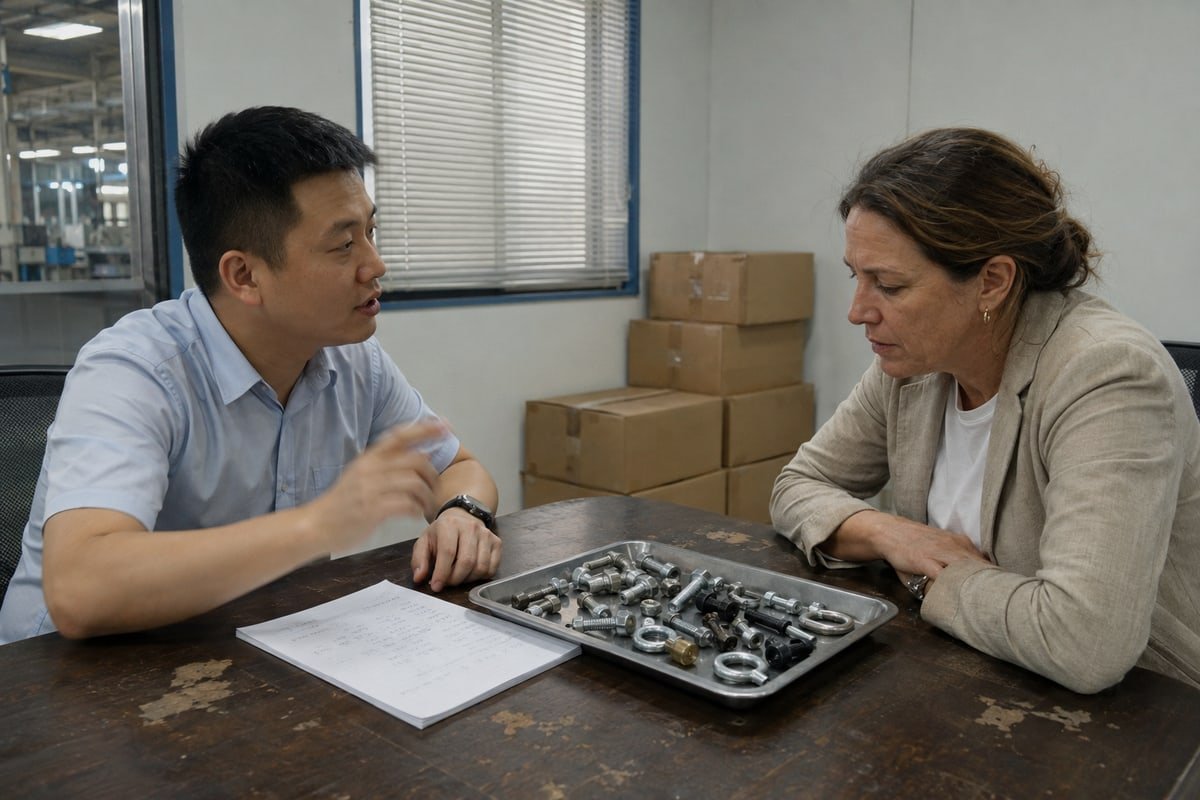
The biggest mistake I see is buyers treating MOQ negotiation like haggling at a market stall. It is not. A Chinese factory's MOQ usually reflects real production costs. So the goal is not to force the factory to sell at a loss. The goal is to lower the factory's risk and complexity until a smaller order makes economic sense for them.
Ask Two Questions, Not One
When we open negotiations on behalf of a buyer, we always ask two separate questions. First, what is your posted MOQ? Second, what is the lowest quantity you would accept at a higher unit price? The second question often reveals a hidden, smaller threshold the factory never advertises.
Trade Offers That Actually Work
| What you offer | Why it works for the factory |
|---|---|
| Higher unit price | Compensates for lost economies of scale on a short run |
| Upfront setup fee | Covers machine calibration and line changeover for a small batch |
| Fewer SKUs and colors | Cuts material variety and changeover time |
| Stock materials and packaging | Avoids the factory's own sub-supplier minimums |
| Trial order plus reorder commitment | Turns a small order into a future volume relationship |
The setup-fee tactic deserves special attention. Many factories will run a small trial order if you pay a one-time sampling or setup fee, because that fee covers the labor of calibrating machines for a short batch. We use this constantly for buyers testing new products.
One more point from our experience: reorders are far easier. Once tooling, sampling, and setup costs are absorbed in the first order, factories often accept much smaller repeat quantities. A high first-order MOQ is rarely a permanent condition.
Why do MOQs vary so much between different Chinese factories?
When we quote the same hardware fitting to two factories, one may ask for 500 units and the other 5,000. The gap comes from materials, tooling, and region — not greed.
MOQs vary because every factory carries different production costs, raw-material minimums from sub-suppliers, tooling requirements, and profit margins — often only 2% to 4% in Chinese manufacturing. Supplier type, regional specialization, and customization level also change the minimum each factory can accept.
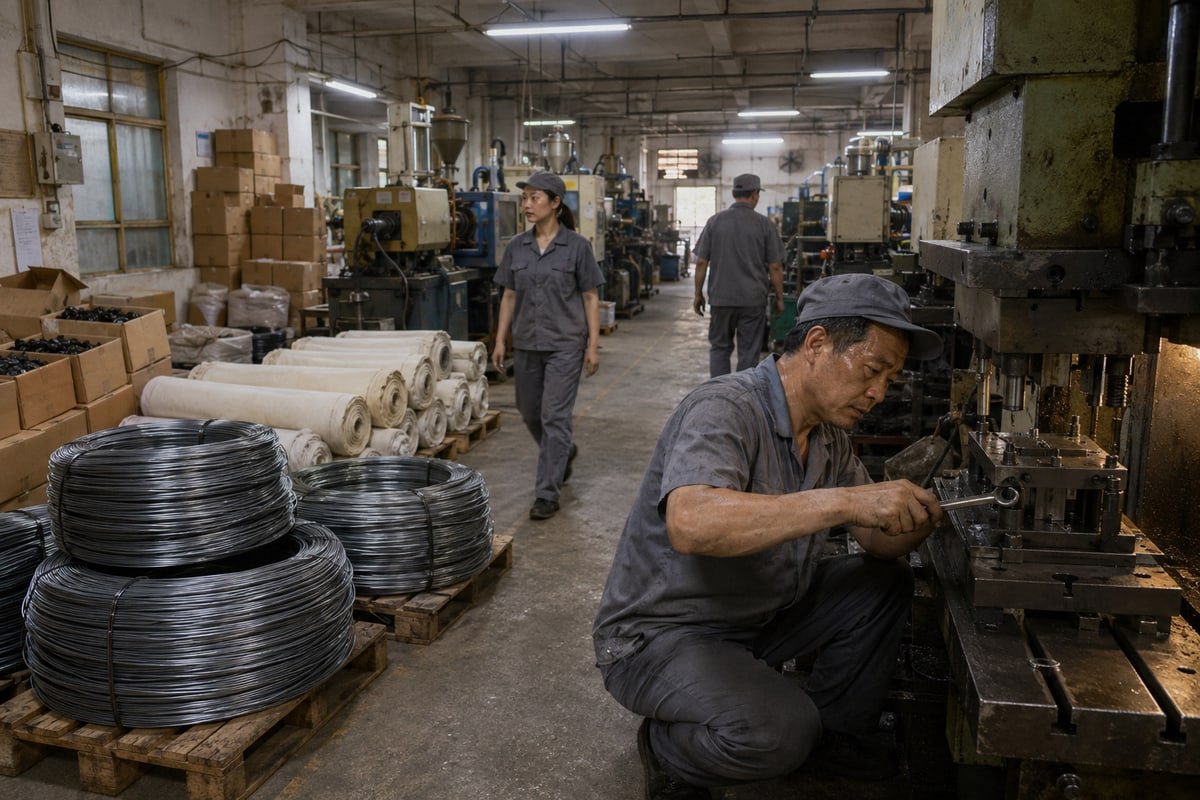
Thin margins are the starting point. Many Chinese factories operate on net margins of roughly 2% to 4%, so the MOQ is essentially a calculated break-even point. Below that quantity, the order loses money. That is why our team never assumes a posted MOQ is arbitrary.
The Sub-Supplier Problem
Here is the factor most buyers never see. A factory's MOQ is frequently dictated by its own raw-material suppliers. If the fabric mill or component provider 1 refuses to sell below a certain volume, the factory physically cannot lower its MOQ, no matter how much you offer. We run into this often with custom colors and coated metals.
Customization Multiplies Minimums
Stock items using open-market materials 2 already on the factory floor carry the lowest MOQs. Private labeling, custom colors, unique molds, and full OEM manufacturing push minimums up exponentially, because each layer of customization adds setup work and dedicated material purchases.
| Product type | Typical MOQ range |
|---|---|
| Simple stock goods | 50–500 units |
| Custom packaging or light branding | 500–3,000 units |
| Textiles and apparel | 300–1,000 per color or size variant |
| Electronics with custom PCB | 500–5,000 units |
| Custom-molded or tooled products | 1,000–10,000+ units |
Treat these as broad ranges, not promises. Real MOQs shift by SKU, material, and season.
Supplier Type and Region Matter Too
| Supplier type | MOQ level | Unit price |
|---|---|---|
| Direct factory | Highest | Lowest |
| Trading company | Lower | 10–20% premium over factory-direct |
| Market wholesaler | Lowest | Highest per unit |
Geography compounds this. Yiwu is structurally built for low-MOQ, ready-to-ship wholesale goods. Dongguan and Shenzhen lean toward high-volume, complex OEM production. From our base in Suzhou, we see the Yangtze River Delta sitting in between, with clusters that handle both depending on the product.
What happens if I can't meet a supplier's MOQ requirement?
Early in my sourcing career, I watched a buyer purchase 500 units to satisfy an MOQ when his market needed 200. The extra 300 sat as deadstock for a year.
If you cannot meet a supplier's MOQ, the factory will usually decline the order. Your realistic options are paying a higher unit price, buying through a trading company or wholesaler, choosing stock products, consolidating orders through a sourcing agent, or finding a smaller factory.
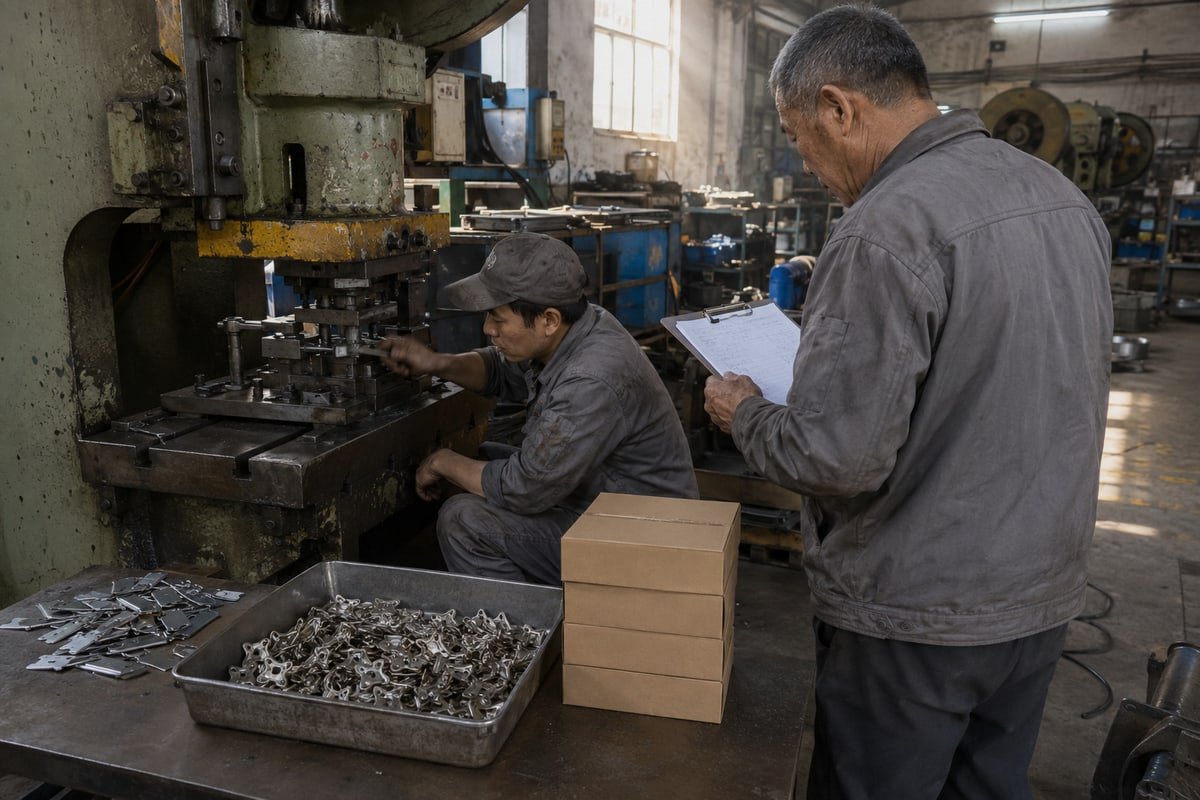
Take the classic example: the MOQ is 500 units and you need 200. In most cases, the supplier simply says no. Pushing harder rarely helps. What helps is changing the structure of the deal or changing where you buy.
Your Realistic Paths Forward
| Option | Trade-off |
|---|---|
| Pay a higher unit price for a smaller run | Margins shrink, but risk and inventory drop |
| Buy through a trading company | Aggregated orders meet factory minimums, at a 10–20% premium |
| Switch to a stock item | Lose customization, gain a small trial order |
| Consolidate SKUs, colors, or sizes | Fewer variants, but total volume hits the threshold |
| Place a sample order first | Tests quality and lead time before committing capital |
Whatever you do, avoid over-ordering just to hit a number. Deadstock ties up cash, complicates inventory management 3, and increasingly carries sustainability costs. Global mandates against overproduction are actually pressuring Chinese suppliers to offer lower MOQs as a green-compliance feature, which works in your favor.
The Landscape Is Shifting
Three trends we watch closely are softening MOQ barriers. Modular robotics and automated "dark factories" now enable micro-batching, where automated changeovers make 50-unit runs profitable when 5,000 used to be the floor. Some manufacturers offer near-zero MOQs under integrated fulfillment models 4, if you agree to ship direct-to-consumer through their bonded warehouses. And factory ERP systems are starting to use AI to offer dynamic MOQs — small orders slotted into high-volume runs already scheduled on the line. None of these are universal yet, but they widen the options our team can pursue for smaller buyers.
How do I find manufacturers with MOQs that fit my order size?
Last quarter, our team visited three hinge factories near Suzhou for one buyer, calipers in hand. Only one matched his 800-unit target — the others wanted container volumes.
To find manufacturers with fitting MOQs, filter Alibaba and 1688 listings by minimum quantity, request quotations at your true volume, target low-MOQ hubs like Yiwu for ready-to-ship goods, and use a sourcing agent to locate verified factories flexible at your scale.
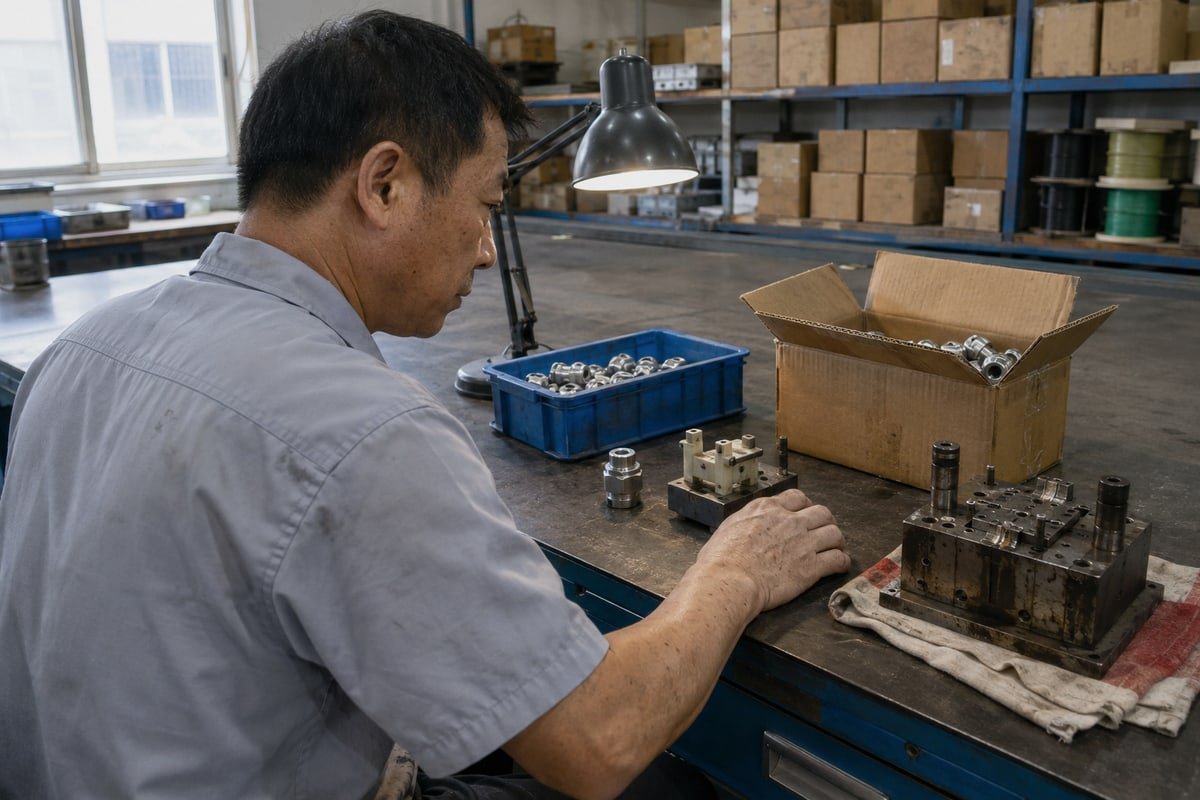
Finding the right MOQ fit is a matching exercise, not a search for the single cheapest quote. Here is the process we run for buyers, step by step.
- Define your true volume first. Base it on your sales forecast and inventory management capacity, not on what suppliers demand. A supplier that fits sells you what you can actually move.
- Match the platform to the order. Alibaba suppliers show wildly different minimums depending on whether they are factories or resellers, and whether the item is stock or custom. 1688, the domestic Chinese platform, often lists lower MOQs at better unit prices, but requires Chinese-language negotiation and domestic logistics — something our team handles for clients daily.
- Match the region to the product. Ready-to-ship general merchandise points to Yiwu. Complex OEM work points to Shenzhen, Dongguan, or the Yangtze River Delta clusters around our Suzhou base.
- Request two-tier quotations. Ask every candidate for pricing at their MOQ and at your real quantity. The spread tells you instantly who is flexible.
- Verify before you commit. A low MOQ from an unverified seller is a risk, not a bargain. We audit factories, check capabilities, and run a sample order before any deposit moves.
- Consolidate where possible. If you buy several SKUs, combining them through one China-side partner can satisfy minimums, shorten effective lead time, and cut freight costs in a single shipment.
Small buyers do not need to eliminate MOQ. They need suppliers whose economics match their order size — and a team on the ground to find and verify them.
Conclusion
MOQ in China is a production threshold, not a wall. Understand the economics, negotiate real trade-offs, and match suppliers to your true volume — or let our Suzhou team handle it.
Footnotes
1. Trade.gov provides resources for businesses to analyze supply chains and manage relationships with international component providers. ↩︎
2. WTO agreements regulate the international trade of raw materials and goods within open market systems. ↩︎
3. Explains the principles of managing stock levels to balance supply with market demand and minimize costs. ↩︎
4. Describes the process of coordinating supply chain activities to meet customer orders efficiently. ↩︎