
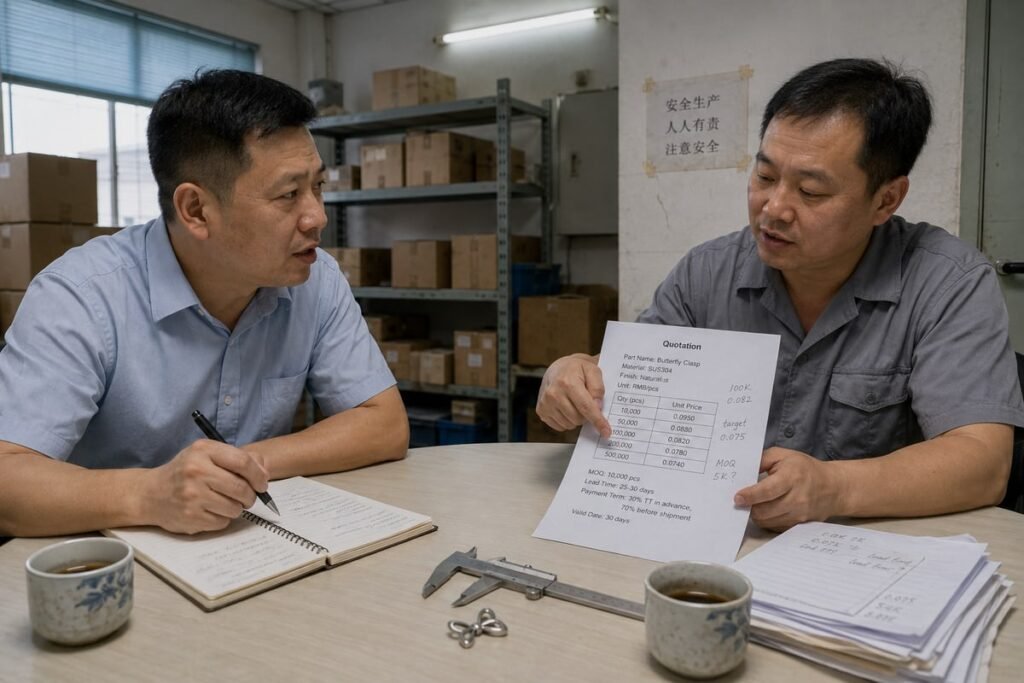
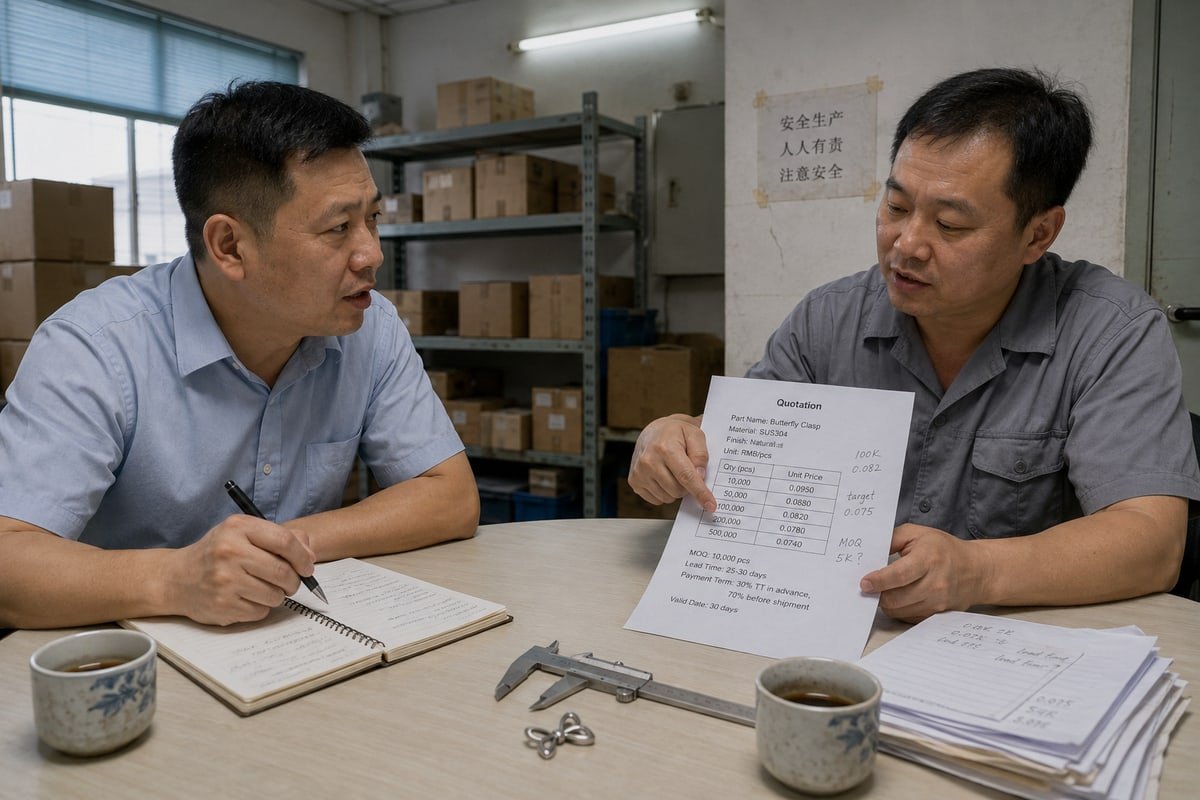
Every week, our Suzhou team sits across from factory sales managers to negotiate prices with Chinese manufacturers. Most overseas buyers lose money here—not on price, but on preparation.
To negotiate prices with Chinese manufacturers, prepare exact specifications, collect three to five comparable quotes, and negotiate the full commercial package—unit price, MOQ, payment terms, packaging, and inspection—rather than just haggling. Confirm quality requirements in writing before production starts to protect both price and relationship.
That answer sounds simple. In practice, most buyers skip half of those steps. Then they wonder why the factory will not move, or worse, why quality drops after the discount. This article walks through the process we use on real purchase orders, step by step.
How can I negotiate lower prices without damaging my supplier relationship?
A US hardware importer once asked us to demand 25% off a fastener quote. We advised against it. Instead, we restructured the order—and the factory improved the price willingly.
Negotiate lower prices without damaging the relationship by trading value instead of demanding discounts. Offer larger volumes, forecasts, flexible lead times, or better payment terms in exchange for price improvements. Stay polite, preserve face, and negotiate the deal structure—never attack the supplier's competence or honesty.
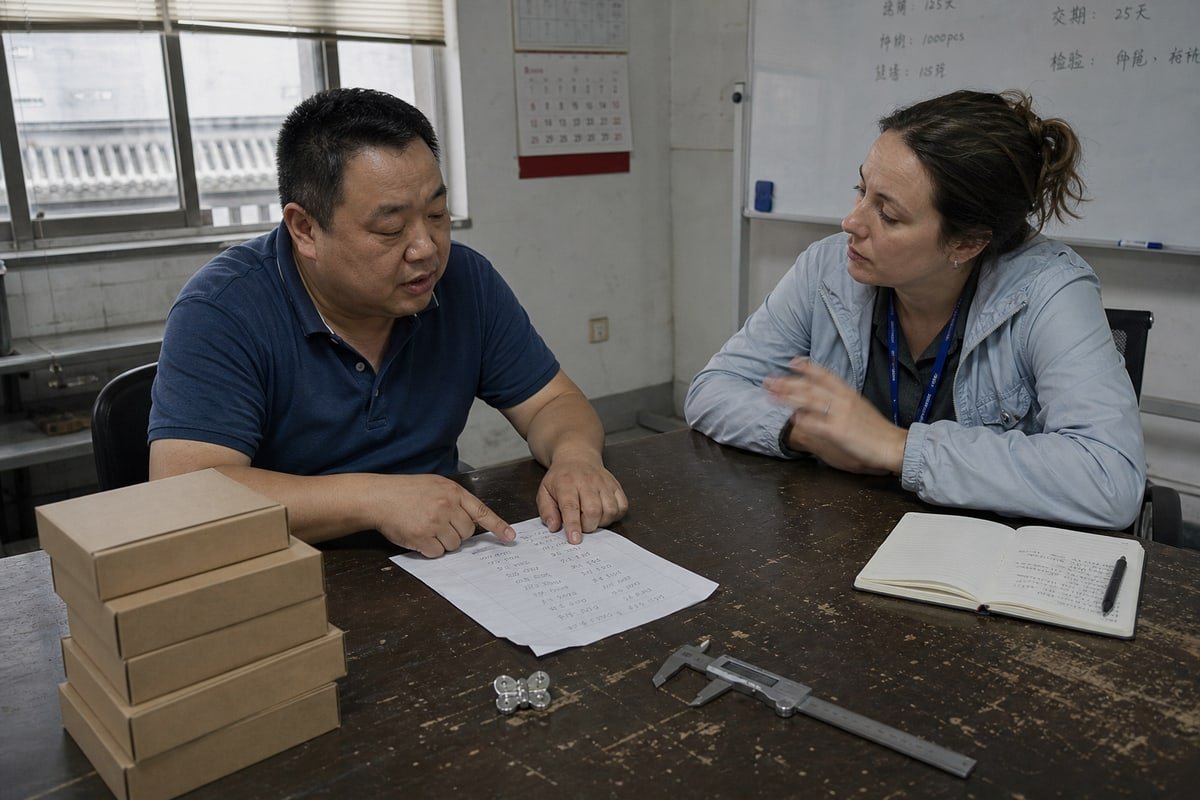
Chinese factories do not price emotionally. They price on spec, quantity, risk, timing, and relationship. So the way to move the number is to change one of those inputs, not to push harder on the same request.
Trade Value Instead of Asking for Discounts
Here is a pattern we see constantly. The core unit price often has only 5–10% of real room. But packaging, free samples, tooling amortization, inspection support, and payment terms usually have more flexibility. So we negotiate those items separately. A blunt "make it cheaper" gets a polite refusal. A structured trade gets movement. Useful trades include:
- "What price if I take 30% more quantity?" This works better than asking for an arbitrary discount.
- Sharing an annual forecast or reorder plan in exchange for tiered volume discounts.
- Accepting a longer lead time so the factory can schedule your production during its slow season. This capacity-fill pricing is one of the most underused levers we know.
- Offering a slightly higher deposit in exchange for a lower unit price, or trading the reverse when cash flow matters more.
Use Certainty, Not Pressure
Many factories discount based on certainty, not just size. A predictable, long-term customer is worth more to them than a one-off bargain hunter. That is the practical meaning of guanxi. It is not dinners and gifts. It is being the buyer whose orders are clear, whose payments arrive on time, and whose quality control inspection criteria never surprise anyone.
Stay hard on the numbers and soft on the people. Question the structure, the Bill of Materials 1, and the terms. Never question the factory's honesty in front of its team. A supplier who loses face may still take your order—but you will feel it later in responsiveness and service.
What information do I need before I start price negotiations with a Chinese factory?
Before every negotiation, our Suzhou team weighs one trade-off: spend two extra days building a complete spec pack, or start talking price now. The spec pack wins every time.
Before price negotiations with a Chinese factory, prepare exact drawings or spec sheets, target materials, tolerances, order quantity, destination market, required certifications, packaging requirements, and preferred Incoterms. Also research raw material prices and request quotes at multiple quantity tiers to understand the factory's cost structure.

Vague RFQs produce meaningless quotes. A factory prices against materials, dimensions, tolerances, hardware, packaging, and compliance requirements. If you leave any of those open, the factory fills the gap with assumptions—usually the cheapest ones.
You Are Negotiating Ambiguity, Not Price
Many buyers think they are negotiating price. They are actually negotiating ambiguity. When we prepare a negotiation for a client, we build a package that removes every assumption before the first quote arrives. The table below is the checklist we work from.
| Information to Prepare | Why It Matters in Negotiation |
|---|---|
| Technical drawings or a full spec sheet | Prevents the factory from quoting against a cheaper assumed version |
| Bill of Materials with target materials and finishes | Lets you challenge specific cost lines, not the whole quote |
| Order quantity plus tiers (e.g., 500 / 1,000 / 2,000 units) | Reveals price breakpoints and real Minimum Order Quantity constraints |
| Destination market and required certifications | Compliance costs change the quote; surprises kill deals later |
| Preferred Incoterms and shipping expectations | FOB vs. EXW vs. DDP quotes are not comparable otherwise |
| Current raw material prices for key inputs | Tells you whether a price increase claim is real or tactical |
| Packaging, labeling, and inspection requirements | These are negotiable items—but only if defined upfront |
| Target payment terms and deposit structure | Payment terms are a lever you can trade against unit price |
Price First or Spec First?
Some buyers push back here: "Shouldn't I just anchor a target price first and sort out details later?" For simple, repeat commodity products, anchoring a price range early can be efficient. But for custom or quality-sensitive products—machined parts, hardware fittings, anything with tolerances—spec-first is safer. In our experience coordinating OEM projects 2 from Suzhou, a price agreed before the spec is locked almost always gets renegotiated. Usually upward.
How do I know if a supplier's quotation is actually competitive?
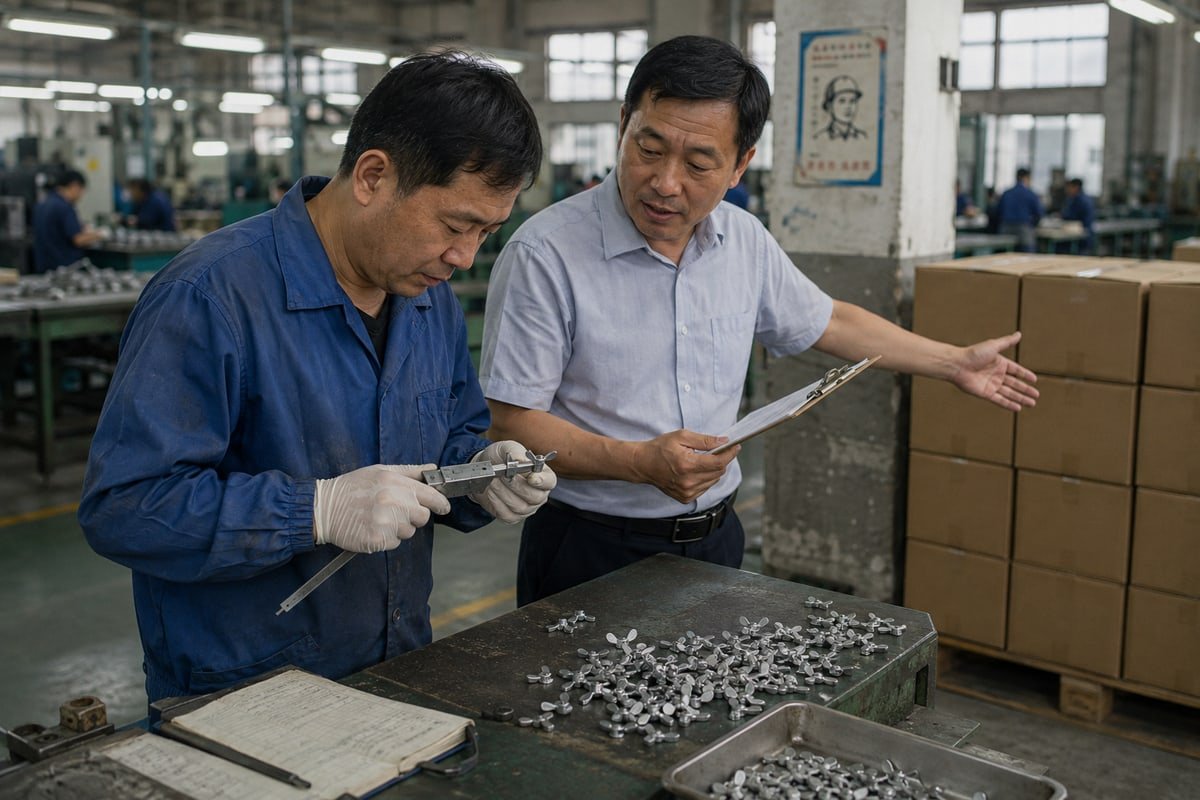
Last year, I stood in a Jiangsu workshop watching an inspector measure a small metal fitting with a digital caliper. The quote had looked cheap. The tolerances explained why.
A quotation is competitive when it sits within the market range established by three to five like-for-like quotes—same specification, quantity, Incoterms, and inspection requirements. Request a unit cost breakdown, check current raw material prices, and treat quotes far below the range as quality warnings.
You cannot judge one quote in isolation. You need a real market range. Practitioner guidance consistently recommends collecting at least three to five quotes, and experienced sourcing teams often go to five to eight suppliers for a better read on the market. We follow the same rule on client projects across the Yangtze River Delta.
Build a Real Market Range
The comparison only works if it is like-for-like. A cheaper quote with different Incoterms 3, a lower-grade material, or no inspection allowance is not cheaper. It is a different product. Standardize before you compare.
| Comparison Point | What to Standardize | Red Flag to Watch |
|---|---|---|
| Specification | Same drawing, material grade, finish, tolerance | Quote silently based on a "similar" material |
| Quantity | Same tier across all suppliers | MOQ quietly raised to hit the quoted price |
| Incoterms | Same basis (e.g., all FOB Shanghai) | EXW quote disguised as landed pricing |
| Inspection | Same quality control inspection standard | "Inspection extra" appearing after agreement |
| Tooling and samples | Costs itemized separately | Tooling buried inside the unit price |
| Lead time | Same production window | Fast quote that assumes idle capacity you cannot verify |
Ask Diagnostic Questions Before Countering
Once the range is clear, ask for a unit cost breakdown: materials, labor, tooling, packaging, margin. Cross-check the material lines against current raw material prices. Then counter with reasons, not just numbers. For many products, a 10–15% counter below the quoted price is a reasonable opening move—though this is highly product-dependent, and precision components often have less room.
One warning from hard experience: never fabricate competitor prices. Chinese suppliers usually know their market very well. A bluffed benchmark destroys your credibility, and the supplier will treat every future request as noise. Share real ranges, or share nothing. And remember the fitting under the caliper—a quote far below the market range usually means the spec has already been cut somewhere you have not looked yet.
Should I negotiate directly or use a sourcing partner to get better pricing?
Years of sitting in factory meeting rooms have taught me one lesson: the buyer who negotiates alone from overseas usually pays for what they cannot see.
Negotiate directly if you have China experience, Mandarin capability, and volume leverage. Use a sourcing partner when you need local market benchmarks, factory audits, MOQ flexibility, or on-the-ground follow-up. A good sourcing agent often recovers its fee through better terms and reduced quality risk.

This is a genuine either-or question, so here is the honest comparison before anything else.
| Factor | Negotiating Directly | Using a Sourcing Partner |
|---|---|---|
| Market price knowledge | Limited to your own quote history | Benchmarks from ongoing purchasing across many categories |
| Language and face dynamics | Email English; nuance gets lost | Native negotiation that preserves face and relationships |
| Supplier verification | Website, Alibaba profile, video calls | On-site factory audit 4 before you commit money |
| MOQ and terms flexibility | Weak leverage as an unknown small buyer | Relationship leverage to negotiate practical MOQs |
| Production follow-up | Remote, reactive | Local visits, inspections, and corrective action in China |
| Total cost | No fee, but hidden risks priced in | Service fee, offset by terms, risk reduction, and consolidation |
The Hidden Cost Objection
The common objection is fair: "Doesn't an agent just add a margin?" A hidden-commission broker does exactly that. A transparent sourcing partner works differently. When our team negotiates prices with Chinese manufacturers on a client's behalf, the client sees the quotes, the comparison, and the terms. The fee buys negotiating position, not a middleman markup.
What Local Presence Changes
Higher-trust negotiation unlocks better terms than email-only bargaining. Factory visits and face-to-face meetings signal seriousness, and factories price seriousness. Being based in Suzhou, we can sit in the meeting room, walk the production line during a factory audit, and verify that the capability behind the quote is real. For smaller and growing buyers, that presence also solves the MOQ problem: we help structure trial orders, use the factory's existing stock materials, and build order volume the factory can trust. Then, after production, one team handles inspection, multi-supplier consolidation, and shipping—so the negotiated price survives all the way to your warehouse.
Conclusion
Negotiating prices with Chinese manufacturers rewards preparation over pressure. Define specs, benchmark quotes, trade value for price, lock terms in writing—and get on-the-ground support when you need it.
Footnotes
1. Comprehensive overview of BOM structures essential for manufacturing cost analysis. ↩︎
2. Definition and context for Original Equipment Manufacturing, a standard model in Chinese production. ↩︎
3. ICC is the official body defining Incoterms used in international trade contracts. ↩︎
4. ISO 9001 is the global standard used during factory audits to verify quality systems. ↩︎