
Every week our sourcing team in Suzhou compares quotations from Chinese suppliers for overseas buyers 1. The cheapest quote usually leaves out the most — and buyers pay for it later.
To compare quotations from Chinese suppliers correctly, normalize first and compare second. Confirm identical product specifications, quantity, packaging, Incoterms, tooling and sample treatment, lead time basis, and payment terms, then convert every offer to total landed cost before judging unit price.
That sounds simple. In practice, suppliers rarely quote on the same basis. One includes packaging, another does not. One quotes FOB, another EXW. This article shows you how to turn messy, inconsistent quotes into a fair, like-for-like comparison.
How do I know if a Chinese supplier's quotation actually covers everything I need?
A Canadian importer recently forwarded us three quotes for one hardware fitting. Only one quote mentioned packaging. None stated the drawing revision. That gap worried him more than the prices.
A quotation covers everything only when it states the exact product specification, drawing revision, material grade, packaging basis, quantity, Incoterm with named place, validity period, and what tooling, samples, and testing cost. Anything not written down should be treated as excluded.
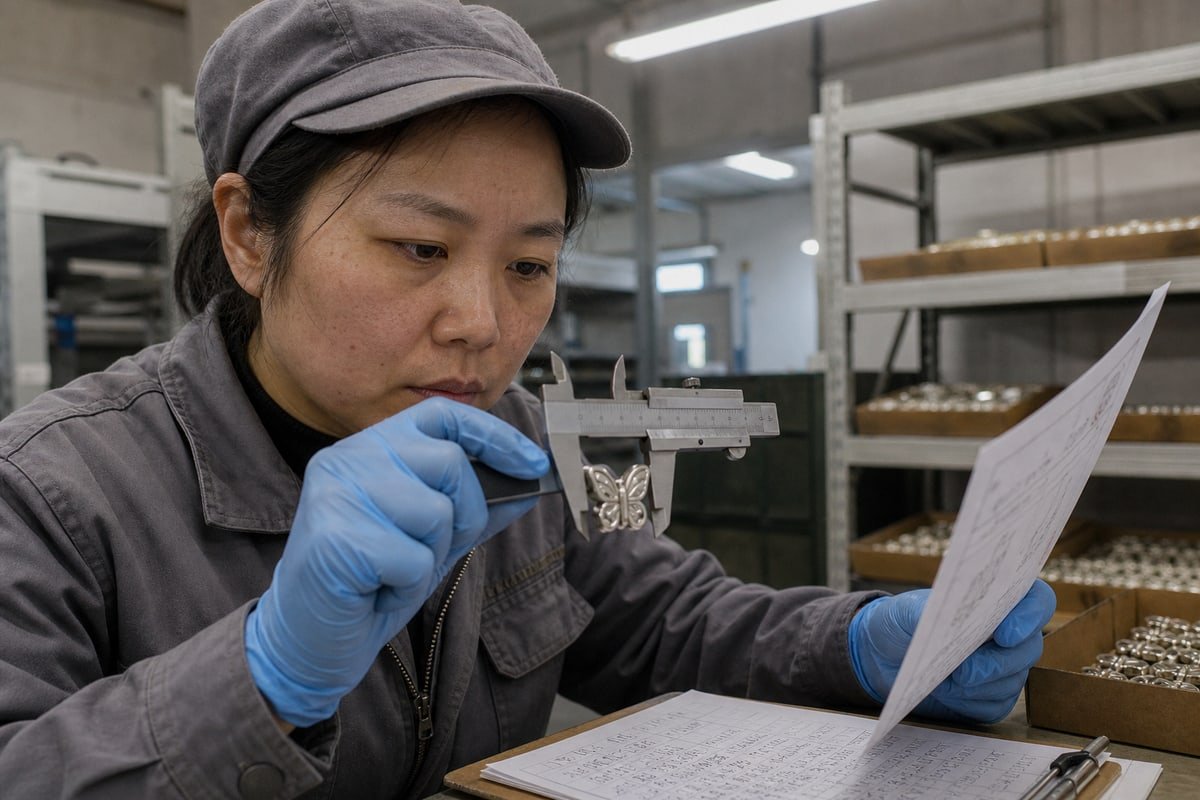
Most buyers scan a quote for the unit price and move on. That is the mistake. A quotation is a scope document, not a price tag. Before you can trust it, you need to check what it actually commits the supplier to deliver.
What a complete quotation must state
We check every incoming quote against a fixed list. If an element is missing, we ask the supplier to confirm it in writing before the quote goes into our comparison.
| Quote element | What it should specify | Risk if missing |
|---|---|---|
| Product specification | Drawing revision, material grade per the Bill of Materials, dimensions, tolerances, finish, accessories | Supplier quotes a cheaper spec than you asked for |
| Quantity and MOQ | Exact quantity or band, Minimum Order Quantity, tier pricing | Price applies only above a threshold you did not plan for |
| Packaging | Retail or bulk pack, inner box, carton spec, labels, inserts | Packaging billed later, or goods arrive bare |
| Delivery basis | Incoterm, named place, and version, e.g. FOB Shanghai, Incoterms 2020 | Freight and export costs land on you unexpectedly |
| One-time costs | Tooling, mold, sample, setup, and test fees | Charges surface after you commit |
| Validity | Validity period, currency, exchange rate date | Supplier requotes higher before you place the order |
| Quality evidence | Test reports and certificates for the exact model, inspection access, quality control standards | Goods fail import compliance or your own acceptance criteria |
Silence means exclusion
Here is the rule we apply on every project: if the quote does not mention it, assume it is excluded. Suppliers are not necessarily hiding anything. They simply quote their default scope, and defaults differ between factories. So we send the same RFQ revision 2 to every supplier and require written confirmation of any exception. That one habit removes most of the surprises before they can become invoices.
What hidden costs should I watch for when comparing supplier quotes from China?
During a pre-shipment inspection in Zhejiang, our team measured a metal clasp with calipers and found the wall thickness undersized. The cheap quote had quietly assumed a lighter material.
Watch for excluded tooling and mold fees, sample charges, testing and certification costs, packaging and labeling, inland freight to port, export handling, third-party inspection fees, customs duty driven by the HS code, and currency risk when the quote validity outlasts RMB/USD exchange rate movement.
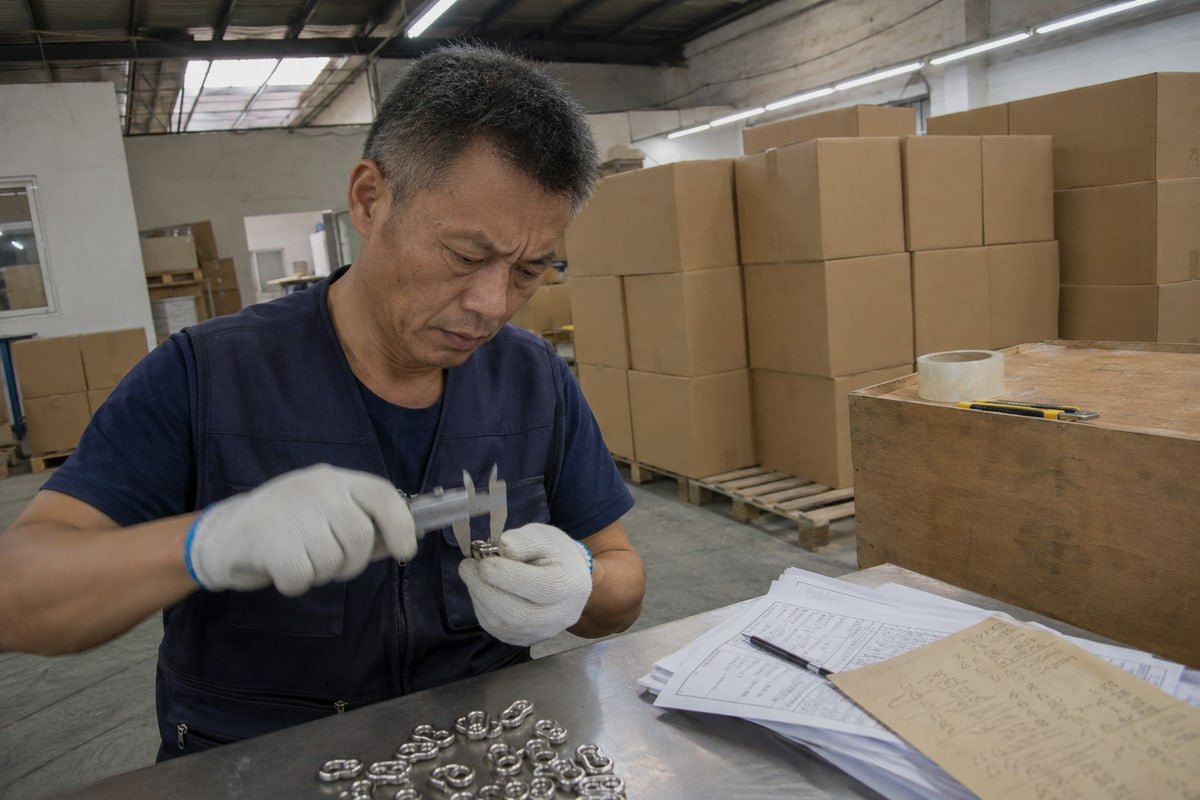
Hidden costs fall into two groups: costs the supplier excluded, and costs the supplier never controls. Both distort your comparison. A quote that looks 10 percent cheaper on paper can easily become the expensive option once these items are added back.
Where hidden costs typically hide
| Hidden cost | Where it hides | What to ask |
|---|---|---|
| Tooling and mold fees | Quoted separately or buried in the first order | Is tooling a one-time cost, and who owns the mold? |
| Sample charges | Assumed paid, free, or credited later | Is the sample fee credited against the production order? |
| Testing and certification | Quoted for a different model or skipped entirely | Do the certificates apply to the exact model quoted? |
| Compliance premium | Ethical audits and environmental certifications your market requires | Who pays for audit and certification costs? |
| Packaging and labeling | Bulk pack assumed instead of retail pack | Are cartons, barcodes, and inserts included? |
| Inland freight and export handling | EXW quotes stop at the factory gate | What does it cost to get goods to the port? |
| Customs duty | HS code 3 classification chosen by the supplier | Which HS code did you use, and can we verify it? |
| Currency risk | Short validity against RMB/USD volatility | How long is the price valid, and at what exchange rate date? |
One-time costs versus unit price
Never let a supplier blend tooling, sample, or setup fees into the unit price. Blended pricing makes small orders look expensive and hides the real volume curve. We always ask suppliers to separate one-time costs from recurring unit costs, then we amortize the one-time costs across the planned order volume ourselves.
The tariff and currency angle
Two costs sit outside the quote but inside your total landed cost. First, verify the HS code the supplier assumes, because different classifications can change your duty rate dramatically. Second, check the quote validity period against exchange rate movement. A price valid for seven days is a different commercial offer than a price valid for sixty.
How can I compare quotations fairly when suppliers use different terms and specifications?
On every project, we weigh a trade-off: spend a few extra days normalizing quotations upfront, or absorb surprise costs after the purchase order is signed. We always choose the days.
Compare fairly by sending one standardized RFQ, asking each supplier to confirm exceptions in writing, then converting every quote to the same specification, quantity, packaging, and Incoterm. Build one comparison matrix and judge total landed cost, not the quoted unit price.

Fair comparison is a process, not a spreadsheet trick. Here is the workflow we run when we compare quotations from Chinese suppliers on behalf of clients. It works with three suppliers or ten. Beyond ten, the data set becomes noise, so we recommend keeping the field between three and ten candidates.
- Send one RFQ to every supplier. Same brief, same drawings, same RFQ revision, same document set. Different inputs guarantee different outputs.
- Require written exceptions. Suppliers must state what they cannot meet, instead of quietly assuming a different scope.
- Extract each quote into one matrix. Our standard columns: supplier name, supplier type, unit price, MOQ, sample cost, tooling cost, production lead time, payment terms, packaging, inspection access, shipment readiness, and open questions.
- Convert to the same commercial basis. Same Incoterm, same named place, same currency with a noted exchange rate date.
- Calculate total landed cost separately. Keep freight, duty, and customs assumptions out of the supplier price columns so they do not blur the comparison.
- Shortlist for sample evaluation and supplier verification. Capability and risk decide the shortlist — after normalization, never before.
Normalizing EXW, FOB, CIF, and DDP quotes
| Incoterm | Supplier covers | You cover |
|---|---|---|
| EXW | Goods at the factory gate only | Inland freight, export clearance, all freight, insurance, duty, delivery |
| FOB (named port) | Inland freight, export handling, loading on vessel | Main freight, insurance, import duty, final delivery |
| CIF (destination port) | Freight and insurance to your port | Import clearance, duty, inland delivery |
| DDP | Everything to your door, including duty | Receiving the goods |
An EXW price 4 will always look cheapest and a DDP price will always look most expensive. Neither tells you anything until both sit on the same basis.
But shouldn't I demand a full cost breakdown?
Buyers often raise this objection: why not force every supplier to itemize raw material, labor, overhead, and packaging? Itemized costing is genuinely useful — it strengthens negotiation and exposes unrealistic low-balling. But many capable factories will not share it, and you do not need it to decide fairly. Like-for-like normalization is the minimum requirement. Treat the cost breakdown as a negotiation tool, not the entry ticket.
What should I ask suppliers before trusting their quoted price and lead time?
Years of production follow-up in Jiangsu taught our team one lesson: a quoted lead time means nothing until you know what starts the clock.
Before trusting a quote, ask what triggers the production lead time, whether tooling and sample fees are separate, what the MOQ and price tiers are, who actually manufactures the product, what payment terms apply, and whether third-party inspection access is accepted in writing.
These are the questions we put to suppliers before any quote enters a client's final comparison. Each one closes a gap where price or schedule can quietly shift after the order is placed.
- What triggers the production lead time? The clock should start from a defined event — deposit receipt or approved artwork and drawings — not from an unspecified start date. Ask for sample lead time and shipment readiness separately.
- What is the sample policy? Paid, free, or credited against the production order? Sample evaluation timing affects your launch date as much as production does.
- What is the Minimum Order Quantity, and what are the price tiers? Ask for pricing at two or more quantity levels. The volume curve tells you whether a supplier is cheap at your quantity or only at theirs.
- Are one-time costs separated? Tooling, mold, setup, and test fees should never be buried inside the unit price.
- What are the payment terms? Deposit percentage, balance timing, and method. Confirm whether terms change after sample approval or inspection. A lower unit price with a heavier deposit is a different risk profile, not a better deal.
- Who actually manufactures the product? Ask whether the quoting company is the factory, the exporter, or only the payee. Request the Chinese legal name, Unified Social Credit Code 5, and registered address. This sub-tier transparency reveals whether a trading company markup sits inside the price.
- Do you accept third-party inspection? Confirm pre-shipment inspection access and agree in writing on what happens if goods fail against your quality control standards.
- Can you hold inventory or ship partials? Flexibility here changes your real supply risk.
A supplier's answers matter as much as the numbers. Clear, written, specific responses are a capability signal. Vague answers are a reason for deeper supplier verification — a factory audit before the purchase order, not a dispute after the shipment.
Conclusion
If two quotes do not share the same product, quantity, packaging, and delivery basis, they are not comparable. Normalize first, compare second — and let total landed cost decide.
Footnotes
1. Authoritative government source for international trade resources and market research for global commerce. ↩︎
2. Definition of the standard business process for inviting suppliers to bid on specific products. ↩︎
3. Official World Customs Organization page defining the Harmonized System for global product classification. ↩︎
4. Official International Chamber of Commerce resource for Incoterms 2020 rules and commercial delivery terms. ↩︎
5. Reference for the standard identification number used for business registration in mainland China. ↩︎